The air at two thousand feet does not feel like the air on the ground. It is thinner, colder, and smells faintly of aviation fuel and infinite possibility. To anyone who has ever stood at the open door of a moving aircraft, that air is a physical presence. It pushes against your chest. It whips your hair into a frenzy. It whispers a reckless, intoxicating promise: Jump.
On a clear Missouri afternoon, thirteen people chased that whisper. They loaded into a twin-engine plane, heavy with equipment but light with anticipation. They were a mix of seasoned instructors, eager hobbyists, and a pilot who knew the local airspace like the back of his hand. They shared the tight, cramped camaraderie unique to skydivers—knees knocking against knees, parachutes bristling against nylon rigs, the collective, rhythmic thumping of nervous, excited hearts.
Minutes later, that shared heartbeat stopped.
The crash of a skydiving aircraft near Sullivan, Missouri, which claimed twelve lives and left one survivor clinging to existence, is a stark reminder of a truth we often try to forget. We live our lives by trusting machines we do not understand, guided by forces we cannot see. When that trust shatters, it does not happen in the abstract. It happens to people who had breakfasts, who left unfinished coffee on kitchen counters, and who expected to be home for dinner.
The Gravity of the Ascent
Every aviation statistic tells a story of survival, until it doesn’t.
Statistically, skydiving is remarkably safe. The United States Parachute Association tracks these numbers with religious dedication. Millions of jumps occur every year with a fatality rate that is a mere fraction of a percent. You are far more likely to die texting while driving to the grocery store than you are while falling through the sky under a canopy of nylon.
But those statistics are a comfort built for the ground. They offer zero shelter when an engine falters.
Consider the physics of the climb. A skydiving plane is essentially an elevator with wings. Its sole purpose is to haul weight to altitude as quickly and efficiently as possible. Because of this, these aircraft are stripped down. There are no luxury seats, no drink carts, no soundproofing insulation. You sit on the floor. You feel every vibration of the airframe deep in your marrow.
When a plane like the one in Missouri encounters trouble during the ascent, the margins for error vanish. At ten thousand feet, a skydiver has options. If the plane fails, you open the door and you exit. The parachute is your escape hatch. But during the initial climb—the first few hundred feet where the ground is still terrifyingly close and the aircraft is straining against gravity at low speeds—the parachute is useless weight. You are trapped in a metal box that is rapidly losing its argument with the earth.
The witnesses on the ground near the Missouri airfield heard the change before they saw it. A sputter. A sudden, sickening alteration in the pitch of the engines. Anyone who lives near a rural airport knows that sound. It is the sound of momentum dying.
The Human Geometry of a Tragedy
We treat plane crashes as legal and mechanical puzzles. Federal investigators arrive in dark windbreakers. They measure skid marks in the dirt. They recover the wreckage. They analyze fuel lines and maintenance logs to isolate the exact component that failed.
But a tragedy is not a mechanical failure. A tragedy is a human displacement.
To understand what happened inside that cabin, you have to look past the official reports and look at the people. Think of the youngest jumper on board, perhaps someone taking their first tandem leap. They would have been strapped securely to the chest of a veteran instructor. In those final seconds, as the horizon tilted violently and the trees rushed upward, that instructor’s instincts would not have been to read an instrument panel. Their instinct, honed by hundreds of jumps, would have been to shield their student. To hold on. To offer a final, futile human barrier against an unimaginable impact.
Then there is the pilot. Aviation training beats a singular mantra into your brain from day one: Aviate, Navigate, Communicate. In that order. When the engines quit, you do not panic. You fly the airplane. You look for a patch of green, a stretch of highway, anything that isn't solid rock or dense timber. You fight the controls until the very last millisecond, pulling back on the yoke, desperate to trade whatever speed you have left for just one more foot of altitude.
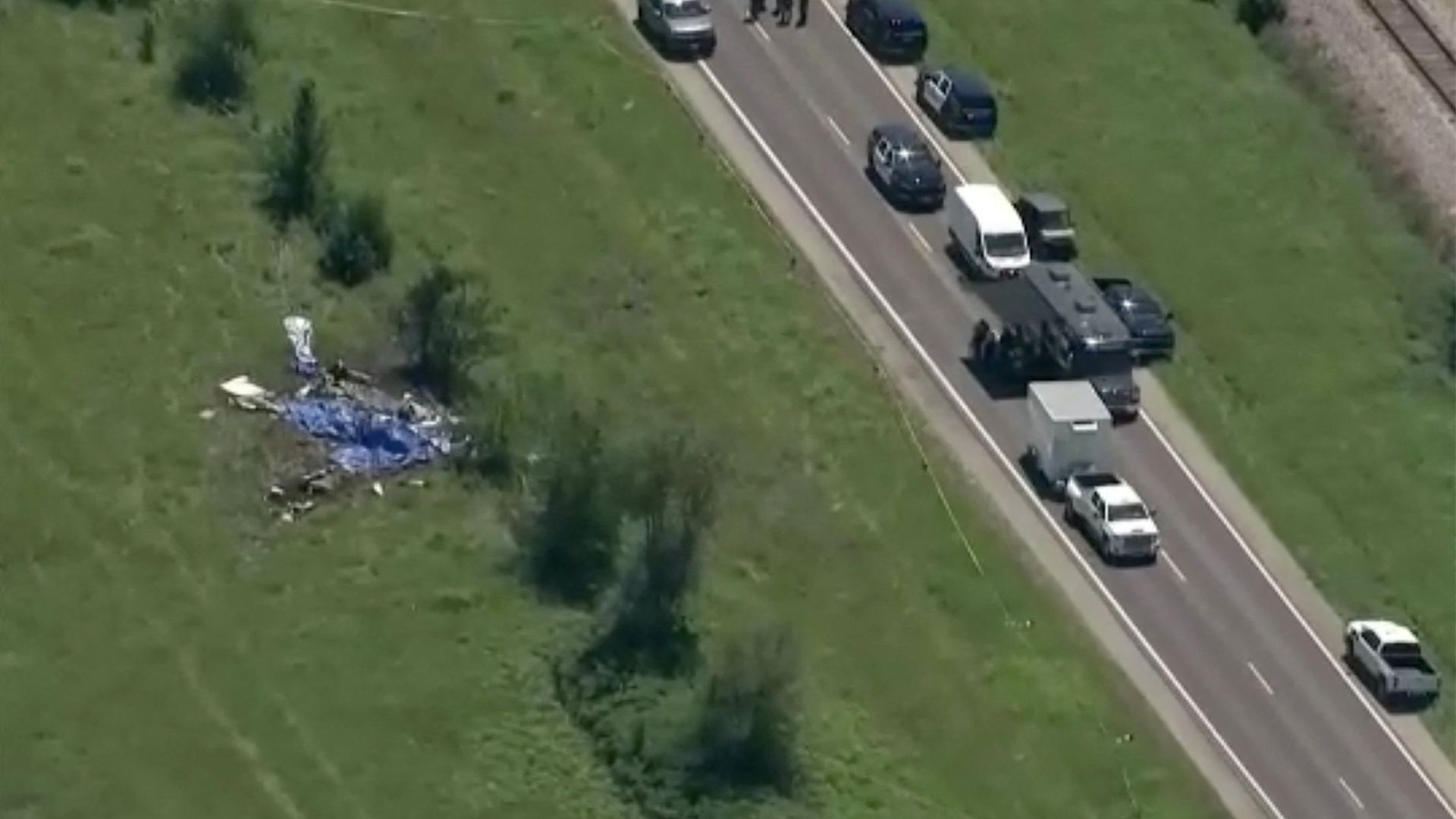
The wreckage in Missouri was found in a wooded area, a cruel tangle of aluminum and oak. Twelve people died at the scene. One survived, pulled from the debris by first responders who could only marvel at the arbitrary nature of luck and physics. Why did one body endure what twelve others could not? There is no logic to it. Only the cold geometry of impact angles and structural collapse.
The Invisible Bonds of the Drop Zone
Every sport has its subculture, but skydiving is more like a secular religion. The drop zone is the church. It is a place where social status, wealth, and politics evaporate. When you are in the sky, a neurosurgeon and a diesel mechanic are identical. They wear the same jumpsuits. They trust each other with their lives.
When a plane goes down at a drop zone, the shockwaves ripple through the entire global community. It is a small world. Instructors travel from state to state, chasing the weather. Jumpers know each other by their rigs, their styles, and their stories. The loss of twelve people in a single afternoon is a catastrophic blow to this community. It leaves twelve empty lockers. It leaves twelve cars parked at the airfield that will never be driven home.
The conversation in the days following the Missouri crash invariably turns to scrutiny. Were the pilots properly rested? Was the aircraft overloaded? Did the intense summer heat create "density altitude" issues, robbing the wings of lift and the engines of power? These are necessary questions. We ask them because we desperately want to believe that every accident is preventable. We want to find a mistake, because if we can find a mistake, we can fix it, and if we can fix it, we can believe that we are safe.
But the truth is far more uncomfortable.
The Contract with the Unknown
We are fragile creatures who have built a world of immense speed and power. Every time we step onto a commercial airliner, step into an elevator, or strap ourselves into a skydiving plane, we sign an invisible contract with the unknown. We agree to trust the metal, the maintenance crew, the pilot, and the laws of aerodynamics. Most of the time, the contract is honored. The flight lands. The door opens. We walk away.
But occasionally, the contract is torn up.
The sun still sets over the Missouri airfield, casting long shadows across the runway where that flight began. The investigators will eventually finish their work. They will publish a report filled with technical jargon, graphs, and a definitive cause of death for the aircraft. The news cycle will move on to the next headline, the next political debate, the next storm.
Yet, for those who know the feeling of the wind at two thousand feet, the sky will look different now. It will look a little larger, a little emptier, and vastly more solemn. The twelve who stayed in the sky remind us that the line between an ordinary afternoon and eternity is as thin as a layer of aluminum, and as fragile as a breath. They leave behind a silence that no engine can fill, and an indelible image of thirteen souls who looked at the horizon and chose to fly.