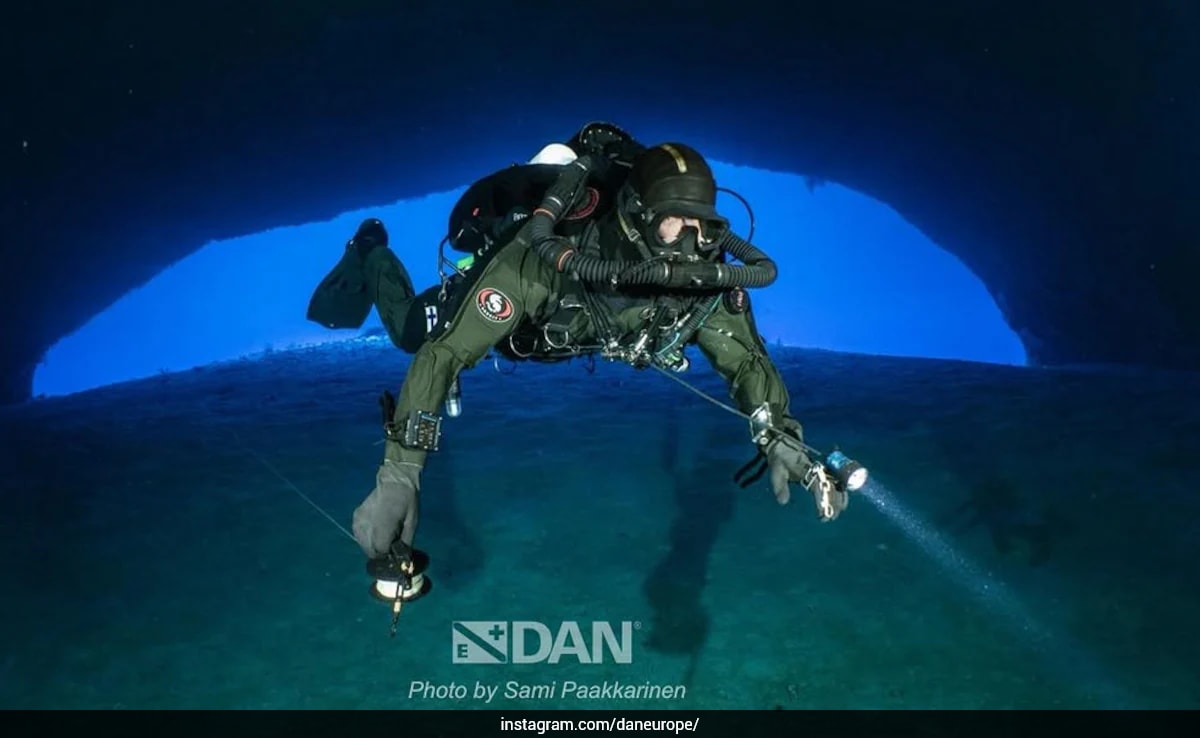
The water changes color first. Near the surface, the Maldivian ocean is a brilliant, blinding turquoise that looks almost synthetic. It feels safe. It feels like a postcard. But as you drop past twenty meters, the light loses its warmth. The reds fade first. Then the yellows. By the time you reach the threshold of the deep wreck, the world is rendered entirely in monochromatic, bruising shades of blue.
Every diver knows the sensation of the squeeze. It is not just the physical pressure of the atmosphere compressing your lungs; it is the psychological weight of knowing that the air on your back is your only lifeline. For most, that weight breeds a healthy, survivalist caution. For a few, it creates a strange, quiet euphoria.
They call it the rapture of the deep. Nitrogen narcosis. It feels exactly like drinking a glass of dry martini on an empty stomach, a slow, warm unraveling of judgment. And when you are standing at the mouth of an underwater cavern, that warm unraveling can be fatal.
The Kuda Giri wreck is a famous dive site, a sunken freighter encrusted with sponge and coral, teeming with life. It is an aquatic playground for thousands of tourists every year. But beneath the celebratory marine life lies a shadow. Just past the wreck, the reef drops away into a vertical wall, and tucked into that black volcanic rock is a restriction known informally to locals as the cave of no return.
In the diving community, we talk about the line. It is a literal nylon cord woven through treacherous underwater passages, but it is also a mental boundary. On a clear morning, six people crossed both.
They were not reckless amateurs. That is the detail that haunts the local dive guides who still work these waters. The group included certified instructors, individuals who had logged thousands of hours underwater, people who taught others how to survive. Yet, the ocean possesses a unique ability to dismantle expertise.
Consider the physics of the environment. At thirty-five meters down, a standard tank of air drains three times faster than it does at the surface. Your brain, starved of optimal oxygen levels and saturated with compressed nitrogen, begins to process time differently. Seconds stretch. Minutes vanish.
The entry point of the cave is narrow, a slit in the reef that swallows the ambient sunlight. When the team of six pushed through the opening, they were likely chasing the thrill of discovery, the quiet pride of exploring a space few human eyes had ever seen.
What they encountered inside was a structural trap.
Underwater caves are not smooth tunnels. They are jagged, unpredictable chambers lined with fine, powdery silt. This silt is the silent killer of cave diving. A single careless kick of a fin, a moment of panic that causes a diver to flail, and the visibility drops from twenty meters to zero in less than three seconds. It is called a silt-out.
Imagine turning off every light in your house, filling the rooms with thick, black smoke, and trying to find a door that has been locked from the outside. Now imagine doing it while breathing through a plastic tube, knowing that every panicked breath shortens your life by a minute.
The new images recovered from the site tell a story of total disorientation.
Equipment was found scattered across the cavern floor, a sign of the chaotic, desperate scramble that occurs when the human brain realizes it is trapped. When visibility goes, up becomes down. Left becomes right. Divers have been known to dig themselves deeper into the silt walls of a cave, convinced they were swimming toward the exit, their fingers clawing at solid stone until their tanks ran dry.
The tragedy of the six-diver incident changed the way local authorities view recreational limits in the Maldives. For years, the region was marketed purely as a tropical paradise, a place where the ocean was a gentle host. The reality is far more complex. The archipelago sits atop a massive underwater mountain range, a landscape of sheer drop-offs, unpredictable current channels, and deep, unexplored thermal vents.
The investigative photos show the exact spot where the group made their final stand. It is a small, dead-end chamber at the very back of the system. There are no fish here. There is no coral. The water is stagnant and cold.
We often look at these tragedies and look for someone to blame. We blame the equipment, the weather, the dive computer, the guide. It is a coping mechanism. If we can attribute the disaster to a specific, avoidable mistake, we can convince ourselves that it won't happen to us. We preserve the illusion of control.
But the truth is far more uncomfortable. The equipment functioned perfectly. The weather was calm. The mistake was entirely human, born from a subtle, creeping overconfidence that the ocean takes as an insult.
When you dive regularly, you develop a dangerous familiarity with danger. You survive a difficult dive, and your threshold for risk shifts. You go a little deeper. You stay a little longer. You squeeze through a slightly tighter opening. You forget that the ocean does not negotiate, and it does not offer second chances.
The local dive community in the Maldives still carries the weight of that morning. The entrance to the deeper sections of the Kuda Giri cave system is now heavily monitored, and guides are fiercely protective of the boundaries. The site remains beautiful, a stunning testament to the power and scale of the natural world, but the air around the dive boats feels different now. Cleaner. More precious.
The boat ride back to the resort after a deep dive is usually loud, filled with the clatter of heavy tanks, the peeling off of neoprene, and the excited chatter of tourists comparing notes on the sharks or turtles they spotted. But when you look out over the edge of the boat, past the white wake of the engine, you can see the deep blue water where the reef drops off into nothingness.
Down there, beneath the sunlit waves, the cave remains perfectly still, wrapped in total darkness, a permanent monument to the thinness of the line between adventure and catastrophe.