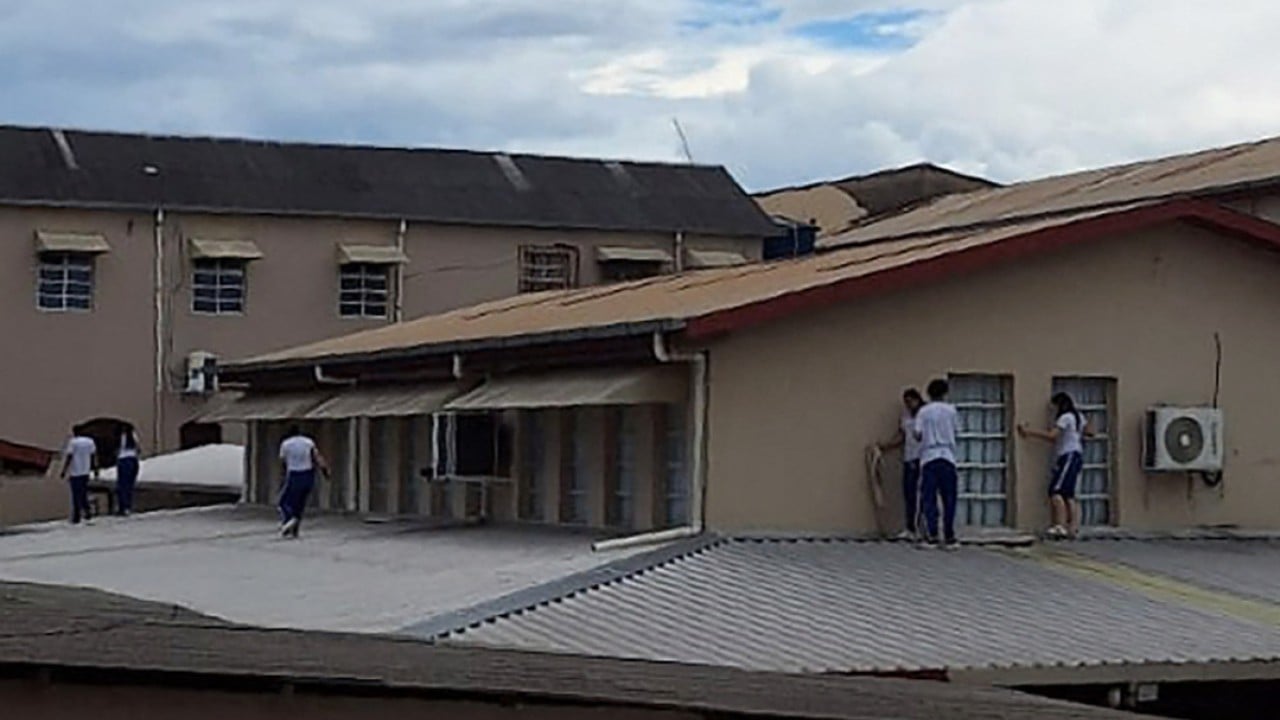
The fatal shooting of two students by a thirteen-year-old boy in a Brazilian classroom is more than a localized tragedy. It is a symptom of a systemic collapse. When a teenager walks into a place of learning armed with a firearm and a plan to kill his peers, the failure belongs to every institution tasked with his upbringing. The immediate facts are harrowing. Two young lives were cut short. Others were injured. The shooter is now in custody. But the narrow focus on the event itself misses the broader, more terrifying trend of radicalization and security failures currently gripping South America’s largest nation.
Brazil is grappling with a surge in school-based attacks that were once considered a foreign phenomenon. For decades, Brazilians watched news of American school shootings with a sense of detached horror, believing their own culture of social cohesion and strict gun laws—relative to the United States—would provide a shield. That shield has shattered. To understand why a thirteen-year-old turns a weapon on his classmates, we have to look past the crime scene tape and into the digital underworlds and legislative gaps that made this moment inevitable. You might also find this connected coverage interesting: The Hormuz Delusion and Why the United Nations Veto is the Only Thing Saving the Global Economy.
The Digital Echo Chamber of Hate
The path to a school shooting rarely begins with the pull of a trigger. It starts months, sometimes years, earlier in the corners of the internet where disenfranchised youth find a sense of belonging through shared resentment. Investigations into recent Brazilian school attacks frequently point toward "chan" culture and extremist forums. These are not just websites. They are incubators.
In these spaces, perpetrators of previous massacres are not seen as criminals but as "saints" or "heroes." A thirteen-year-old boy, likely struggling with the typical social anxieties of puberty, finds a community that validates his anger. They provide him with a script. This script includes specific aesthetics, tactical advice, and a distorted promise of immortality through infamy. The anonymity of these platforms makes them incredibly difficult for Brazilian authorities to monitor effectively, especially when the servers are hosted in jurisdictions with lax oversight. As reported in recent coverage by Al Jazeera, the results are significant.
Parents often remain oblivious. They see a child spending hours on a computer and assume it is harmless gaming or social media. In reality, the child is being groomed by a collective that rewards the ideation of violence. By the time the physical planning begins, the psychological rubicon has already been crossed. The boy did not just decide to kill one morning. He was conditioned to believe it was his only path to being seen.
The Failure of the Iron Fist
Politicians often respond to these tragedies with a predictable call for increased security. They want metal detectors at every door. They want armed guards in the hallways. They want to turn schools into fortresses. This approach ignores the fundamental reality that most school shooters are students who belong inside those walls.
A metal detector might catch a gun, but it does not address the intent to use it. Furthermore, the logistical challenge of securing thousands of schools in impoverished regions of Brazil is insurmountable. Many schools lack basic plumbing and reliable electricity. Expecting these same institutions to maintain high-tech security grids is a fantasy. It is a hollow political talking point that provides a veneer of action while the root causes—mental health neglect and social isolation—continue to fester.
The "iron fist" rhetoric also misses the mark on how these weapons are acquired. Despite Brazil’s efforts to regulate firearms, the black market remains robust. Smuggled weapons from neighboring countries and "leakage" from official police and military stockpiles mean that a determined teenager with enough time and digital guidance can find a way to arm himself. The focus on the hardware of the crime is a distraction from the software of the killer’s mind.
Mental Health in the Shadow of Poverty
Brazil’s mental health infrastructure is in a state of perpetual crisis. In the public school system, a single psychologist might be responsible for thousands of students across multiple campuses. Identifying a "red flag" in a thirteen-year-old becomes a matter of luck rather than a structured clinical process.
The Warning Signs Nobody Saw
- Sudden Social Withdrawal: The shooter had reportedly become increasingly isolated in the weeks leading up to the attack.
- Academic Decline: A sharp drop in grades that went unaddressed by overworked faculty.
- Fixation on Dark Content: His digital footprint showed an obsession with past mass shootings, a common trait among copycat attackers.
These signs are only visible in hindsight because the systems meant to catch them are broken. Teachers are trained to deliver curriculum, not to act as frontline mental health screeners. When a student shows signs of distress, the referral process to specialized care can take months. For a teenager spiraling into radicalization, months are a lifetime. By the time a professional gets a look at the child, the ammunition has already been purchased.
The Copycat Effect and Media Responsibility
The way we talk about these events matters. There is a documented phenomenon known as the "contagion effect," where the intense media coverage of one shooting inspires another. When news outlets lead with the shooter’s name, his manifesto, and his photos, they are providing exactly what the extremist forums promised him: a platform.
This thirteen-year-old boy in Brazil knew exactly how the world would react. He knew his face would be on every screen. To a child who feels invisible, that level of attention is a powerful incentive. High-end journalism requires a shift in focus. We must center the victims and the systemic failures, while stripping the perpetrator of the "glory" he sought. The Brazilian media landscape is slowly moving toward this "No Notoriety" protocol, but the speed of social media often outpaces ethical journalism, spreading the shooter's "message" before the bodies are even cold.
A Generation Left Behind
We are witnessing the fallout of a generation raised in a period of intense political polarization and economic instability in Brazil. The social fabric is frayed. When children do not see a viable future for themselves, they become susceptible to ideologies that offer a violent shortcut to significance.
The tragedy in this Brazilian school is not an isolated incident of "madness." It is the logical conclusion of a society that has prioritized political posturing over the quiet, expensive work of social welfare and psychological support. We are failing our children long before they reach for a gun. The boy who pulled the trigger was a thirteen-year-old who fell through every safety net our modern world is supposed to provide.
The answer is not more locks on the doors. It is a radical reinvestment in the human element of education. It is about closing the digital gap that allows extremist recruiters to reach children in their bedrooms. It is about acknowledging that a child’s mental health is just as critical as their ability to read and write. Until we stop treating these shootings as freak accidents and start seeing them as the predictable results of our own negligence, the death toll will only continue to rise.
The silence in that Brazilian classroom today is the loudest indictment of our collective failure.