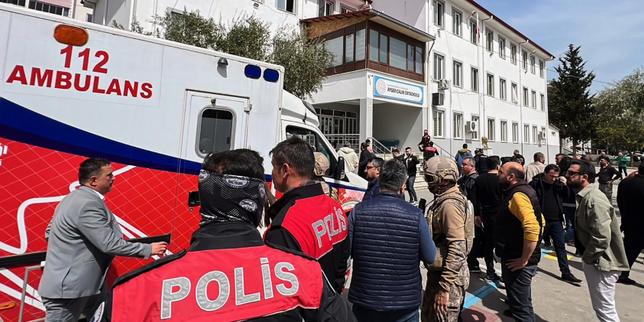
The massacre at a Turkish school that left nine dead and thirteen wounded is more than a localized tragedy. It is a catastrophic failure of the state’s duty to protect its youth. On a Tuesday morning that should have been defined by routine and education, gunfire instead tore through the hallways, exposing a massive gap in the nation's domestic security infrastructure. While initial reports focused on the immediate horror of the body count, the deeper truth lies in a systemic refusal to address escalating youth radicalization and the porous nature of weapon procurement in urban centers.
This event marks a dark milestone in a country already grappling with social tension. The victims were students and faculty, people whose only mistake was showing up to a building that was supposed to be a sanctuary. But the sanctuary was breached with terrifying ease. To understand how nine people ended up in a morgue, we have to look past the yellow police tape and examine the factors that made this assault not just possible, but perhaps inevitable.
A Failure of Prevention and Protection
Schools in the region have long been touted as "secure zones," yet the reality on the ground tells a different story. In most public institutions, security consists of a single elderly guard or a locked gate that is easily bypassed. This wasn't a sophisticated paramilitary operation. It was a targeted strike that took advantage of predictable weaknesses.
The attacker moved through the facility with a level of familiarity that suggests a failure in monitoring internal threats. When we look at the logistics of the assault, the question isn't just how the shooter got in, but why no one saw the warning signs. Intelligence gathering at the local level has been heavily skewed toward political dissent rather than identifying individuals prone to mass violence. This misallocation of resources has left a flank wide open.
The Weaponry Pipeline
Turkey has seen a surge in the availability of unlicensed firearms. While the government claims to have strict control over gun ownership, the black market is thriving. You can procure a handgun or a modified shotgun with a few encrypted messages and a hand-off in a quiet neighborhood.
The weapon used in this attack was not a hunting rifle or a legacy piece from a grandfather’s cabinet. It was a tool designed for high-capacity output. The fact that such a weapon found its way into the hands of someone willing to use it in a classroom is an indictment of the current border and customs enforcement. If the state cannot track the flow of steel and lead, it cannot claim to have a handle on public safety.
The Social Pressure Cooker
The motive behind such a heinous act often gets buried in the grief, but the profile of the violence points to a growing sense of nihilism among certain segments of the population. Economic instability, combined with a polarized social atmosphere, has created a generation of "invisible" individuals who feel they have nothing to lose.
- Radicalization: Both online and in physical social circles, extremist rhetoric has become more accessible.
- Mental Health Neglect: There is a profound lack of support for those on the brink of a psychological break.
- The Copycat Effect: International incidents of school violence are no longer distant news stories; they serve as blueprints for local actors.
Beyond the Official Narrative
Government officials were quick to offer condolences and promises of "swift justice." However, justice in this context is often reactive. Arresting the perpetrator—if they are even taken alive—does nothing for the families of the nine who died. It does nothing to prevent the next person from walking into a school with a loaded magazine.
We are seeing a pattern where the response to tragedy is a flurry of arrests and a temporary increase in police patrols. But three months from now, the patrols will vanish. The cameras will stop rolling. The schools will return to the same vulnerable state they were in before the first shot was fired.
The Architecture of Fear
When you walk through the corridors of a school today, you shouldn't feel like you are entering a prison. Yet, the alternative is the current "open-door" reality that invites disaster. The middle ground—professional, armed security and high-tech surveillance integrated with rapid-response police units—is expensive. The Turkish education budget has rarely prioritized this kind of hardening.
It is a bitter pill for a society to swallow that its schools must now resemble high-security government installations. But the blood on the floor of that classroom proves that the era of "it won't happen here" is officially over. The psychological impact on the survivors and the broader student body will last for decades. This isn't something a few days of national mourning can fix.
The Legal Gaps
There is also the matter of legal accountability for those who facilitated the environment. Who sold the gun? Who ignored the social media posts that preceded the attack? Who allowed the school's security budget to be diverted elsewhere? In many cases, the trail of responsibility stops at the shooter. This is a mistake.
True accountability requires a forensic look at the entire chain of failure. If a private security firm was contracted, their license should be under the microscope. If local police ignored reports of a suspicious individual, there must be dismissals. Without a "top-to-bottom" purge of the negligence that allowed this to happen, the nine lives lost become nothing more than a statistic in a deteriorating security environment.
The Regional Ripple Effect
This attack doesn't exist in a vacuum. It happened in a specific geopolitical context where violence is often used as a language of grievance. By allowing this incident to occur, the state has signaled a weakness that other groups or individuals might seek to exploit. Security isn't just about stopping one man; it's about projecting an image of invulnerability that deters the next one.
The thirteen wounded will carry the physical and mental scars of this day into every room they enter for the rest of their lives. They are the living evidence of a system that blinked at the wrong moment. As the funerals conclude and the headlines move on to the next scandal or economic dip, the families are left with the silence of empty bedrooms.
The reality of modern Turkish life is that the front lines are no longer just at the borders or in the restless southeast. They are in the cafeterias, the libraries, and the biology labs of the nation's schools. Ignoring this shift in the security landscape isn't just an oversight; it is a betrayal of the next generation. The time for hollow rhetoric about "unity" and "strength" has passed. What remains is a stark choice between a total overhaul of institutional security or the grim acceptance that this was merely the first chapter in a new era of domestic terror.
The state must now decide if it will continue to prioritize the optics of stability over the actual safety of its citizens. Every day that passes without a concrete, funded, and transparent plan to harden these soft targets is a day spent waiting for the next phone call, the next siren, and the next list of names that will never be called during morning roll call again.