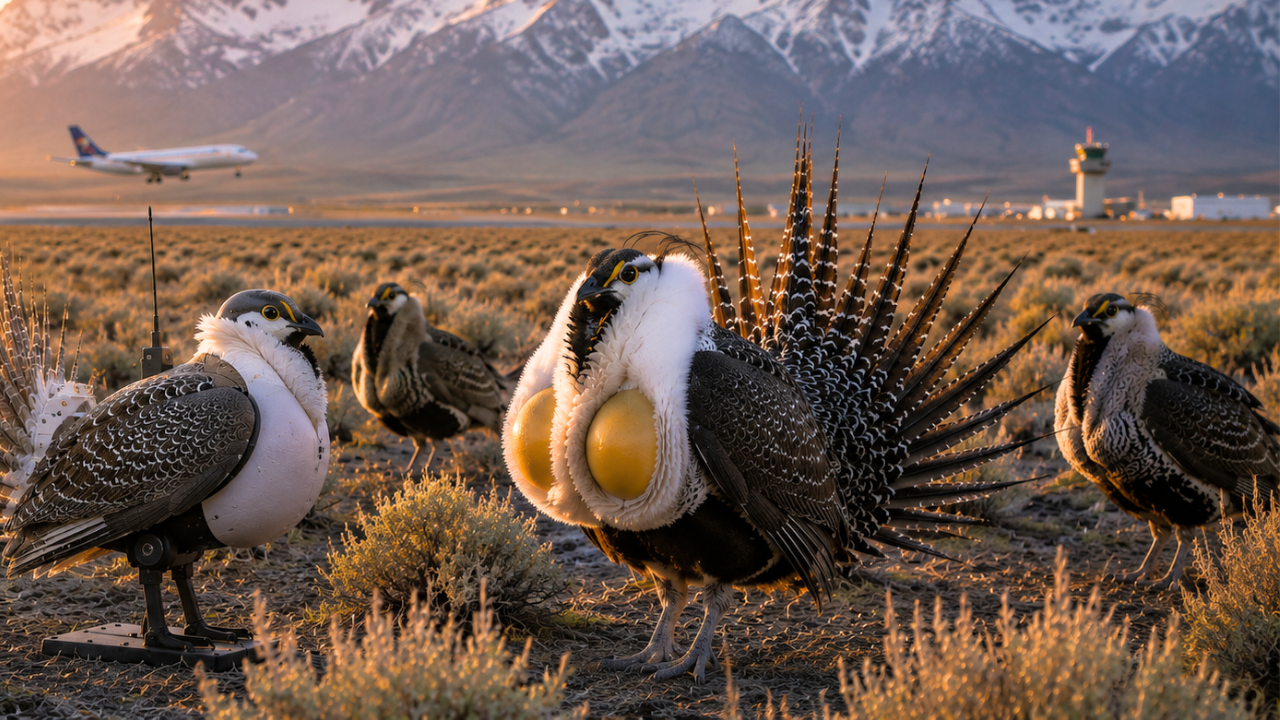
A High-Stakes Decoy Mission in the Tetons
Jackson Hole Airport sits directly inside Grand Teton National Park, creating a persistent, existential conflict between commercial aviation and wildlife preservation. To pull vulnerable greater sage-grouse away from the tarmac and dangerous flight paths, researchers have begun deploying biomimetic drone birds designed to mimic natural movement and lure the birds toward safer breeding grounds. This high-tech intervention highlights the desperate measures required when critical habitat overlaps with critical infrastructure. Grounding these efforts in actual animal behavior offers a rare, viable path toward keeping a declining species intact without shutting down vital regional transit.
The greater sage-grouse population across the American West has plummeted dramatically over the past several decades. Habitat fragmentation from urban spillover, oil and gas drilling, and expanding transportation hubs has disrupted the intricate social structures these birds rely on to survive. In Grand Teton National Park, the conflict is particularly stark. Jackson Hole Airport remains the only commercial airport located entirely within a U.S. National Park, putting high-speed aircraft on a direct collision course with a native species known for its fidelity to historical breeding sites.
The Science of Avian Deception
Sage-grouse return to the exact same breeding grounds, known as leks, every single spring. They do not easily adapt when an asphalt runway cuts across their historical mating territory. When noise, artificial lights, and low-flying jets invade a lek, the birds do not simply move down the road; they often fail to mate altogether or suffer high mortality rates from collisions and stress.
This stubborn territorial commitment forced wildlife biologists to get creative. Traditional methods of hazing birds away using loud noises, pyrotechnics, or manual human scaring often backfire. Sage-grouse either habituate to the noise or disperse into even more hazardous areas.
Biomimetic robotics changes that dynamic. Instead of using fear to push the birds away, researchers use custom-built robotic birds designed to pull them away using social cues.
How the Robotic Decoys Work
- Visual Mimicry: The drones match the size, silhouette, and feather coloration of female sage-grouse, tricking males into paying attention.
- Acoustic Signaling: Onboard audio systems play specific, low-frequency vocalizations that signal safety and mating readiness.
- Mechanical Flight Dynamics: Unlike standard quadcopters, which emit high-pitched electrical hums and look entirely alien, winged biomimetic aircraft emulate actual avian wing-flapping and gliding motions.
By placing these mechanical decoys on secure habitat reserves miles away from the airport runway, researchers can coax the male grouse away from the danger zone. Where the males go, females follow. Over successive seasons, the goal is to shift the population's core breeding activity out of the flight path entirely.
Why Technical Solutions Are Not a Cure-All
High-tech tools make for compelling headlines, but reliance on hardware alone carries serious risks. Engineering an artificial bird does not fix the fundamental issue: human infrastructure continues to encroach on wilderness.
Robotics are expensive. Battery life limits operational time during critical dawn hours when grouse are most active on the lek. Furthermore, wild predators such as eagles and coyotes quickly take notice of mechanical birds, sometimes destroying costly prototypes or learning to hunt near the artificial lures.
"A technological patch can buy a species time, but it cannot replace thousands of acres of intact, undisturbed sagebrush steppe."
If regulatory agencies view robotic lures as a permanent fix, it creates a dangerous precedent. It allows airport authorities and commercial developers to claim mitigation success without actually reducing human activity, flight frequencies, or physical expansion.
The Financial and Ecological Balance Sheet
Running biomimetic conservation programs requires consistent funding and precise inter-agency cooperation. The project in Grand Teton relies on a delicate matrix of public and private backing.
| Stakeholder Group | Primary Role | Core Objective |
|---|---|---|
| National Park Service | Land Management | Preserve native ecosystem integrity |
| Federal Aviation Administration | Air Traffic Safety | Prevent bird strikes and maintain flight schedules |
| Wildlife Robotics Engineers | Hardware Development | Refine wing mechanics and acoustic fidelity |
| Conservation Donors | Capital Funding | Direct action against regional extinction |
This grid of competing priorities means every flight hour for a drone bird must be justified. The FAA demands clear evidence that bird strike risks are dropping, while biologists monitor stress hormones in the wild population to ensure the decoys are not causing additional harm.
What Real Recovery Demands
Using mechanical decoys to save Wyoming's sage-grouse is a bold experiment in applied biology. It proves that human ingenuity can adapt to correct past ecological errors. Yet, the long-term survival of the species depends on what happens after the drone batteries run out.
Permanent protection of the sagebrush ecosystem, strict noise abatement policies during peak mating windows, and hard limits on airport expansion remain the fundamental pillars of recovery. The mechanical birds can show the sage-grouse where it is safe to go. Humans still have to keep those safe zones intact.