The desert does not care about your net worth. When you stand on the salt-crusted flats of northern Utah, the wind carries a silence so heavy it feels physical. For generations, the people living in the shadow of the Wasatch Range have looked out at this empty space and seen a sanctuary of quiet endurance.
Then came the data centers.
To the average consumer, the cloud is an invisible, ethereal concept. We upload our photos, stream our movies, and prompt our artificial intelligence models with the assumption that these thoughts exist in the ether. They do not. The cloud is made of concrete, copper, and an unimaginable amount of electricity. It is a physical footprint that requires land, massive power grids, and thousands of gallons of water to keep humming.
When celebrity investor Kevin O’Leary set his sights on Utah, he saw the perfect blank canvas for a monumental infrastructure project. He envisioned a data center facility so massive it would anchor the region’s technological future. It was a blueprint born in boardroom meetings, fueled by the insatiable demands of the AI boom.
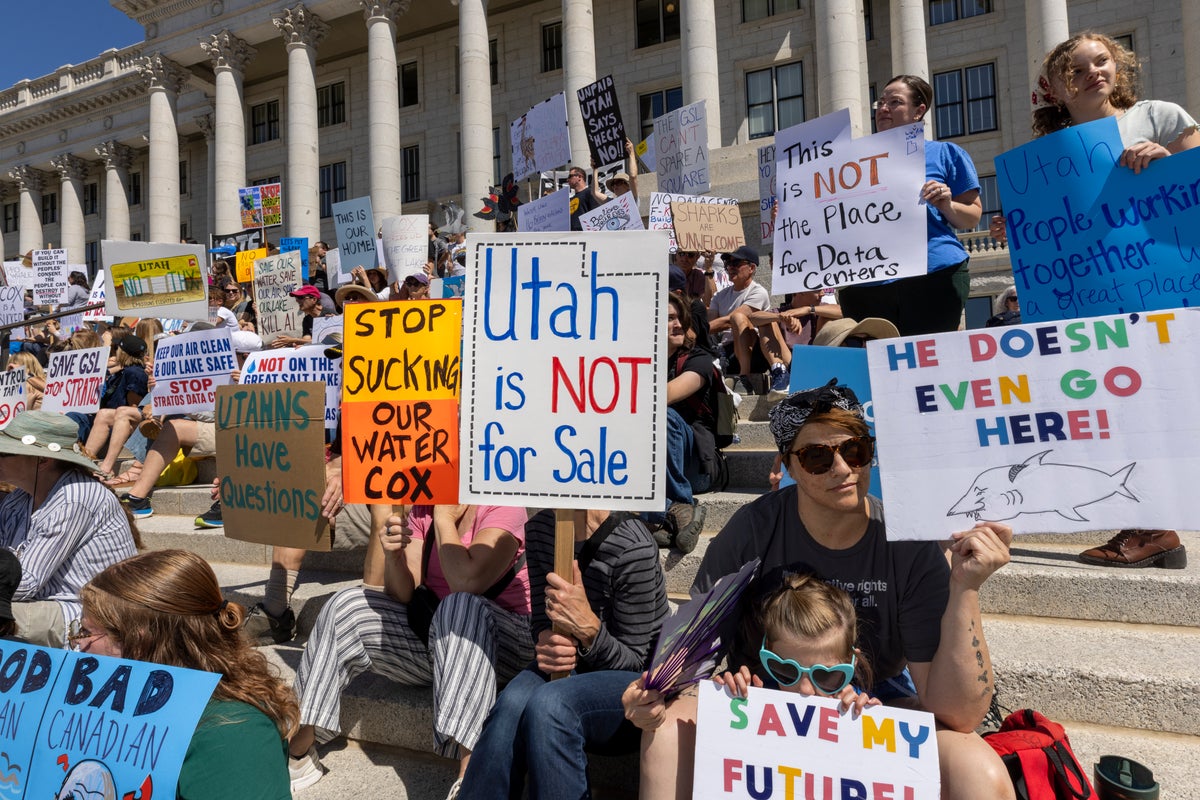
The locals saw something else entirely. They saw an existential threat to their skyline, their resources, and their way of life.
What followed was not just a standard zoning dispute. It became a proxy war between the unstoppable force of Silicon Valley ambition and the immovable object of local governance. By the time the dust settled, O’Leary’s grand vision was sliced squarely in half.
The Cost of a Digital Footprint
To understand why a billionaire suffered such a significant setback in a traditionally business-friendly state, you have to look at what these facilities actually demand from a community.
Think of a modern AI data center as a city that never sleeps, populated entirely by machines that generate immense heat. To keep thousands of high-performance graphics processing units from melting down, they require a constant, staggering supply of power. In many parts of the country, the sudden arrival of a large data center can consume as much electricity as hundreds of thousands of homes.
Utah lawmakers, watching the rapid expansion of tech infrastructure across neighboring states, began to grow uneasy. The state has long prided itself on economic growth, but the sheer scale of O’Leary’s proposed project forced a hard question: how much of the state’s future energy capacity should be sacrificed to power the global internet?
Consider the perspective of a local resident living near a proposed site. For forty years, your view has been open sky and rugged peaks. Suddenly, a windowless concrete monolith stretching across the horizon threatens to dominate the landscape. The hum of industrial cooling fans replaces the sound of the wind.
This tension bubbled to the surface in the legislative halls of Salt Lake City. Lawmakers were caught between two competing pressures. On one hand, rejecting tech investment entirely risks leaving a state behind in the modern economy. On the other hand, capitulating to every demands of billionaire developers risks bankrupting the state’s natural resources and straining the electrical grid to a breaking point.
The Turning Point in the Statehouse
The pushback was swift, calculated, and surprisingly unified. Utah’s political leaders did not outright ban the project, but they erected a wall of regulatory hurdles and resource allocations that made the original, gargantuan plan impossible to sustain.
Negotiations became a chess match. State officials scrutinized the projected power consumption metrics. They questioned the long-term strain on Rocky Mountain Power, the primary utility provider for the area. If a massive data center monopolizes the available energy grid, the cost of upgrading that infrastructure inevitably trickles down to everyday taxpayers in the form of higher monthly utility bills.
Faced with the reality that the state would not grant unbridled access to its power grid, O'Leary's team had to make a choice. They could walk away entirely, abandoning millions of dollars in preliminary development, or they could capitulate to the new reality.
They chose to cut the project in half.
The scaling down of the facility was a massive victory for local conservationists and skeptical lawmakers. It proved that despite the immense economic pressure exerted by big tech companies, local communities still retain the power to dictate the terms of their own growth. The reduction meant fewer server racks, a smaller physical footprint, and a significantly reduced demand on Utah’s energy grid.
A New Boundary for the Tech Boom
The halving of O’Leary’s project is a localized event with national implications. Across the United States, from the rural towns of Virginia to the deserts of Arizona, the story is repeating itself. The initial excitement surrounding the tech industry's expansion is giving way to a sober calculation of the physical costs.
We are moving past the era where technology companies are given a blank check to build wherever and however they please. The physical constraints of our world—the availability of water, the capacity of power lines, the limits of human patience—are reasserting themselves.
The scaled-back facility in Utah will still likely be built. It will still process millions of data points every second, contributing its small part to the global digital matrix. But it will stand as a monument to compromise rather than unchecked ambition.
When the sun sets over the Great Salt Lake, casting long shadows across the valley, the horizon remains largely as it has been for centuries. The mountains still dominate the view. The windowless concrete walls of the tech age will have to find a way to fit into the existing landscape, rather than rewriting it completely.