On a Tuesday evening in Queens, the air inside the Jackson Heights-Roosevelt Avenue station carries the familiar scent of charred meat from the street carts outside, mixed with the damp heat of early summer. People are rushing. They are avoiding eye contact, clutching plastic grocery bags, and calculating the exact minute they will finally get to sit down.
For years, this rush hour ritual felt entirely decoupled from the grand, marble-floored chambers of Washington or Albany. Politics was something that happened on television. It was an abstract argument between affluent people who wore better suits. If you enjoyed this piece, you should check out: this related article.
Then came the earthquake.
To understand why two sitting congressmen were just unseated in the June 2026 primaries, you cannot look at a spreadsheet of campaign contributions or poll data. You have to look at the grocery bill. You have to understand the deep, structural exhaustion of a city where a simple trip to the supermarket feels like a minor economic tragedy. For another look on this development, see the recent coverage from Reuters.
When Zohran Mamdani—a 34-year-old democratic socialist who used to work as a housing counselor helping families avoid foreclosure—stunned the political establishment by winning the mayoral race last year, skeptics called it an anomaly. They blamed low turnout. They called it a fluke born of a fractured Democratic primary.
This week proved them wrong. By endorsing and actively campaigning for a slate of unapologetic insurgents, Mamdani did something far more dangerous than winning an office. He proved that his political machinery could be exported.
Consider what happens when a political ecosystem shifts. For decades, the dominant strategy for New York Democrats was a calculated moderation. The prevailing wisdom dictated that you could speak about progressive values, but you had to remain fundamentally friendly to real estate developers, institutional donors, and the party apparatus. This kept the gears turning. It also left a massive, quiet segment of the population feeling utterly abandoned.
In the 10th Congressional District, which spans from the glass towers of lower Manhattan down into the brownstone blocks of Brooklyn, Dan Goldman represented that exact institutional legacy. He was an incumbent with deep pockets and the full backing of House Minority Leader Hakeem Jeffries. On paper, Goldman was safe.
But Brad Lander, the former city Comptroller who aligned himself with Mamdani's movement, focused the entire conversation on a single, agonizing reality: the sheer, unlivable cost of remaining a New Yorker. Lander pushed Goldman hard on his record, specifically highlighting a perceived reluctance to challenge the actions of the Israeli government in Gaza—a deeply emotional flashpoint for a fractured, grieving constituency.
When the votes were counted, the incumbent was gone.
Further north, the story repeated itself with an even more striking narrative arc. Adriano Espaillat, a towering figure in upper Manhattan and the Bronx, the first Dominican American elected to Congress, faced Darializa Avila Chevalier. She is 32 years old. She has never held public office. Her resume consists of working at a public defender’s office, helping victims of police brutality navigate a system designed to exhaust them.
Imagine trying to explain to an old-school political consultant that a young woman who helped organize pro-Palestinian protests at Columbia University could unseat the chair of the Congressional Hispanic Caucus. It sounds impossible. It defies the traditional math of endorsements and institutional loyalty.
Yet, Avila Chevalier won the Bronx neighborhoods by capturing a specific flavor of resentment that has been simmering for a generation. It is the feeling of being a footnote in your own neighborhood's success story. When neighborhoods gentrify, the original residents rarely feel celebrated; they feel hunted by rising rents.
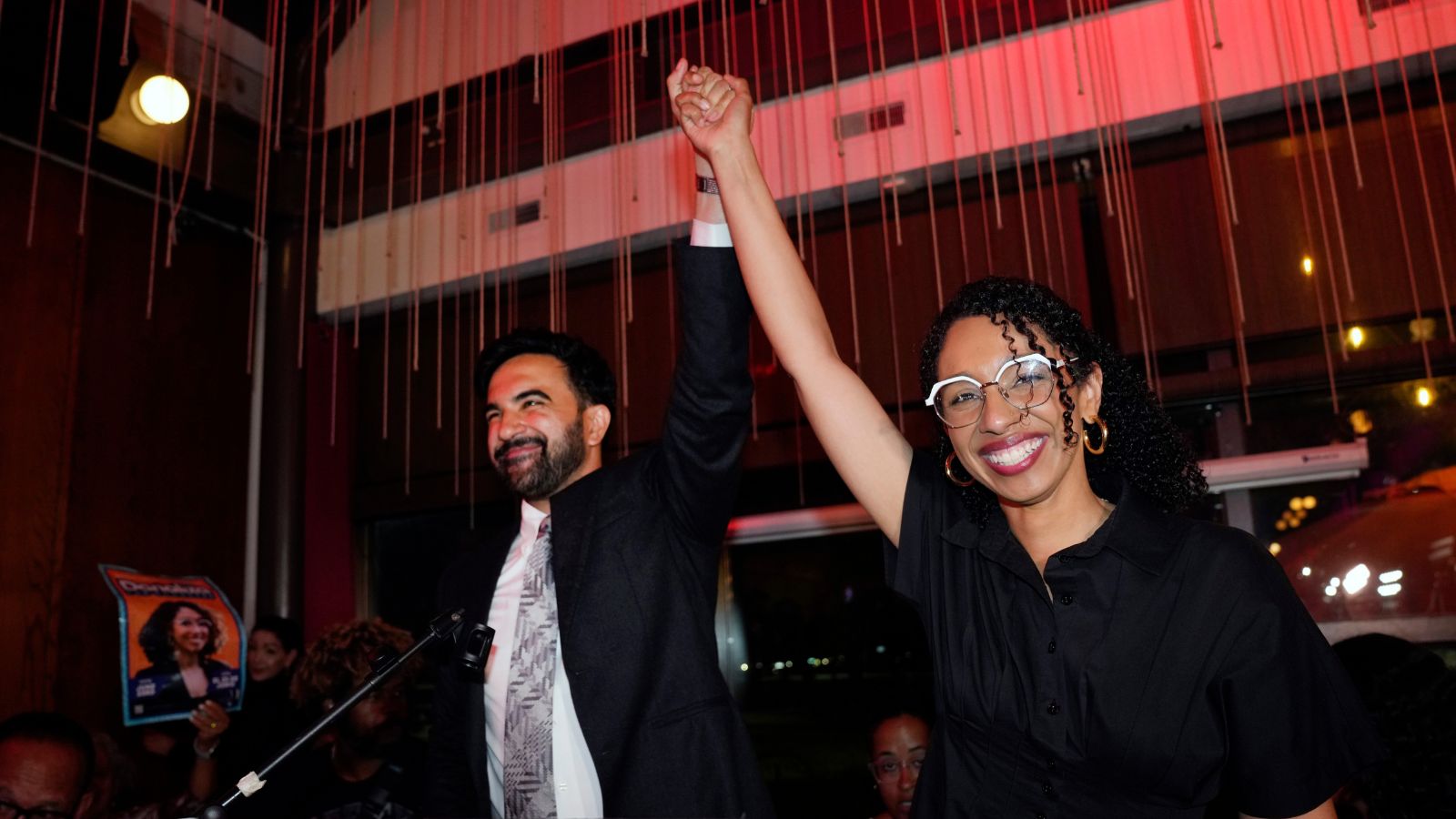
The third piece of the triad fell into place in a district covering pieces of Brooklyn and Queens. Nydia Velázquez, a retiring matriarch of New York politics, had handpicked her successor, Brooklyn Borough President Antonio Reynoso. It was supposed to be a seamless passing of the torch. Instead, Claire Valdez, a democratic socialist state Assembly member backed by Mamdani, broke the line.
The collective platform of these three winners is not subtle. They have promised to tax the ultra-wealthy to fund universal childcare. They have called for the abolition of Immigration and Customs Enforcement. They speak about the housing crisis not as a supply-and-demand problem to be solved with tax incentives for developers, but as a human rights violation occurring in real time.
Establishment figures are already trying to minimize the damage. Washington leadership released statements suggesting that a few localized primaries do not rewrite the identity of the national party. They talk about the danger of alienating moderate swing voters in midwestern swing states.
But that argument misses the point of what is happening on the ground in New York. This is a battle over the definition of security.
To a moderate strategist, security means protecting the status quo and ensuring predictable economic growth. To a person waiting on the platform at Jackson Heights, security means knowing that a single medical emergency or a 10 percent rent hike won’t force them to pack their lives into cardboard boxes and leave the city they built.
Mamdani’s strategy is a throwback to what he calls "sewer socialism"—a reference to the early 20th-century mayors of Milwaukee who won elections not through soaring ideological rhetoric, but by building functioning public infrastructure, filling potholes, and proving that municipal government could work for regular people. During his first six months in Room 9 at City Hall, Mamdani has obsessed over the logistics of affordable housing, launching initiatives to slash the bureaucracy that keeps families waiting for months on housing lottery lists.
By pairing that hyper-local focus with a fierce, global anti-war stance, he has created a political language that bridges the gap between the radical student and the working-class parent.
The establishment didn't just lose three seats this week. They lost the argument that their caution is the only way to govern. The old guard thought the city belonged to the people who owned the buildings. The results of this primary suggest it might finally belong to the people who sweep the floors.