The Knesset has advanced a preliminary bill to establish an independent state commission of inquiry into the systemic intelligence and security failures of October 7. While the vote represents a significant legislative step, the political maneuvering behind the scenes suggests the fight over who controls the narrative of that day is only just beginning. For months, the public has demanded a rigorous, transparent investigation. What they are getting instead is a fierce legislative tug-of-war that could determine whether the final probe has real teeth or serves as a political shield for elected officials.
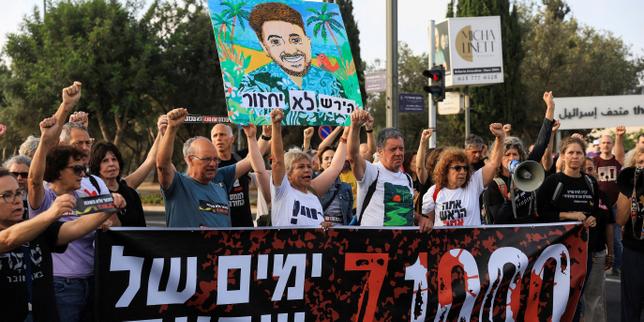
The passage of the bill in its first reading marks a crack in the political coalition's resistance to a formal state inquiry. Prime Minister Benjamin Netanyahu has long maintained that any comprehensive investigation must wait until the active military campaigns conclude. However, mounting pressure from survivors' families, military reservists, and the defense establishment has made total stonewalling politically unsustainable.
The Structural Divide Between Truth and Political Survival
To understand why this legislative step is causing such friction, one has to look at how commissions of inquiry are formed in Israel. A standard State Commission of Inquiry is the most powerful investigative body available under Israeli law. By default, its members are appointed by the President of the Supreme Court, ensuring a high degree of judicial independence.
This independence is precisely what makes the current political leadership deeply uncomfortable. The judiciary and the current government have been locked in a bitter philosophical and political conflict for years. Placing the definitive investigation of Israel’s greatest security failure entirely in the hands of the high court is a prospect the ruling coalition views with immense skepticism.
Consequently, the current legislative battle is not about whether an inquiry will happen. It is about who picks the inquisitors.
Proponents of the current bill argue that only a completely independent body can restore public trust. The defense establishment, including senior commanders within the Israel Defense Forces (IDF) and the Shin Bet, largely favor a clean, independent probe. They have already conducted internal investigations, many of which acknowledge catastrophic operational errors. They are ready to face the music, provided the political echelon faces it alongside them.
Conversely, alternative proposals floated within the coalition aim to alter the selection process. Some lawmakers have suggested a hybrid committee, where political appointees or public figures selected by the government would sit alongside judicial representatives.
This is not a minor bureaucratic detail. It changes everything. If the government influences the panel’s composition, the eventual report risks being viewed as a whitewash by half the country. If the Supreme Court controls it, the political right will likely dismiss its findings as a politicized hit job.
Precedents of Blame and the Ghost of Agranat
Israel has been here before. The current standoff mirrors the political crisis that followed the 1973 Yom Kippur War.
When the Agranat Commission was formed to investigate the intelligence failures of that conflict, it focused heavily on the military echelon. It recommended the dismissal of Chief of Staff David Elazar and other top intelligence officers. Yet, it largely cleared Prime Minister Golda Meir and Defense Minister Moshe Dayan of direct responsibility, ruling that their reliance on military assessments was reasonable.
The public was furious. The perception that the generals took the fall while the politicians escaped accountability led to massive protests, ultimately forcing Meir’s resignation despite the official report's leniency.
Historical Comparison of Israeli Inquiry Commissions
+-------------------+-----------------------+-----------------------------+
| Commission        | Event Investigated    | Primary Consequence         |
+-------------------+-----------------------+-----------------------------+
| Agranat (1974)    | Yom Kippur War        | Military leadership ouster;  |
|                   |                       | Public forced Meir to resign|
+-------------------+-----------------------+-----------------------------+
| Kahan (1982)      | Sabra & Shatila       | Ariel Sharon removed as     |
|                   |                       | Defense Minister            |
+-------------------+-----------------------+-----------------------------+
| Winograd (2006)   | Second Lebanon War    | Highly critical of Olmert;  |
|                   |                       | Catalyzed systemic reforms  |
+-------------------+-----------------------+-----------------------------+
Today’s political actors are acutely aware of this history. The political echelon knows that a truly independent commission investigating October 7 will not limit its scope to tactical military blunders. It will examine the broader, decade-long strategy of containment, the financial flows permitted into Gaza, and the systematic downgrading of Hamas’s operational capabilities in the minds of policymakers.
The defense establishment faces its own risks. A formal inquiry will permanently etch the names of specific commanders into history as responsible for the collapse of the southern border defenses. The IDF has already seen high-profile resignations, including the head of Military Intelligence. A state commission will codify these failures into law, meaning the institutional pride of the military is on the line.
The Fragile Path to Becoming Law
Passing a bill in its first reading is a far cry from enacting a law. The legislation must now navigate the committee process, where it can be delayed, amended, or stripped of its core powers.
The strategy from opponents of an immediate, independent inquiry is likely to be one of attrition. By dragging out the committee debate, adding clauses that alter the selection mechanism, or conditioning the commission's launch on the resolution of ongoing military operations, the bill can be neutralized without the need for a politically damaging veto.
"The issue is time. The longer the delay, the more memory fades, documents get compartmentalized, and the public's focus shifts to economic survival and new security threats."
Furthermore, the ongoing conflict provides a legitimate logistical argument against an immediate probe. Senior commanders cannot easily spend days testifying before a panel while simultaneously managing complex combat operations across multiple fronts. This practical reality serves as a convenient shield for those who wish to defer accountability indefinitely.
Public Trust as a National Security Metric
The debate over the inquiry highlights a deeper crisis within Israel that goes beyond intelligence failures and military doctrine. It strikes at the heart of public trust in state institutions.
For decades, the unwritten social contract in Israel was straightforward. Citizens sent their children to a mandatory draft, paid high taxes, and accepted constant security restrictions. In return, the state provided a competent defense apparatus that would ensure their basic physical safety. October 7 shattered that contract.
A credible, uncompromising investigation is the only mechanism available to begin rebuilding that trust. If the public perceives the eventual inquiry as a rigged game designed to protect careers rather than uncover institutional rot, the long-term societal damage will be severe. The willingness of citizens to sacrifice for the state depends entirely on their belief that the leadership is competent and accountable.
The Knesset vote is a symptom of a society demanding answers, but the machinery of political self-preservation is already working to blunt the impact. The coming weeks in the parliamentary committees will reveal whether Israel is ready to look into the mirror honestly, or if the truth will be sacrificed to maintain the stability of the political order. The real struggle is not against external adversaries; it is the internal fight to prove that accountability still exists within the state's foundations.