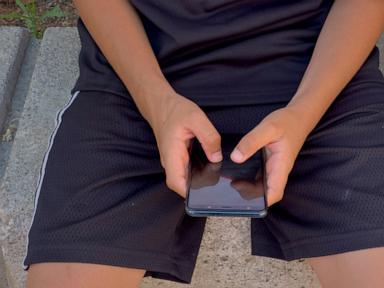
Governments have officially lost their patience with big tech. British Prime Minister Keir Starmer just announced a sweeping ban on social media for children under 16. The policy cuts off access to massive platforms like TikTok, YouTube, Snapchat, Instagram, Facebook, and X. It is part of a frantic global race to save teenagers from algorithmic addiction, but honestly, most of these laws are going to crash straight into reality.
Parents are exhausted. Tech companies have ignored warnings for a decade. So, a heavy-handed legal crackdown feels like a massive relief. The UK public consultation pulled in over 116,000 responses, and 90% of parents actively demanded this under-16 block. But passing a law is the easy part. Enforcing it without building an invasive, privacy-destroying digital surveillance state is almost impossible.
The UK is not the first to try this, and it won't be the last. A handful of nations are rolling out completely different strategies to police the internet for minors, ranging from parental link requirements to hard data curfews.
The Global Crackdown on Teenage Scrolling
The UK model borrows its blueprint directly from Australia, which passed its own total ban for under-16s. But Starmer is pushing the restrictions even further. The British law, set to take full effect in early 2027, goes beyond user-to-user social apps. It bans live-streaming access and stranger-to-child messaging on massive gaming platforms. It also blocks under-18s from using AI "romantic companion" chatbots that simulate intimate or sexual relationships.
Other nations are taking entirely different paths to solve the exact same problem.
- Australia: The original pioneer of the hard cutoff. Tech platforms face fines up to 49.5 million Australian dollars ($35 million) if they fail to actively purge under-16 accounts. Since the law passed, platforms have shut down nearly 5 million accounts identified as belonging to kids.
- Malaysia and Indonesia: Both Southeast Asian nations executed rapid policy pivots. Malaysia forces any platform with more than 8 million users to implement strict age checks and block under-16s or face fines up to 2.5 million dollars. Indonesia's ban applies to platforms exposing kids to addictive loops, gambling, or cyberbullying, explicitly targeting apps like TikTok and Roblox.
- Brazil: Instead of an outright ban, Brazil focuses on structural control. A law requires under-16s to link accounts directly to a legal guardian. It also bans companies from using addictive engineering tricks like infinite scrolling and autoplay on minor accounts.
- France: The country requires parental consent for anyone under 15, though enforcement has been an absolute mess. President Emmanuel Macron is now pushing to transition this into a full, legally binding social media block for under-15s.
The Age Verification Nightmare
Here is the central problem that politicians refuse to acknowledge: you cannot ban kids from an app unless you verify the identity of every single adult using it.
If an app just uses an "I am over 16" checkbox, kids will lie. They always have. To make a ban stick, platforms have to use facial analysis technology, credit card checks, or government-issued digital IDs. The UK government claims that adults with accounts older than 16 years or those with linked credit cards won't face constant checks. But for everyone else, accessing a public forum will soon require showing papers to a Silicon Valley tech giant.
The Open Rights Group and privacy advocates are rightfully terrified of this. Turning social platforms into massive clearinghouses for biometric data and national identity documents creates an unprecedented security risk.
Then there is the technical workaround factor. Kids understand technology better than the politicians writing these bills. Virtual Private Networks (VPNs) can spoof a device's location to a country without bans in three clicks. Sideloading unapproved apps or moving to anonymous, decentralized alternative forums is incredibly simple.
Why One Country is Actually Succeeding
While Western democracies struggle with age verification logistics and free speech lawsuits, China has successfully restricted youth screen time for years. But their success relies on an infrastructure that Western nations cannot replicate.
China uses a mandatory, system-level "Minor Mode" backed by the Cyberspace Administration of China. It is built directly into the operating system of smartphones and enforced via real-name registration linked to national ID numbers.
The rules are brutally efficient. Young teens face an automatic 40-minute daily limit on apps. Furthermore, internet access for minors is completely blacked out between 10 pm and 6 am.
This works because the Chinese government maintains direct oversight of telecom networks and hardware manufacturers. In the West, the US Embassy in London has already issued warnings that broad social media bans threaten free speech protections. Silicon Valley giants like Meta and Alphabet are preparing massive legal challenges, arguing that blanket bans isolate vulnerable teens from communities and push them toward unmonitored, truly dangerous dark-web spaces.
Actionable Steps for Parents Right Now
You cannot wait until 2027 for a government entity or an automated system to secure your kitchen table. If you want to reduce screen addiction today, you have to execute tactical changes on the devices you own.
- Enforce Router-Level Guardrails: Do not try to police individual apps on a teenager's phone. Use your home Wi-Fi router settings (or services like NextDNS and OpenDNS) to cut off access to social media domains entirely at 9 pm. If the network does not serve the data, the app cannot refresh.
- Deploy Hardware-Level Minor Modes: Utilize Apple Screen Time or Google Family Link to lock down app installation privileges. Set the age ratings strictly and require a passcode entry for any app download. This completely stops kids from downloading VPNs to bypass local app store restrictions.
- Audit the Exceptions: The upcoming UK ban deliberately exempts messaging utilities like WhatsApp and Signal. Be aware that these apps have evolved far beyond text. Group chats on WhatsApp frequently serve as the primary hub for the exact same cyberbullying and media sharing found on public timelines.