The sirens in Manama didn't get the memo about the peace deal. Just hours after the United States and Iran reportedly shook hands on a two-week ceasefire, Bahrain’s missile alert systems screamed to life, sending a clear message to the world. Paper agreements don't stop rockets. When you’re living in a region where proxy forces, state actors, and nervous radar operators share the same tight airspace, a "truce" is often just a fancy word for a re-load.
I’ve watched these cycles for years. You get the high-level diplomatic handshake in a neutral European city or via a back-channel Swiss telegram, and everyone breathes a sigh of relief. Then, the reality of the ground war hits. The Bahraini Ministry of Interior later clarified the alert, but the damage was done. The panic was real. This incident highlights exactly why the Gulf remains on a knife-edge despite what the State Department might claim in a press briefing. Also making waves recently: Strategic Asymmetry and the Joint Comprehensive Plan of Action Framework.
The Fragile Reality of a Two Week Pause
A two-week ceasefire sounds great on a teleprompter. It gives humanitarian aid a window. It lets civilians sleep. But in the context of the current war involving U.S. interests and Iranian influence, fourteen days is barely enough time to move a battery of drones.
The deal reached between Washington and Tehran was supposed to de-escalate the broader regional spillover. It didn't. Bahrain, which houses the U.S. Navy’s 5th Fleet, is a massive target. It's an island nation that effectively functions as a stationary aircraft carrier for Western interests. When those sirens went off, they weren't just a local glitch. They represented the collective anxiety of a region that doesn't trust the ink on the contract. Further details into this topic are detailed by The Washington Post.
Ceasefires fail because of the "proxy problem." Even if Tehran tells its core commanders to stand down, do the decentralized militias in Yemen, Iraq, or Syria listen? Usually, they don't. Or they "misinterpret" the order. Or a radar operator in Bahrain sees a flock of birds or a scheduled drill and triggers the alarm because, frankly, being wrong is better than being dead.
Why Bahrain is Always the Canary in the Coal Mine
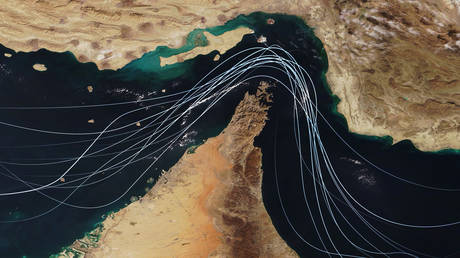
Bahrain occupies a precarious spot. It’s tiny. It’s sits right across the water from Iran. It has a complex internal political dynamic and a very loud, very visible American military presence. If a full-scale conflict breaks out, Bahrain isn't just a spectator. It's the front line.
The missile alert alarm wasn't just a technical event. It was a stress test.
- Response Times: The gap between a launch and an impact in the Persian Gulf is measured in seconds, not minutes.
- Public Panic: Years of regional tension have left the local population with zero margin for error.
- The 5th Fleet Factor: Any alert in Bahrain immediately puts the U.S. military on high alert, creating a feedback loop that can lead to accidental escalation.
We’ve seen this before. During the "Tanker War" of the 1980s or the more recent drone strikes on Saudi infrastructure, the warning systems are often the first things to fail—or the first things to tell the truth. While diplomats talk about "de-escalation," the sensors are looking for incoming heat signatures. Sensors don't care about diplomacy.
The Communications Gap Between Tehran and the Front Lines
One major reason these alerts happen right after a ceasefire announcement is the massive lag in communication. Command and control in the Middle East isn't a straight line. It's a web.
When the U.S. and Iran agree to a pause, that information has to trickle down through various layers of command. Sometimes a local commander wants to get one last shot in before the clock hits zero. Sometimes a "technical error" is actually a deliberate provocation by a faction that hates the idea of peace.
The timing here is suspicious. Hours after the deal? That’s exactly when tensions are highest. Everyone is watching the sky, waiting for the other side to cheat. In that environment, every blip on a screen looks like a cruise missile.
The Toll of False Alarms on Regional Stability
You can only cry wolf so many times before people stop running for the shelters. But in Bahrain, you can't afford to ignore the siren. This creates a state of permanent "combat fatigue" for the civilian population.
It also hurts the credibility of the ceasefire itself. If the alarm goes off, the average person assumes the deal is dead. They start hoarding supplies. They stop going to work. The economic engine of the Gulf, which relies on the "safe" transit of oil and goods, stutters.
The U.S. and Iran might have agreed on a pause, but they haven't agreed on the "why" or the "how." Without a shared mechanism to verify who is firing what, a ceasefire is just a suggestion.
What This Means for the Next Ten Days
If you're looking for signs that this war is actually ending, don't look at the press releases from the UN. Look at the radar.
The Bahraini alert proves that the "ground truth" is still incredibly volatile. The next few days will be a game of chicken. If another alarm sounds—or worse, if something actually hits—the two-week window will slam shut before the first week is even over.
Security experts in the region are already saying the quiet part out loud. They don't believe the ceasefire will hold. They're preparing for the "after."
Stay skeptical of the headlines. When a superpower and a regional power claim they’ve found peace, check the sirens. If they’re still screaming, the war hasn't moved an inch. Keep your emergency bags packed and your eyes on the official channels, but don't assume the "agreement" has changed the reality of the threats in the sky. Verify every "all clear" twice. The silence is often more dangerous than the noise.
Check your local embassy updates if you're in the region. Don't rely on social media rumors during an active alert. Follow the established protocols for your specific district in Manama or the surrounding areas immediately.
Wait for the official confirmation from the National Emergency Management and then wait another hour. History shows that the second wave is usually what catches people off guard. Be smart. Stay frosty.