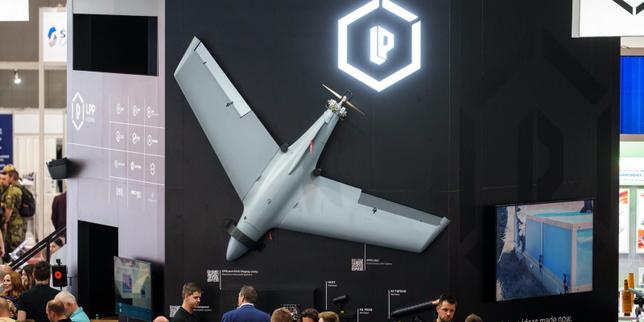
A young lieutenant sits in the dim, blue-lit glow of a combat information center, sweat prickling at his neck. On his screen, a jagged green icon flickers. It is an unidentified drone, closing the distance at four hundred knots. He needs to know what the frigate five miles to his port side sees. He taps a command to sync their sensor data.
Nothing happens.
The two ships are allies. They fly the same flags, share the same mission, and their crews eat the same salt-crusted rations. But their computers are strangers. One ship speaks a dialect of digital code owned by a contractor in Marseille; the other runs on a proprietary locked system from a firm in Arlington. They are two of the most sophisticated weapons ever built, yet they are as useless to one another as two people screaming in different languages across a storm-tossed sea.
This is the wall Admiral Pierre Vandier warned us about. It isn't a wall of stone or steel. It is a wall of ego, closed software, and the dangerous delusion that we can win tomorrow’s wars with yesterday’s isolated tech.
The Architect of a Digital Tower of Babel
For decades, military hardware was defined by the physical. You bought a tank, a jet, or a destroyer, and that was the "unit." It was a discrete object. If it had a radio that could tune to the right frequency, it was "connected." But the ocean has changed. The sky has changed. We no longer fight with units; we fight with webs.
Admiral Vandier, the former Chief of Staff of the French Navy, looked at the current trajectory of Western defense and saw a looming disaster. He didn't see a lack of bravery or a lack of funding. He saw a lack of "openness." In the rigid world of defense procurement, "proprietary" is a polite word for a hostage situation. When a company builds a combat system that cannot talk to any other system without a specialized, multimillion-dollar bridge, they aren't just protecting their intellectual property. They are active participants in the fragmentation of our collective security.
Think of it like the early days of the railroad. If every province built tracks with a different width, the train would have to stop, unload, and reload every time it crossed a border. It is inefficient. It is slow. In a world of hypersonic missiles, slow is just another word for dead.
The Invisible Ghost in the Machine
We often talk about "interoperability" as if it is a boring box to check on a spreadsheet. It isn't. It is the difference between a fleet acting as a single, multi-headed organism and a group of lonely targets waiting to be picked off.
Consider a hypothetical scenario in the Mediterranean. A swarm of low-cost, expendable drones is launched from a shoreline. No single ship has enough interceptors to stop them all. In a standardized, open system, the ships act like a cloud. The radar on a small patrol boat detects the threat; the processing power on a distant carrier calculates the trajectory; and the missile is fired from a destroyer that hasn't even seen the target yet.
Data flows like water. It finds the path of least resistance.
But today, that data hits a dam. To get a French sensor to "talk" to a German effector or an American cloud network, engineers often have to write thousands of lines of custom "glue code." By the time the bridge is built, the conflict might already be over. We are currently building "Black Box" navies. We buy a ship, and we aren't allowed to see the source code. We aren't allowed to plug in a new sensor unless we pay the original manufacturer a king's ransom to permit it.
Vandier’s argument is that this isn't just a budget issue. It is a sovereign one. If a nation cannot modify its own weapons to meet a new threat because a private company holds the keys to the software, does that nation truly own its defense?
The High Cost of the Golden Handcuffs
The tragedy is that the technology to fix this already exists. In the civilian world, we take it for granted. Your smartphone doesn't care if your router was made by Cisco, TP-Link, or an obscure startup. They speak the same language: Internet Protocol. They are "open."
In defense, we have done the opposite. We have incentivized "closed" ecosystems.
Defense giants argue that proprietary systems are more secure. They claim that "open" means "vulnerable." This is a convenient fiction. In reality, some of the most secure systems on the planet—the ones that run global banking and nuclear research—are built on open-source foundations. Security comes from the strength of the encryption and the rigor of the architecture, not from hiding the blueprints in a basement.
When we build a closed system, we are betting that the original designer was perfect. We are betting they anticipated every move the enemy will make for the next thirty years. That is a losing bet. War is the ultimate environment of "unanticipated moves." If you can't adapt your software in weeks—or days—you have already lost.
The Human Toll of Digital Friction
We must return to the lieutenant in the blue-lit room. He doesn't care about "market share" or "proprietary standards." He cares about the red dot on his screen.
When systems are closed, the "cognitive load" on the operator becomes unbearable. Instead of making decisions about tactics and ethics, the human being is forced to act as the manual bridge between two incompatible machines. He has to read a coordinate off one screen and type it into another. He has to interpret a symbol on a map that doesn't match the symbol on his wingman’s map.
Every second he spends translating between two machines is a second he isn't spending on the mission. Digital friction kills. It creates a fog of war that is entirely of our own making. We are essentially sending our soldiers into a high-tech firefight while forcing them to wear blindfolds that only let them see in one direction.
The Admiral’s warning is clear: we are heading for a wall. If we continue to build "boutique" systems—beautiful, expensive, and isolated—we will find ourselves outpaced by adversaries who don't care about proprietary profits. Our enemies are looking for "good enough" systems that are mass-produced and infinitely networked.
Shattering the Black Box
The shift required is psychological more than it is technological. It requires military leaders to demand "plug-and-play" capability as a non-negotiable requirement. It requires politicians to tell defense contractors that the era of the "Black Box" is over.
We need a "Common Operating Environment."
This doesn't mean every country uses the same equipment. Far from it. It means every country uses equipment that adheres to a universal set of rules. It means a Swedish drone can feed data to a Spanish frigate, which then guides a Polish missile. It means the software is decoupled from the hardware.
If the radar breaks, you should be able to swap it for a different model without rewriting the entire brain of the ship. If a new AI algorithm is developed to identify enemy submarines, you should be able to upload it to the entire fleet overnight, like a smartphone update, rather than waiting three years for a "mid-life refit."
This is the "standardization" Vandier calls for. It sounds dry. It sounds like a committee meeting. But in reality, it is the only way to maintain the "mass" necessary to win. We cannot afford to build 500 different types of specialized ships. We can, however, build 500 different platforms that all share the same digital nervous system.
The Horizon is Not Empty
The sun sets over the Atlantic, casting long, orange shadows across the deck of a modern destroyer. It looks invincible. It has the finest steel, the most powerful engines, and the bravest crew. But beneath the surface, in the wiring and the code, there is a fracture.
If we don't fix the language of our machines, the bravest crews in the world will find themselves silenced by a "File Format Not Supported" error while the horizon begins to burn.
The wall is coming. We can either build the hammers to break it down now, or we can wait to hit it at full speed.
The choice isn't between this brand or that brand. It is between a collection of expensive islands and a single, unbreakable continent of defense. We have spent centuries perfecting the art of the shield and the sword. It would be a bitter irony if we lost the next great conflict simply because we couldn't agree on how to plug them in.