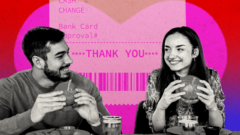
Let's skip the polite lies. First dates are essentially romantic job interviews with appetizers, and the absolute worst part happens when the check hits the table. That sudden, suffocating silence where both people stare at a slip of paper like it's a live grenade.
We've all heard the horror stories. There's the infamous viral tale of a guy who literally grabbed the a la carte menu and hid it from his date, forcing her to order from a cheap prix fixe menu he chose. It sounds absurd, but it highlights a massive, growing tension in modern dating. People are broke, dating is expensive, and old-school rules are crashing hard into modern financial realities.
If you came here looking for a simple, universally accepted answer on who should pay on the first date, here it is. The person who initiated the date should pay. It's that simple. If you ask someone out, you are the host. Hosts don't make their guests pay for dinner.
But while that rule works perfectly on paper, real life is messy. Gender expectations, income gaps, and pure awkwardness mess up the equation every single day. Here is what is actually happening at the dinner table, why old dating rules are broken, and how to handle the bill without destroying a potential relationship.
Why the Old Rules Do Not Work Anymore
Dating has fundamentally changed, but our brains are still catching up to our grandparents' era. Decades ago, the rule was absolute. Men paid. Why? Because women legally and economically couldn't. Until the Equal Credit Opportunity Act of 1974, a woman couldn't even get a credit card without a male co-signer. Men paid because they held all the financial power.
Today, the economic landscape looks entirely different. Women frequently out-earn their male peers, especially in major cities. Yet, the expectation for men to foot the bill remains stubbornly alive.
According to a comprehensive study by Pew Research Center, roughly 63% of Americans still believe men should pay on a first date. It's a bizarre double standard. We want progressive values in our daily lives, but we still crave traditional chivalry when the shrimp cocktail arrives.
This financial friction creates immense resentment. Men feel used as cash machines for a free meal. Women feel insulted if a man expects something in return for a twenty-dollar pasta dish. It's a bad system for everyone involved.
The Cheap Tricks People Play
When rules are vague, people get weird. The story of the man hiding the a la carte menu is just the tip of the iceberg. Financial masking and cheap dating tricks are at an all-time high.
Some people actively choose expensive restaurants to test their date's financial status, expecting the other person to cover it. Others do the classic bathroom escape when the bill arrives.
"I once had a date order three rounds of cocktails, a full steak dinner, and then suddenly remember he left his wallet in his car," says Sarah Miller, a 28-year-old graphic designer from Chicago. "He walked out to the parking lot and never came back. I paid the $180 bill alone."
These aren't just funny bad-date stories. They're symptoms of a dating culture that treats money as a game of chicken. When inflation makes a basic night out cost upwards of $100, people start playing defense. They protect their bank accounts at the expense of human connection.
The Income Gap Dilemma
What happens when one person makes $45,000 a year and the other makes $200,000? This is where the host pays rule gets tricky.
If the high earner asks the low earner out to a Michelin-starred restaurant, expecting a 50-50 split is financial cruelty. A single dinner shouldn't wipe out someone's weekly grocery budget.
If you are the higher earner and you suggest an expensive spot, you pay. No exceptions. If you want to test the waters without flashing your cash or straining your date's wallet, keep the first date cheap.
Coffee dates get a lot of hate online. People call them low-effort. Honestly, they are a genius filtering mechanism. A $6 latte lets you see if you actually like talking to the person before you invest serious capital into a three-course meal.
How To Navigate The Check Drop Safely
You need a strategy for when the bill arrives. Winging it leads to stuttering and fake purse-digging. Here is the exact playbook you should use based on who you are.
If You Initiated the Date
Pick up the bill immediately. Don't hesitate. Don't look around the room. When the waiter drops the check, put your card down.
If your date offers to split, you can say something casual. "I've got this one, you can get the next one if you want." This does two things. It removes the pressure and subtly signals that you'd like a second date.
If You Were Invited Out
Always assume you might have to pay. Never leave the house without enough money to cover the entire bill.
When the check comes, make a genuine offer to split. Reaching for your wallet shouldn't be a theatrical performance. Do it naturally. If they insist on paying, thank them sincerely. Don't fight them for the receipt.
The Standard Split
If the date was a mutual agreement with no clear initiator, splitting 50-50 is the safest modern default. It keeps the playing field level. It also removes any unsaid expectations or perceived obligations.
Reading the Signals
Money talk is a massive indicator of character. How someone acts when the bill arrives tells you exactly how they handle power, fairness, and stress.
Watch out for red flags. If your date watches you pay without saying thank you, that is a bad sign. It shows entitlement.
On the flip side, if your date aggressively demands to pay everything and gets angry if you offer to chip in, that points to control issues. You want a partner, not a financial dictator.
Your Immediate Next Steps
Stop overthinking the dinner bill and start setting boundaries before you even meet up.
First, control the venue. If someone invites you out to a place you can't afford, speak up early. Say something like, "That place looks amazing, but it's a bit outside my budget right now. Can we try this spot instead?" A good date will appreciate your honesty.
Second, establish clarity early. If you prefer splitting dates to keep things neutral, mention it casually before the check arrives. A quick "Hey, I'm a fan of splitting the first date, just so we're both comfortable" saves an hour of anxiety at the end of the night.
Dating should be about finding a human connection, not managing an awkward financial transaction. Pick venues you can afford, communicate clearly, and stop using cheap tricks to avoid paying your fair share. If you ask for the date, bring your wallet and prepare to use it.