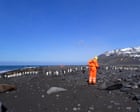
The death of more than 13,000 seal pups on a remote Australian island represents a critical shift in the transmission dynamics of Highly Pathogenic Avian Influenza (HPAI) H5N1. This event is not an isolated wildlife tragedy; it is a structural failure of biological barriers. When a pathogen engineered for avian respiratory systems achieves mass mortality in a mammalian population, the underlying transmission vectors, environmental variables, and host vulnerabilities require systemic quantification. Understanding this phenomenon requires analyzing the specific mechanics of viral spillover, population density bottlenecks, and the cascading macroeconomic and ecological implications of marine mammal depletion.
The Triad of Mammalian Spillover Mechanics
The cross-species transmission of HPAI H5N1 from wild bird reservoirs to pinnipeds (seals and sea lions) operates via a defined three-part kinetic chain: viral shedding density, environmental persistence, and host behavioral vulnerability.
[Avian Reservoir: High Shedding Density]
               │
               ▼
[Environmental Matrix: Cold, Moist Substrate]
               │
               ▼
[Mammalian Host: Mucosal Contact / Ingestion]
1. Viral Shedding Density and Interface Proximity
Wild migratory birds, particularly waterfowl and seabirds, act as high-titer reservoirs for H5N1. These birds shed the virus in high concentrations through cloacal and oral secretions. On remote islands, geography forces an artificial overlap between avian nesting grounds and pinniped rookeries. This spatial compression creates a high-density viral interface where horizontal transmission becomes inevitable.
2. Substrate and Environmental Persistence
The survival of H5N1 virions outside a host depends heavily on ambient conditions. Low temperatures, high humidity, and protection from ultraviolet (UV) radiation prolong viral infectivity in water, mud, and feces. Remote Australian islands provide an ideal ambient matrix for viral preservation. Pinniped pups, which spend their initial weeks exclusively on land, are continuously exposed to these contaminated substrates.
3. Host Behavioral Vulnerabilities
Pinniped rookeries feature high population densities, with individuals packed together closely. Pups exhibit high levels of social interaction, constant vocalization, and exploratory mouthing of environmental objects and deceased conspecifics. These behaviors maximize mucosal contact with viral particles, turning a localized spillover into an outbreak.
Quantifying the Rookery Mortality Function
To evaluate the impact on the colony, we can express the mortality dynamics within a pinniped rookery through a multi-variable function:
$$M = f(D, \alpha, \gamma, \tau)$$
Where:
- $M$ represents the total population mortality.
- $D$ is the population density of the rookery (individuals per square meter).
- $\alpha$ is the viral transmission efficiency across the avian-mammalian boundary.
- $\gamma$ is the immunological vulnerability of the specific cohort (highest in unweaned pups).
- $\tau$ is the temporal duration of host-substrate exposure.
The 13,000 dead seal pups represent a staggering spike in $M$. This outcome stems from the alignment of maximum population density ($D$) during the breeding season with peak viral shedding from migratory birds.
Immunological vulnerability ($\gamma$) is the primary accelerator of this mortality function. Seal pups possess naive immune systems. They lack previous exposure to low-pathogenicity influenza strains that might provide partial cross-protection. Furthermore, nutritional stress from changing foraging patterns weakens their baseline immune defenses, lowering the infectious dose required to cause severe systemic disease.
Pathological Manifestation and Transmission Modes
In pinnipeds, H5N1 ceases to behave purely as a respiratory pathogen. Clinical observations and necropsy data from similar mammalian mass-mortality events indicate that the virus exhibits systemic tropism, targeting the central nervous system, cardiovascular tissue, and hepatic organs.
Neurological Tropism
Affected pups display severe neurological symptoms, including ataxia, tremors, opisthotonos (star-gazing posture), and seizures. The virus breaches the blood-brain barrier, causing acute meningoencephalitis. This central nervous system failure is the primary cause of death in acute cases.
Respiratory System Degradation
While neurological symptoms dominate, the virus also causes severe interstitial pneumonia. The lungs become congested, heavy, and filled with fluid, preventing effective gas exchange. This rapid degradation explains the high mortality rate seen in unweaned cohorts.
The Question of Mammalian-to-Mammalian Transmission
A critical question for epidemiologists is whether the virus is spreading directly between mammals (horizontal mammalian transmission) or if each pup represents an independent spillover event from an avian source.
Hypothesis A: Independent Spillover Vector
[Avian Source] ───► [Individual Seal Pup 1]
[Avian Source] ───► [Individual Seal Pup 2]

Hypothesis B: Horizontal Mammalian Vector
[Avian Source] ───► [Patient Zero (Pup)] ───► [Pup 2] ───► [Pup 3]
Genetic sequencing of viral isolates from these events often reveals specific mutations, such as PB2-E627K or PB2-D701N. These mutations improve viral replication in the lower body temperatures of mammals compared to birds. The presence of these mutations suggests the virus is adapting, which increases the likelihood of horizontal transmission within the dense rookery environment.
Trophic Cascades and Long-Term Ecological Vulnerability
The loss of an entire generation of seal pups creates a demographic bottleneck with long-term consequences for the marine ecosystem. Pinnipeds are apex and upper-trophic-level predators that stabilize food webs by consuming a wide variety of fish and cephalopods.
Demographic Lag Effects
Because seals take several years to reach sexual maturity, the loss of 13,000 pups will not immediately alter the adult breeding population. Instead, a severe population drop will occur 4 to 6 years in the future, when this missing generation fails to enter the breeding pool. This delayed drop will cause a sudden decline in total births, potentially triggering a multi-decade population downward spiral.
Trophic Cascade Mechanics
A sudden drop in pinniped numbers alters predation pressure on lower trophic levels.
[Pinniped Population Decline]
               │
               ▼
[Under-Predation of Mid-Level Carnivores (Squid/Predatory Fish)]
               │
               ▼
[Over-Predation of Commercial Herbivorous/Planktivorous Fish]
Without suppression from apex predators, mid-level carnivore populations can grow unchecked, leading to over-exploitation of smaller commercial fish species and disrupting local fisheries.
Genetic Bottlenecks
Mass mortality events strip genetic diversity from a population. If specific lineages are completely wiped out, the surviving colony becomes more vulnerable to inbreeding depression and less adaptable to future environmental shocks, such as rising sea surface temperatures or subsequent pathogen outbreaks.
Biosecurity Framework and Operational Interventions
Managing an infectious disease outbreak on a remote island requires clear logistically viable strategies. Traditional public health tools like quarantine or mass vaccination are not practical in wild marine environments. Intervention strategies must focus on biosecurity containment, non-invasive monitoring, and minimizing human-mediated spread.
┌────────────────────────────────────────────────────────┐
│             BIOSECURITY INTERVENTION MATRIX            │
├───────────────────────────┬────────────────────────────┤
│ 1. Containment Phase      │ 2. Data Acquisition Phase  │
│ ─ Establish Exclusion Zones│ ─ Satellite Remote Sensing │
│ ─ Implement Fomite Control │ ─ Non-Invasive Drone Swarms│
└───────────────────────────┴────────────────────────────┘
Phase 1: Containment and Fomite Management
- Establishment of Maritime Exclusion Zones: Restrict human access to affected islands to prevent scaring the animals, which causes panicked movement and spreads the virus across the island or into nearby waters.
- Fomite Control Protocols: Enforce strict decontamination procedures for researchers and wildlife officers. Footbaths containing viral disinfectants (like Virkon S) must be used to prevent tracking viral particles back to the mainland.
Phase 2: Remote Surveillance and Data Collection
- Satellite and Aerial Remote Sensing: Use high-resolution satellite imagery and thermal drones to monitor mortality rates and population shifts without entering the rookery and spreading the virus.
- Non-Invasive Sampling: Collect environmental DNA (eDNA) from runoff water and shoreline sediments to track viral load changes over time without handling live or dead animals.
Future Projections and Epidemiological Risks
The spread of H5N1 into Australian pinniped populations fills a major geographic gap in the global distribution of the virus. The virus has now shown it can cause mass mammal casualties across Europe, the Americas, and Oceania.
The next critical risk is the virus spreading into sub-Antarctic and Antarctic regions, where enormous, dense populations of fur seals, elephant seals, and penguins reside. An outbreak in these crowded, pristine ecosystems could cause unprecedented wildlife losses and potentially push several endangered species toward extinction.
Furthermore, the continuous adaptation of the virus to marine mammals increases the risk of zoonotic transmission to humans. Workers in industries like commercial fishing, wildlife management, and coastal tourism face growing exposure risks. If the virus mutates to allow sustainable mammal-to-mammal transmission, it could easily cross over into human populations, creating a significant global pandemic threat.
Governments and international agencies must set up permanent genomic surveillance programs. Tracking genetic mutations in real time is the only way to catch dangerous adaptations early, allowing scientists to update diagnostic tools and prep candidate vaccines before a wider crisis unfolds.


