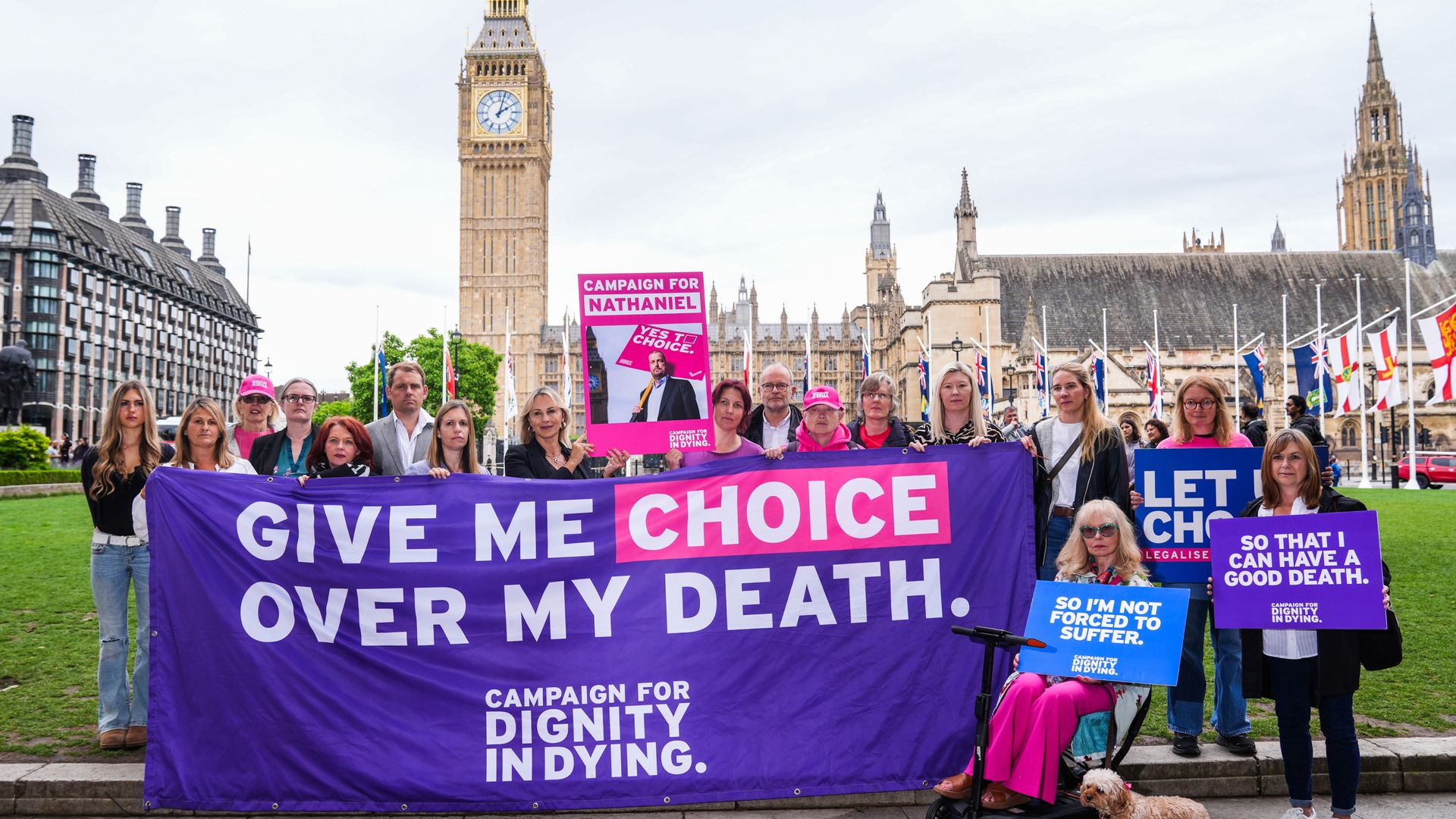
The British political machine is revving its engines for another round of solemn debates on assisted dying. Parliamentarians are dusting off their moral compasses, preparing to argue over personal autonomy, safeguards, and the exact definition of terminal illness. The media coverage follows a predictable, lazy script: a compassionate clash between progressive bodily autonomy and traditionalist sanctity of life.
They are all missing the real crisis.
The entire legislative debate around the assisted dying bill is built on a fundamental lie. It treats the choice to end one's life as an isolated, abstract exercise in pure free will. It assumes a vacuum. In reality, this bill is returning to a fractured state where the social safety net has worn through, palliative care is funded like a charity raffle, and the state's most expensive citizens are subtly being handed an exit ramp.
We do not need a debate on the ethics of death. We need a brutal reckoning with the economics of modern state care.
The Autonomy Myth: Choice in an Empty Room
Proponents of the bill love to champion "choice." It is a seductive word. But choice requires viable alternatives. When a state fails to provide adequate social care, when public health systems are buckling under demographic weight, and when specialized palliative care is largely outsourced to voluntary donations, "choosing" to die ceases to be an act of pure autonomy. It becomes the path of least resistance.
I have spent years analyzing health policy and watching public infrastructure erode. The reality on the ground is grim. We have created a system where staying alive with a chronic or terminal condition requires fighting a relentless bureaucratic war for resources—for beds, for carers, for pain management.
Imagine a scenario where an elderly patient, staring down a degenerative diagnosis, looks at their family’s draining finances and the crumbling local care services. When they ask for assisted dying, are they exercising liberty? Or are they internalizing a societal message that they have become an unsustainable burden?
True autonomy cannot exist when the state makes it easier, faster, and cheaper to die than to live with dignity.
The Economic Elephant in the Legislative Chamber
Let's look at the numbers the politicians refuse to print on their briefing notes.
Palliative care in the UK is not a core, fully state-funded guarantee. According to data from Hospice UK, the state only covers around one-third of the cost of hospice care. The rest relies on charity shops, bake sales, and marathons. We are preparing to codify a legal right to state-sanctioned death while refusing to legally guarantee the right to comprehensive, state-funded pain management.
The institutional incentives here are terrifyingly misaligned.
- The Cost of Living: Specialized end-of-life care costs thousands of pounds per week in medical staff, equipment, and round-the-clock supervision.
- The Cost of Dying: A lethal dose of medication and a judicial sign-off costs the state virtually nothing.
Am I suggesting a shadowy cabal of bureaucrats is actively trying to kill off the vulnerable to balance the budget? No. That is the realm of conspiracy theorists. The danger is far more clinical and systemic. In a strained public healthcare model, resources are rationed. When an inexpensive, legally protected exit option becomes institutionalized, it alters the gravity of the entire healthcare ecosystem. It shifts the baseline expectation.
The Oregon and Canada Fallacy
Activists pointing to international models like Oregon’s Death with Dignity Act or Canada’s Medical Assistance in Dying (MAID) framework usually present a sanitized version of reality. They promise that "robust safeguards" will prevent any slippery slope.
They are wrong. Look at Canada.
Canada introduced MAID in 2016 for terminally ill patients. Within a few years, the criteria expanded. The requirement for a "reasonably foreseeable" natural death was dropped. Discussions expanded to include individuals with chronic illnesses, disabilities, and mental health conditions.
The Canadian track record features horrific, documented instances of disabled individuals explicitly requesting tracking toward MAID not because they wanted to die, but because they could not secure poverty-level disability benefits or adequate housing. The system offered them a lethal injection before it offered them a wheelchair ramp or an affordable apartment.
When you open this door, the definition of "unbearable suffering" inevitably expands from an intractable medical reality to a socio-economic failure.
The Palliative Care Betrayal
The British Medical Association and various healthcare cohorts have historically expressed deep reservations about changing the law, and for good reason. Doctors understand the psychological reality of terminal illness far better than MPs arguing in the abstract.
Suffering is complex. It fluctuates. A patient experiencing existential dread, severe depression, or acute, unmanaged pain will express a desire to end it all. In a properly funded healthcare system, the answer to that cry is aggressive symptom control, psychological support, and human presence.
If the assisted dying bill passes in our current institutional climate, the pressure on clinicians shifts. The conversation changes from "How do we make your remaining time livable?" to "Have you considered your options?"
Dismantling the "People Also Ask" Consensus
The public debate is clogged with superficial questions that misdirect the public. Let's answer them honestly.
Won't strict legal safeguards protect the vulnerable?
No. Safeguards are only as strong as the system enforcing them. In a healthcare system where GPs are overwhelmed and appointments are rushed to the scale of minutes, a thorough, deep-dive psychological assessment of a patient’s true motivations is a logistical fantasy. Safeguards become checkboxes. If a patient repeats the correct legal phrases, the system will move them along the assembly line.
Isn't it cruel to force people to suffer in agony?
This question is an intentional false dichotomy. It assumes the only choices are a agonizing, undignified death or a state-issued prescription for lethal drugs. The third option—high-quality, universally accessible palliative care that completely mitigates physical agony—is entirely possible. It is simply expensive. Parliament is choosing to legislate the cheap option instead of funding the humane one.
Stop Fixing the Wrong Problem
We are having a luxury debate on an impoverished foundation.
If Parliament genuinely cared about dignity in death, the floor of the House of Commons would not be occupied by debates on how to fast-track lethal prescriptions. It would be consumed by a furious, bipartisan effort to fully nationalize hospice care, to overhaul the catastrophic state of social care, and to ensure that no human being in this country ever faces the end of their life feeling like a financial deficit on their children's ledger.
Passing an assisted dying bill right now is not progressive. It is a capitulation. It is the ultimate admission that the state has given up on fixing the social fabric required to sustain life at its most fragile point.
Do not clear the path to the exit until you have made the room worth staying in.