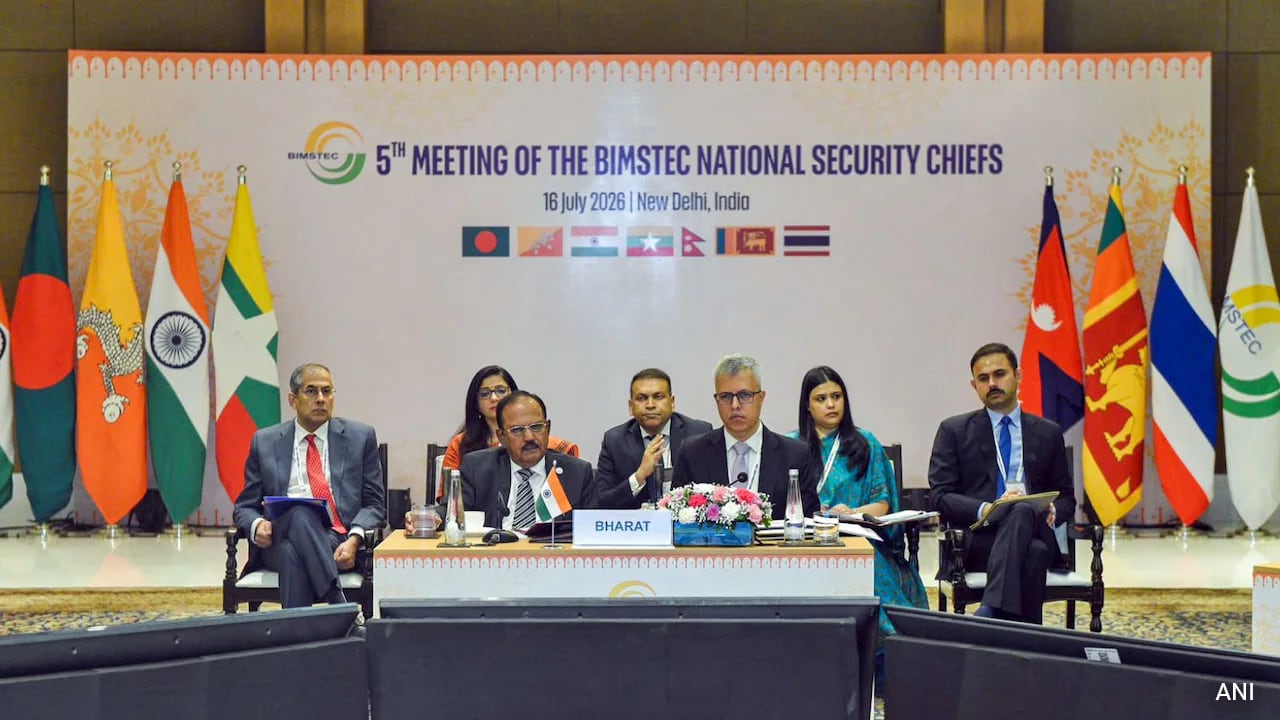
The room in Dhaka was quiet, the kind of stillness that only exists when diplomats, academics, and intelligence analysts are collectively holding their breath. On the screen, a slide projected a map. It was meant to be a simple visual aid for a lecture on regional integration.
Instead, it became a fault line. If you found value in this piece, you should look at: this related article.
Pooja Kumari Jha, a diplomat from the Indian High Commission, stood up. Her voice was polite but unyielding. She pointed out that the borders of Jammu and Kashmir on the slide were drawn incorrectly. The presenter, a veteran diplomat named Tariq Karim, nodded and acknowledged the point. It was a minor, momentary friction, but it perfectly captured the tragedy of South Asia.
In this part of the world, we are obsessed with lines. We draw them on maps, we enforce them at border crossings, and we let them carve up our collective future. For another angle on this event, see the latest update from NBC News.
For decades, the story of South Asian cooperation has been told as a bitter zero-sum game. On one side stands SAARC, the South Asian Association for Regional Cooperation. Born in the mid-1980s with grand dreams of a connected subcontinent, it has spent years frozen in ice, paralyzed by the perpetual hostility between India and Pakistan. On the other side stands BIMSTEC, the younger, shinier alternative that wraps around the Bay of Bengal, conveniently bypassing Pakistan to connect India with Southeast Asia.
For years, foreign policy analysts have insisted that we must choose. Is it SAARC or is it BIMSTEC? Do we stick with the old, broken family, or do we move into the trendy new apartment down the street?
Bangladesh’s State Minister for Foreign Affairs, Shama Obaed Islam, walked up to the podium and offered a different, deceptively simple answer: We do not have to choose.
The Freight Train That Never Arrives
To understand why this diplomatic posturing matters to anyone outside of air-conditioned conference rooms, you have to look at the ground.
Picture a truck driver named Rahim. He is sitting in a rusted cabin at the Petrapole-Benapole border crossing between India and Bangladesh. The air is thick with humidity and diesel exhaust. He has been sitting there for three days, waiting for custom clearances to transport raw cotton. The cotton is meant for a textile mill in Dhaka, which will turn it into shirts for export to Europe.
If Rahim were driving across Europe, he would cross three borders without ever shifting gears. In South Asia, his cargo will be unloaded, inspected, reloaded, and delayed until the economic value of the goods has been chewed away by administrative decay.
This is the cost of our division. We are neighbors who share rivers, histories, languages, and recipes, yet we trade more with partners ten thousand miles away than we do with the people across the street. Intra-regional trade in South Asia hovers around a dismal 5 percent. In East Asia, that number is closer to 50 percent.
SAARC was supposed to fix this. But when India and Pakistan clash, the entire mechanism grinds to a halt. The summit meetings are postponed indefinitely, the secretariats become quiet archives of unfulfilled promises, and the dreams of a shared railway network or a common energy grid fade into the background.
When BIMSTEC gained momentum, many celebrated it as a clever escape hatch. It was a way to build roads and lay cables without getting bogged down by historical trauma. But as Shama Obaed Islam pointed out, abandoning SAARC for BIMSTEC is like amputating a limb because it is difficult to heal.
BIMSTEC is an excellent bridge to Southeast Asia. It connects the Bay of Bengal. But it does not represent the entirety of our South Asian identity. It leaves out the Maldives, Afghanistan, and Pakistan. It ignores the vast, landlocked realities of the northern subcontinent.
The Ambition of the Middle Child
Bangladesh has often played the role of the sensible middle child in South Asian geopolitics. It was Dhaka, after all, that originally conceived and pushed for the creation of SAARC in the late 1970s and early 1980s.
There is a unique vulnerability in being a smaller nation bordered almost entirely by a giant neighbor. For Bangladesh, regional forums are not just intellectual exercises; they are shields. They are spaces where a smaller country can sit at the table with regional powers on equal terms, where collective rules protect individual sovereignty.
The current stance from Dhaka is a masterclass in pragmatic foreign policy. Under the leadership of Prime Minister Tarique Rahman, the administration is pursuing a policy of "optimal functionality."
What does that mean in plain terms?
It means we stop waiting for the perfect political weather. If the prime ministers of India and Pakistan cannot sit in the same room for a grand summit, we do not throw our hands up and go home. Instead, we focus on the pipes. We keep the technical committees running. We keep the meteorologists talking about shared cyclone warning systems. We keep the agricultural scientists sharing seed varieties.
We build a coalition of the willing. If three member states are ready to link their electrical grids, they should do it, leaving the door open for others to join when they are ready.
It is an admission of limits, but also a refusal to despair. It recognizes that trust is not built during grand speeches on red carpets; it is built when engineers from different countries successfully connect a power line across a muddy border.
The Ghosts of Our Own Making
The skepticism is easy to understand. We have heard these speeches before. We have seen the treaties signed with gold-plated pens, only to watch them collect dust in archives. The cynic will say that SAARC is dead, and trying to revive it is an exercise in futility.
But cynicism is a cheap luxury in a region where millions of people still live on the edge of climate catastrophe and economic instability. The monsoons do not recognize the borders of Jammu and Kashmir, nor do the rising tides of the Bay of Bengal care about diplomatic snubs.
When a super-cyclone forms in the bay, it threatens the fishermen of India, Bangladesh, and Myanmar equally. When the Himalayan glaciers melt, the resulting floods do not stop to show passports at the border.
To suggest that we must choose between SAARC and BIMSTEC is to misunderstand the nature of our geography. They are not rival sports teams. They are different tools for different tasks. One is a mirror, forcing us to look at our immediate, complicated family. The other is a window, looking out toward a wider, wealthier world.
We need both.
The real test will not be whether we can draft the perfect treaty, but whether we can look past the incorrect maps, the historic grudges, and the diplomatic friction to see the shared ground beneath our feet. If we cannot, we will remain a region of immense potential and tragic achievements, forever waiting at the border for a train that never arrives.