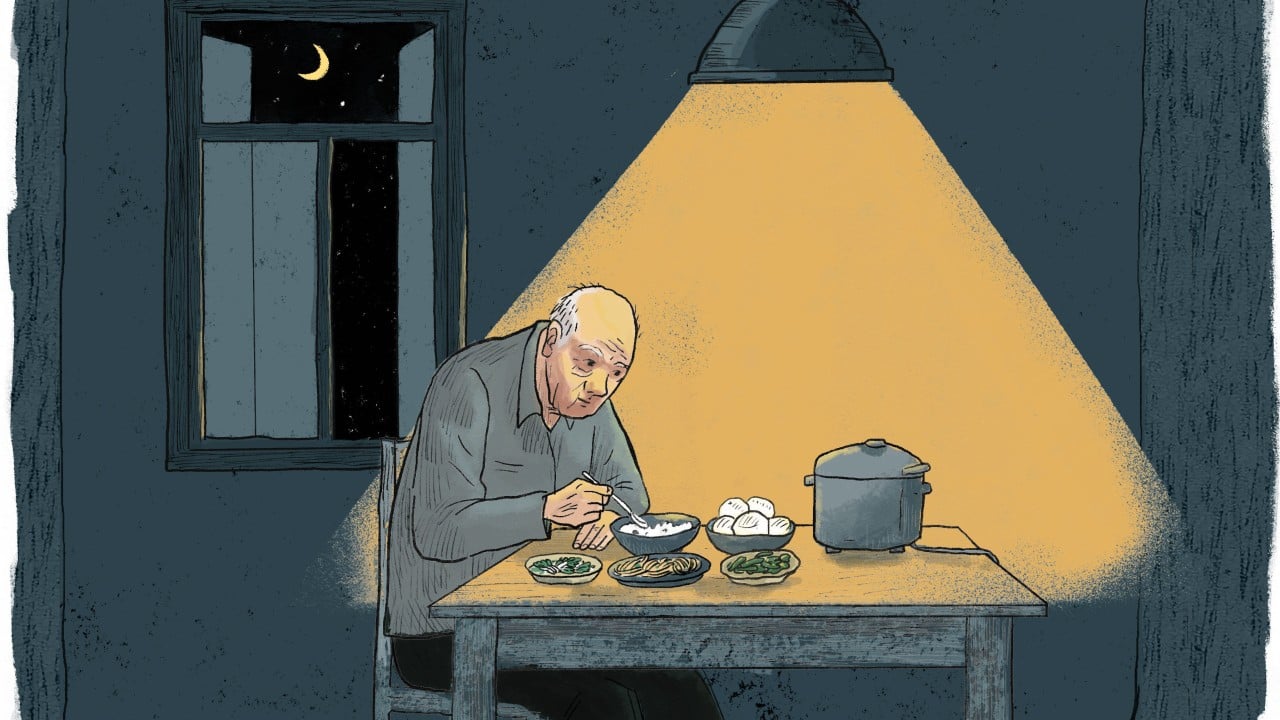
The traditional 9-to-5 workday is an arbitrary construct of industrial manufacturing, yet it aligns with a non-negotiable biological reality: human physiology is hardwired to the solar cycle. When an organization shifts its labor force to operate against this evolutionary blueprint, it introduces a systemic friction that extends far beyond simple fatigue. Shift work—specifically permanent night shifts and rotating schedules—inflicts a measurable tax on human capital, operational efficiency, and long-term metabolic health. Optimizing the night shift requires moving past generic sleep hygiene advice and instead treats human biology as a complex, bounded system requiring precise environmental engineering.
To understand the scope of this friction, one must model the night shift not as a lifestyle preference, but as a state of chronic circadian misalignment. This state generates a cascade of compounding costs that can be categorized into three distinct layers: metabolic degradation, cognitive performance degradation, and operational attrition.
The Tri-Layer Cost Function of Night Shift Operations
1. The Metabolic Degradation Layer
The human master clock, located in the suprachiasmatic nucleus (SCN) of the hypothalamus, coordinates peripheral clocks present in virtually every organ system. When light exposure occurs during biological night, this coordination collapses.
The immediate casualty is glucose regulation. During the biological night, insulin sensitivity naturally decreases as the body prepares for a fasting state. Introducing caloric intake during this window forces the pancreas to secrete insulin at a time when peripheral tissues, such as skeletal muscle and liver cells, are resistant to it. This structural mismatch creates acute postprandial hyperglycemia. Over sustained periods, this pathway accelerates pancreatic beta-cell exhaustion, explaining the significantly elevated incidence of Type 2 diabetes observed in long-term night shift cohorts.
Concurrently, the disruption of melatonin secretion—suppressed by exposure to artificial blue light during the night shift—deprives the body of a potent endogenous antioxidant and immunomodulator. Melatonin suppression alters the nocturnal dipping of blood pressure. In circadian alignment, blood pressure drops by 10% to 20% at night. In shift workers, this dipping mechanism frequently fails, maintaining vascular shear stress across a 24-hour cycle and directly driving endothelial dysfunction and accelerated cardiovascular disease.
2. The Cognitive Performance Degradation Layer
Cognitive capacity is governed by a two-process model of sleep regulation: Process S (the homeostatic sleep drive) and Process C (the circadian drive for arousal). In a standard diurnal routine, these processes work in harmony; Process C rises throughout the day to counteract the accumulating pressure of Process S.
For the night shift worker, these vectors invert. By 03:00, Process S has been accumulating for nearly 18 hours, while Process C has dropped to its nadir. This intersection creates a cognitive bottleneck characterized by:
- Microsleep Intrusions: Involuntary episodes of cortical sleep lasting from 1 to 15 seconds, occurring without the individual's conscious awareness.
- Working Memory Depletion: A severe reduction in the capacity of the prefrontal cortex to hold and manipulate complex information mid-task.
- Perceptual Narrowing: A phenomenon where the visual field and situational awareness contract, forcing the operator to fixate on single data points while ignoring peripheral anomalies.
The operational consequence is a predictable spike in error rates. Data across industrial manufacturing and healthcare settings indicate that catastrophic human-error incidents cluster disproportionately between 02:00 and 05:00.
3. The Operational Attrition Layer
Organizations often look at night shifts purely through the lens of hourly wage premiums, ignoring the hidden overhead of turnover and absenteeism. The social isolation forced by a nocturnal schedule degrades the worker's support structure. Chronic sleep restriction—the average night shift worker loses 1 to 4 hours of sleep per 24-hour cycle compared to their daytime counterparts—elevates cortisol production. High systemic cortisol levels alter amygdala reactivity, manifesting as heightened irritability, chronic anxiety, and clinical depression. This psychological strain converts directly into unannounced absenteeism and elevated voluntary separation rates, inflating human resource replacement costs.
Environmental and Behavioral Re-Engineering: A Data-Driven Framework
Overcoming the biological tax of the night shift cannot be achieved by sheer willpower or increased caffeine consumption. It requires a systematic intervention framework designed to artificially shift the circadian phase and preserve sleep architecture.
[Phase Shifting Framework]
Light Exposure Control --> Melatonin Chronobiotic Timing --> Strategic Fatigue Mitigation
Phase Shifting Through Targeted Photobiotic Input
Light is the primary zeitgeber (time giver) that trains the SCN. To successfully work at night and sleep during the day, the worker must shift their biological clock forward or backward. Random light exposure traps the body in a permanent state of partial adaptation, which is the most destructive state possible.
- Anchoring Nighttime Alertness: To suppress early morning drowsiness and shift the circadian rhythm forward, workers require high-intensity blue-enriched light (460–480 nm wavelength) during the first half of their shift. This can be delivered via localized industrial task lighting or specialized light boxes producing at least 2,500 to 10,000 lux.
- The Morning Photobiotic Shield: The critical failure point for most night shift workers occurs during the commute home. Exposure to natural sunlight at 07:00 hits the retina precisely at the phase-response curve's peak for advancing the clock, signaling the SCN that it is daytime. This instantly halts melatonin synthesis and resets the body to a diurnal state, destroying the subsequent daytime sleep cycle. To prevent this, workers must wear high-density blue-blocking glasses (filtering >99% of short-wavelength light) from the moment they exit the workplace until they enter their darkened sleeping environment.
Diurnal Sleep Architecture Optimization
Daytime sleep is fundamentally different from nighttime sleep. It is shortened by rising ambient temperatures, environmental noise, and the circadian drive for alertness. To protect Slow-Wave Sleep (SWS) and Rapid Eye Movement (REM) cycles, the sleep environment must be engineered to mimic a subterranean environment.
- Thermal Regulation: The core body temperature must drop to initiate deep sleep stages. Ambient room temperature should be maintained strictly between 15°C and 19°C. Higher temperatures trigger micro-arousals that fragment sleep architecture, stripping away the restorative benefits of SWS.
- Acoustic Isolation: High-frequency daytime noises (traffic, sirens, domestic activity) penetrate standard residential structures. White or pink noise generators should be deployed to mask these transient auditory spikes. Pink noise, which features deeper sounds with a spectral density inversely proportional to frequency, has been shown to enhance slow-wave brain activity.
- Absolute Photopic Occlusion: The presence of even 0.1 lux of light in the bedroom can penetrate closed eyelids and disrupt melatonin production. Blackout structures must seal the edges of window frames completely.
Chronobiotic and Strategic Chemical Management
Exogenous substances are frequently misused by shift workers to force alertness or somnolence. A rigorous strategy treats these compounds with pharmacological precision.
- Exogenous Melatonin Timing: Melatonin should not be used as a standard sedative. It is a chronobiotic that shifts the timing of the internal clock. For a night shift worker, administering a low dose (0.5 mg to 3 mg) of fast-release melatonin 30 to 60 minutes before their desired daytime sleep window signals the SCN that night has arrived, stabilizing sleep duration.
- Caffeine Half-Life Management: Caffeine is an adenosine receptor antagonist that masks sleep pressure but does not eliminate it. It possesses a half-life of roughly 5 to 7 hours. Consuming caffeine past the midpoint of a night shift guarantees that high circulating plasma concentrations will block adenosine binding when the worker attempts to sleep, ruining sleep efficiency. All caffeine intake must cease 6 hours prior to the targeted sleep time.
- Strategic Prophylactic Napping: For operations where safety is critical, deploying a 20-to-30-minute prophylactic nap immediately prior to the shift, or during a scheduled break around 03:00, leverages the homeostatic sleep drive. Keeping the nap under 30 minutes prevents the individual from entering Stage 3 deep sleep, thereby eliminating sleep inertia—the groggy disorientation that degrades performance immediately upon waking.
Limitations and Risks of Circadian Adaptation
Any strategy deployed to mitigate the costs of the night shift operates within strict biological boundaries. There is no intervention capable of rendering night work entirely benign.
The primary limitation of phase-shifting strategies is the incomplete adaptation vector. Unless an individual maintains an identical schedule on their days off, the SCN will inevitably drift back toward a diurnal alignment due to social and societal cues. This constant oscillation—often termed "social jetlag"—keeps the individual in a state of perpetual acute dysregulation, which may be more harmful than maintaining a permanent, stable night schedule.
Furthermore, genetic variability plays a decisive role in an individual’s tolerance for shift work. Genetic polymorphisms in circadian genes, such as the CLOCK and PER3 genes, dictate whether an individual is a pronounced morning chronotype ("lark") or an evening chronotype ("owl"). Forcing an extreme morning chronotype into a permanent night shift is an exercise in biological misalignment that no amount of light therapy or exogenous melatonin can fully correct. The individual's physiology will actively resist the shift, leading to early operational burnout and pronounced health degradation.
The Strategic Operational Play
Organizations running 24-hour operations must stop viewing shift worker fatigue as an individual lifestyle issue and treat it as a systemic operational risk. The final strategic play requires abandoning the traditional 7-day rotating shift schedule. Rapidly rotating schedules (e.g., changing from days to nights every 3 to 4 days) ensure the human workforce remains in a permanent state of circadian chaos, maximizing cognitive errors and health liabilities.
Operations must transition to either permanent, fixed shifts—allowing workers with compatible evening chronotypes to adapt over months—or implement forward-rotating schedules (Day to Evening to Night) with a minimum of 14 days spent on each shift. This longer rotation cycle provides the SCN sufficient time to complete the phase shift, stabilizing human capital performance and protecting the bottom line from the compounding tax of biological misalignment.