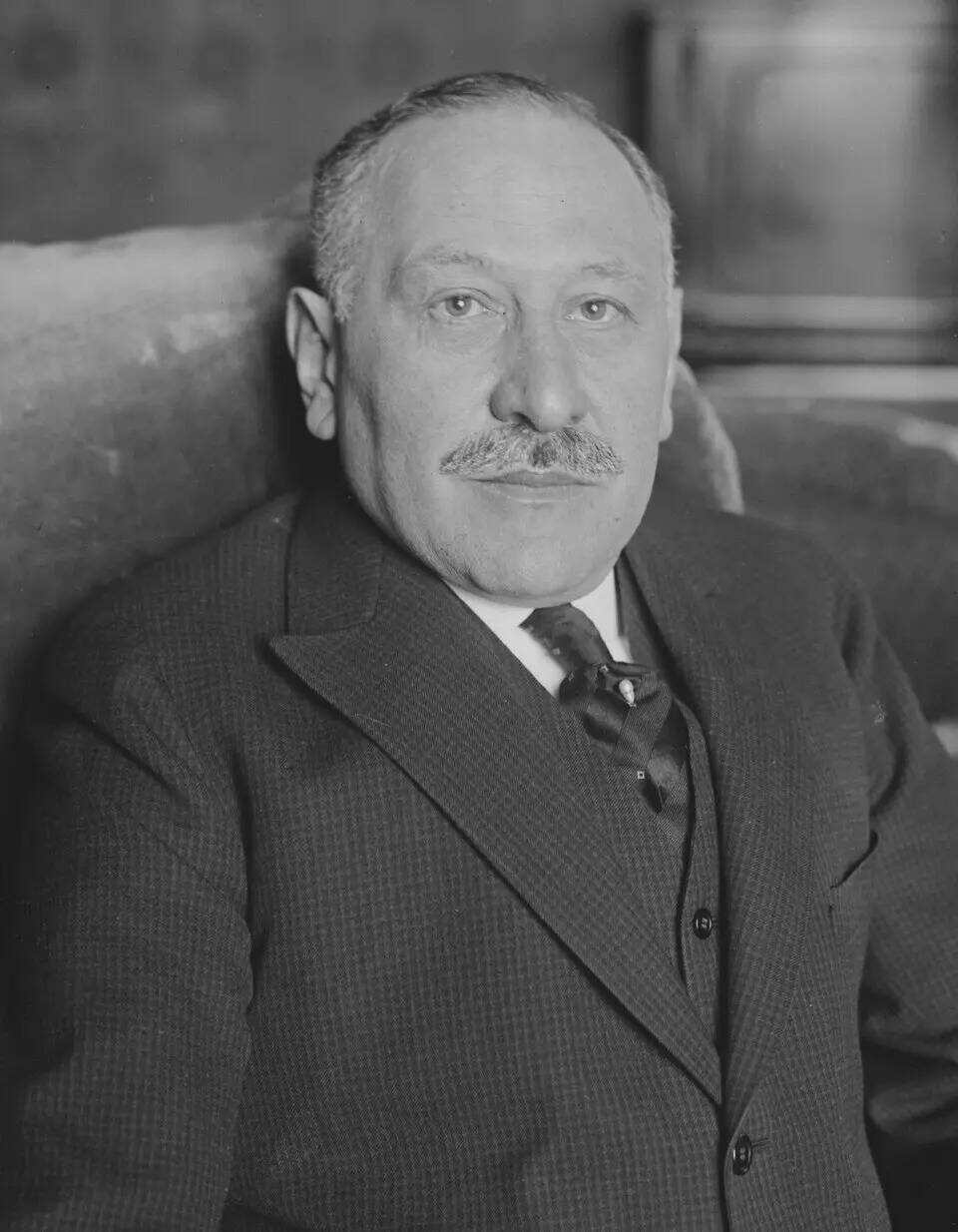
Capital allocation in conditions of extreme institutional failure requires models that go beyond traditional charity. When the state systematically disinvests from a population segment, direct cash transfers fail because they do not alter the underlying political economy. The rural school building program executed by Julius Rosenwald and Booker T. Washington between 1912 and 1932 offers a masterclass in structural philanthropy, proving that targeted private capital can force public systems to fulfill their statutory obligations.
By deploying $4.3 million in seed capital, the Rosenwald Fund triggered a total infrastructure investment of $28.4 million, constructing 4,977 schools, 217 teacher residences, and 163 vocational shops across 15 Southern states. This program ultimately educated one-third of rural African American children in the South, successfully bridging a critical literacy gap. The success of the initiative did not rest on pure altruism; it succeeded due to a rigorous matching-grant framework, precise architectural standardization, and a clear understanding of community-led operational leverage.
The Tripartite Funding Framework
The core mechanism of the Rosenwald program was an asymmetric matching function. The fund rejected the traditional endowment model, which frequently breeds institutional dependency. Instead, it operated as a spent-down foundation, liquidating its principal to maximize immediate, compounding social returns.
The financial architecture divided the cost function of each school into three distinct capital pools:
- Private Seed Capital (The Rosenwald Fund): Offered fixed, conditional grants capped according to the number of teachers required (ranging from $500 for a one-teacher facility to $2,100 for large-scale installations).
- Grassroots Equity (The Black Community): Required local African American citizens to match or exceed the Rosenwald grant through cash, land dedication, raw materials, or manual labor.
- Public Accountability Capital (The White School Boards): Forced local white-dominated school boards to commit public tax revenues to construction and formally assume long-term operational costs, including maintenance and teacher salaries.
Total Project Cost = Rosenwald Grant (Fixed Cap) + Community Contribution (Cash/Labor) + State Appropriations
The financial realities of this model reveal its structural leverage. Across the entire life cycle of the program, the Rosenwald Fund contributed 15.2% ($4.3 million) of the total capital expended. Local African American communities raised 16.5% ($4.7 million), frequently through double-taxation—paying standard state taxes that were withheld from their children, alongside voluntary contributions to the fund.
This local investment acted as a primary screening mechanism. It ensured absolute community buy-in and guaranteed that schools were placed in areas with the highest social density and organizational capacity.
The largest portion of capital, 63.7% ($18.1 million), was forced out of local governments. By making the private grant conditional on public matching funds and official state incorporation, the program created an economic incentive structure that local school boards found difficult to ignore. White authorities, eager to secure external capital for county infrastructure, signed binding agreements that legally integrated these new facilities into the public school system.
Architectural Optimization as an Operational Multiplier
Infrastructure investments fail when asset maintenance costs outpace local operational capabilities. To prevent this, the Rosenwald Fund shifted construction oversight from the Tuskegee Institute to a centralized office in Nashville in 1920. This office standardized production by issuing strict, modular blueprints designed by Progressive Era architects.
These "stock plans" optimized physical space for environments completely lacking electrical grids and central heating. The engineering focused heavily on maximizing natural resources:
Daylight Engineering
Buildings were strictly oriented north-to-south to capture optimal east-west solar paths. Classrooms featured massive banks of double-hung sash windows, positioned precisely to the left of student desks. This layout ensured that light cast no shadows from a right-handed student's pen, maintaining minimum lumen thresholds required for literacy tasks without artificial light.
Spatial Flexibility
Smaller school designs utilized moveable partitions and sliding blackboards. This design choice turned a two-room instructional facility into a large civic auditorium during non-school hours. By maximizing asset utilization, the school became a multi-functional hub for agricultural extensions, public health initiatives, and financial cooperatives, lowering the per-capita cost of community infrastructure.
Maintenance and Material Standardization
Blueprints specified exact paint formulations (such as interior graphite-slated blackboards and specific reflective paint schemes) to bounce light efficiently. The use of simple timber frames meant that maintenance could be handled locally using standard regional lumber and basic carpentry skills, eliminating dependencies on specialized external supply chains.
The Mechanism of Structural Leverage
The true value of this strategy lay in its ability to navigate oppressive institutional frameworks. The Rosenwald-Washington model did not explicitly challenge Jim Crow segregation laws; instead, it optimized operations within existing legal constraints to alter economic realities on the ground.
[Private Seed Capital] ---> [Local Community Match] ---> [Forced Public Tax Allocation] ---> [State-Maintained Asset]
This structural approach solved three distinct system bottlenecks:
First, it solved the public appropriation bottleneck. By offering a cash incentive directly to local school boards, it lowered the immediate political and financial cost for white officials to build Black schools.
Second, it solved the property rights bottleneck. The fund required that the land be deeded directly to the public school system. This transferred the long-term liability of asset protection to the state, shielding the physical structures from extra-legal destruction or seizure.
Third, it solved the human capital bottleneck. The construction of "teacherages" (dedicated residential homes for educators) alongside the schools allowed rural communities to attract and retain qualified instructors from urban centers like the Tuskegee Institute. This stabilized the local labor supply for education.
Systemic Trade-offs and Strategic Limitations
A rigorous assessment of the Rosenwald program requires analyzing its structural limitations. The model operated on a compromise that traded long-term systemic equality for immediate operational execution.
The primary limitation was the capping of education at the eighth-grade level. The curriculum focused heavily on industrial, agricultural, and vocational training rather than advanced classical academics. This design appeased the white political power structure by ensuring the program did not overtly disrupt the rural labor market. As a result, while the program successfully built widespread baseline literacy, it did not immediately build a pathway to higher-tier professional capital.
Furthermore, the model relied on the exceptional personal networks and corporate wealth of Julius Rosenwald, whose fortune was tied directly to his equity in Sears, Roebuck and Company. This concentration of capital created a single point of failure.
When the Rosenwald Fund executed its planned spend-down and shut down operations in 1948, no equivalent private framework emerged to take its place. The responsibility shifted back to an unequal public system, leaving the assets vulnerable to consolidation, neglect, or abandonment as desegregation advanced in the 1950s and 1960s. Today, only an estimated 10% to 12% of these structural assets survive.
The Modern Venture Philanthropy Blueprint
The Rosenwald-Washington program provides a clear blueprint for modern capital allocation targeting deep-rooted social problems. It demonstrates that effective philanthropy does not look like perpetual grant-making; it functions as an acceleration mechanism designed to force public or market systems into equilibrium.
Organizations seeking to deploy capital against deep systemic inefficiencies should implement the following structural framework:
- De-risk Through Asymmetric Incentives: Do not fund projects fully. Position private capital as the final piece that unlocks broader, latent pools of public or community funds.
- Enforce Strict Asset Standardization: Reduce execution risk by providing open-source, highly optimized blueprints. Strip out regional complexity to ensure predictable construction and maintenance costs.
- Design for System Integration: Avoid creating parallel, isolated systems. Force project assets into the legal and operational pipelines of the dominant public or market infrastructure, ensuring long-term institutional survival.