The back-to-back 7.2 and 7.5 magnitude earthquakes that struck the northern coast of Venezuela, centering their destruction on the state of La Guaira, represent more than a acute tectonic event. They have triggered a complex humanitarian cascade where structural collapse, state-controlled information blockades, and a fundamentally compromised health infrastructure intersect. While initial official reports downplay the architectural and human toll, data gathered via remote sensing and independent monitoring agencies point to a catastrophic systemic failure.
To evaluate the true scope of this crisis and map its secondary trajectories, analysts must abandon emotional narratives and evaluate the event through the cold mathematics of logistics, epidemiological risk factors, and structural engineering limitations. This analysis deconstructs the disaster into its component operational realities.
The Discrepancy Matrix: Quantifying Structural Collapse
A profound divergence exists between the data issued by the Venezuelan National Assembly and independent satellite observations. Evaluating this discrepancy is critical to understanding the logistical bottleneck facing international search and rescue (SAR) operations.
- The State Narrative: The official government assessment counts 855 damaged structures, including 189 documented as total collapses.
- The Empirical Reality: Rapid-assessment high-resolution radar imagery collected by the European Space Agency’s Sentinel-1 satellites and analyzed by researchers at Oregon State University indicates that approximately 58,870 buildings were damaged or destroyed.
This variance is not a matter of statistical margin; it is an order-of-magnitude misrepresentation. The 58,870-building figure correlates directly with the United Nations estimate of 50,000 missing or unaccounted-for persons across the disaster zone.
The logistical reality of SAR operations dictates a strict 72-hour peak survivability window, which has now closed. Survival rates drop exponentially after this threshold due to dehydration, crush syndrome, and positional asphyxiation. The structural mechanics of the collapses in La Guaira—predominantly unreinforced masonry and non-ductile concrete frames common in high-density, unregulated urban developments—yield "pancake" collapses rather than survival voids. This specific failure mode compresses interior spaces completely, drastically lowering the survival coefficient of trapped populations and explaining the unprecedented volume of missing persons registries.
The Triad of Epidemiological Vulnerability
With the immediate SAR window closed, the primary threat vector shifts from traumatic mortality to secondary epidemiological cascades. World Health Organization (WHO) briefs identify a high risk of disease outbreaks. Rather than viewing this as a vague threat, the risk can be quantified through three distinct biological and environmental drivers.
1. Vector-Borne Transmission Acceleration
The coastal climate of La Guaira, combined with the structural destruction of municipal drainage systems, creates immediate micro-habitats for vector breeding. Standing water accumulated from ruptured municipal mains and blocked waterways serves as a hyper-accelerator for mosquito vectors.
- The Pathogen Profile: Aedes aegypti and Anopheles mosquitoes are endemic to this region.
- The Expected Trajectory: Incidences of dengue, yellow fever, Zika, and chikungunya operate on a 10-to-14-day incubation cycle post-exposure. Concurrently, a resurgence in Plasmodium falciparum and Plasmodium vivax (malaria) is mathematically modeling a steep upward curve as displaced populations sleep outdoors without bed nets.
2. The Vaccine Deficit and Pathogen Recrudescence
The pre-disaster baseline of Venezuela's public health program is a critical vulnerability factor. Decades of economic contraction left the population with profound gaps in herd immunity.
- The Measles and Diphtheria Risk: Prior to the seism, national vaccination coverage for preventable childhood illnesses hovered well below the 95% threshold required for herd immunity.
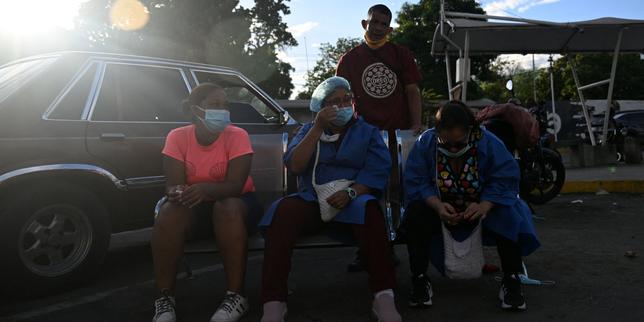
- The Shelter Aggregation Mechanism: Currently, more than 15,800 displaced individuals are concentrated in crowded, informal encampments, cars, and public parks. This density accelerates respiratory droplet transmission. A single index case of measles within these environments presents a basic reproduction number ($R_0$) potentially exceeding 15 to 18, threatening a severe outbreak among pediatric populations.
3. Waterborne and Enteric Pathogen Proliferation
The destruction of water treatment facilities and the widespread compromise of sanitation infrastructure eliminate the barrier between sewage and drinking supply. The lack of access to basic hygiene facilities—toilets, showers, and clean water—means fecal-oral transmission routes are open. Enteric pathogens such as Vibrio cholerae and various strains of Escherichia coli present immediate threats. The clinical progression from acute watery diarrhea to lethal hypovolemic shock can occur in under 24 hours in vulnerable demographics, shifting the mortality curve from adults caught in structural collapses to infants and elderly survivors in shelters.
Healthcare Infrastructure Overload Dynamics
The ability to mitigate these impending health crises is limited by the destruction of the healthcare network itself. Public health infrastructure under extreme pressure cannot execute standard triage or containment protocols.
The World Health Organization evaluated 21 of the 38 government-compromised hospitals nationwide. The diagnostic data outlines an operational bottleneck:
- Complete Failure: Three major facilities are completely non-operational. In La Guaira specifically, the New York Times reported that back-to-back quakes completely knocked out electrical grids and backup generators in two of the area's three public hospitals.
- Structural Compromise: Six facilities sustained severe structural damage, limiting their safe occupancy fields.
- Functional Overloading: The remaining twelve evaluated facilities are structurally intact but functionally crippled by chaotic patient flow, extreme personnel deficits, and expanding surgical backlogs.
The immediate consequence of this degradation is the breakdown of basic biosafety measures. When hospitals lack running water and reliable electricity, sterile fields are lost. Nosocomial (hospital-acquired) infections rise sharply, transforming remaining triage spaces into secondary infection vectors. Furthermore, the missing maternity care workforce in La Guaira has created a complete deficit in obstetric services, guaranteeing an inflation in maternal and neonatal mortality rates over the coming weeks.
Forensic Infrastructure and Information Control as a Geopolitical Bottleneck
A critical block to international aid efficiency is the Venezuelan state’s deployment of asymmetric information control and militarization. The legislative warning issued by the leadership of the National Assembly against sharing information that contradicts official figures is an operational strategy designed to control the narrative of state capacity.
This political directive creates a direct operational bottleneck for international humanitarian actors:
- The Forensic Void: The collapse of forensic and morgue services, coupled with inadequate casualty registration, makes it impossible to build an accurate epidemiological baseline. Without knowing who has died or where missing persons were localized, relief groups cannot accurately allocate resources.
- The Logistics Blockade: The militarization of La Guaira and the imposition of a strict permit system for entry into the disaster zone limit the speed of deployment for the 40 international search and rescue teams sent by 27 countries.
- The Strategic Shift: While the U.S. military successfully repaired and reopened the port of La Guaira, its utilization reflects the grim reality on the ground: a primary port warehouse has been converted into a makeshift morgue to handle hundreds of unidentified bodies. Logistics have shifted from supply delivery to mass casualty management.
Strategic Forecast and Resource Allocation Matrix
Humanitarian interventions over the next 180 days must operate on an altered logistical framework to avoid a severe secondary mortality wave.
The immediate priority must shift away from heavy SAR machinery toward decentralized public health containment. Because centralized hospital networks are offline or structurally unsafe, resources must bypass traditional hubs and deploy directly to informal settlements.
The immediate logistical requirement is the deployment of field hospitals with independent water purification and distribution units (WADUs). These units must prioritize the generation of clean water to suppress waterborne pathogen transmission. Simultaneously, mobile vaccination teams must establish containment perimeters around refugee concentrations, executing ring vaccination strategies for measles and diphtheria regardless of pre-existing records.
The secondary requirement demands the deployment of widespread vector-control measures. This includes the aerial and terrestrial application of larvicides to static water pools generated by structural debris and the immediate distribution of long-lasting insecticidal nets (LLINs) to the displaced population sleeping exposed to the coastal elements.
If international actors continue to depend on state-channeled infrastructure and bureaucratic verification from a government maintaining an informational blockade, the secondary mortality rate from preventable disease outbreaks will surpass the initial casualties caused by the structural failures of the earthquakes.