Strategic Imperatives in the Levantine Security Vacuum
The bilateral framework negotiated between Lebanon and Israel—brokered by the United States—represents a structural shift in regional stabilization logic. Rather than relying on non-enforceable diplomatic declarations, the June 26 framework establishes a conditional sequence: gradual withdrawal of the Israel Defense Forces (IDF) in exchange for the verifiable disarming of Hezbollah and sole territorial control by the Lebanese Armed Forces (LAF).
The primary friction in executing this framework stems from a classic security dilemma. Israel views full withdrawal before verified disarmament as an unacceptable operational vulnerability. Conversely, the Lebanese state, led by President Joseph Aoun, faces an existential domestic credibility gap if it enforces disarmament without immediate, visible gains in national sovereignty.
┌─────────────────────────────────────────────────────────┐
│                 US Security Mediation                   │
└────────────────────────────┬────────────────────────────┘
                             │
            ┌────────────────┴────────────────┐
            ▼                                 ▼
┌───────────────────────┐         ┌───────────────────────┐
│      IDF Domain       │         │      LAF Domain       │
│  Security Zone        │         │  Pilot Security Zones │
│  Verification First   │         │  Enforcement & State  │
│                       │         │  Monopoly on Arms     │
└───────────┬───────────┘         └───────────┬───────────┘
            │                                 │
            └────────────────┬────────────────┘
                             ▼
┌─────────────────────────────────────────────────────────┐
│           Conditioned Reciprocal Phasing                │
└─────────────────────────────────────────────────────────┘
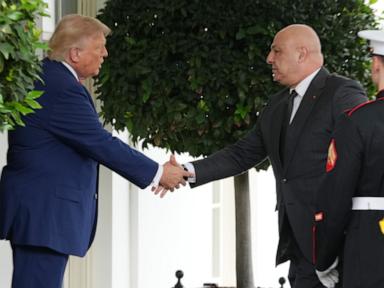
The success of President Aoun’s summit with US President Donald Trump relies on overcoming this structural deadlock through a phased, data-backed execution mechanism rather than generalized security guarantees.
The Three Pillars of Execution
To understand why traditional diplomatic talks frequently fail in Levant border disputes, one must deconstruct the execution architecture into three functional vectors:
1. The Security Zone Pilot Model
The operational blueprint hinges on designated "pilot zones"—such as Froun, Srifa, and Zawtar al-Gharbieh—where the LAF attempts to establish absolute security authority.
- The Verification Mechanism: The withdrawal mechanism is non-linear. The IDF conditions its complete departure from the 10-kilometer border buffer on real-time intelligence verifying that non-state actors have ceased military operations and cleared weapons caches.
- The Sovereign Bottleneck: The LAF faces physical infrastructure limits. Decades of economic contraction in Lebanon have constrained the military's logisitical deployment capabilities, requiring immediate third-party institutional financing.
2. Disarmament and the Monopoly on Violence
The central policy friction is Hezbollah’s refusal to recognize the bilateral framework signed by Beirut.
- State Monopoly: The reformist platform under President Aoun asserts that state sovereignty cannot coexist with non-state armed factions.
- Enforcement Dynamics: Disarmament cannot occur solely through military force without risking internal sectarian escalation. It requires a mix of economic integration, political isolation of non-state actors, and direct structural support for state security forces.
3. The Washington Leverage Calculus
The United States acts as both guarantor and mediator.
- Diplomatic Pressure: Washington exerts pressure on Tel Aviv regarding the strategic cost of maintaining a long-term presence inside foreign borders.
- Capital Mobilization: Foreign direct investment and bilateral military aid serve as the primary carrots for Beirut. Security stability is directly linked to attracting international reconstruction capital.
Asymmetrical Risk Matrix
Evaluating the core variables reveals distinct risk profiles for each institutional stakeholder in the current negotiation phase:
| Stakeholder | Key Risk Variable | Failure Condition | Mitigation Strategy |
|---|---|---|---|
| Lebanese State (LAF) | Internal Political Fracture | Outbreak of domestic civil instability during disarmament attempts | Gradual deployment via piloted zones backed by foreign aid |
| Israel (IDF) | Operational Exposure | Resurgence of non-state military infrastructure along the border | Retention of long-term intelligence verification rights |
| United States | Mediation Breakdown | Permanent occupation leading to expanded regional escalation | Direct pressure on both parties via military aid and political access |
Strategic Playbook for the Washington Summit
For President Aoun to translate high-level access into operational policy outcomes during negotiations at the White House, Beirut must move beyond political appeals and execute a three-stage tactical framework:
Establish an International Oversight Task Force
Shift the burden of verification away from unmediated bilateral channels. Beirut must demand a tripartite assessment panel (US-LAF-Third Party) to independently verify the complete removal of non-state military assets in designated pilot zones. This deprives third parties of pretexts to delay scheduled troop redeployments.Condition Reconstruction Capital on Disarmament Metrics
Draft a clear operational timeline connecting international financial support for southern infrastructure directly to verified disarmament phases. Linking physical reconstruction to the LAF's expansion incentivizes local community compliance and weakens non-state political leverage.Secure Direct Institutional Funding for LAF Logistics
Focus immediate requests to the US executive branch on direct operational funding—fuel, salaries, communications, and transport vehicles—for the LAF’s southern brigades. Without immediate capital injection, the Lebanese military cannot physically fill the operational vacuum created by retreating forces.