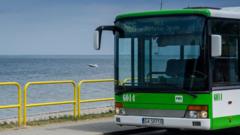
The reinstatement of Bus Route 666 to the town of Hel, Poland, by European transit operator FlixBus is not a mere concession to internet nostalgia. It is a calculated exercise in corporate brand arbitrage, exploiting a structural mismatch between localized cultural pushback and globalized digital equity.
When regional operator PKS Gdynia retired the designation in June 2023 by altering the final digit to form Line 669, it responded to a specific, decade-long domestic lobbying effort driven by conservative Catholic groups. However, the capitulation fractured a highly lucrative, internationally recognized intellectual property asset that had organically converted mundane municipal transit into a destination service. By reviving the route as a long-distance carrier stretching from Kraków through Warsaw to the Baltic coast, FlixBus has optimized a clear corporate asset valuation strategy: absorbing local socio-cultural friction to capture high-margin, tourist-driven demand.
The Economic Mechanics of Viral Infrastructure
Transit lines operate primarily as utility functions, where consumer demand is driven by price elasticity, scheduling frequency, and temporal efficiency. Under standard economic models, route designators (numbers and symbols) serve a purely administrative purpose to minimize consumer friction and navigation errors.
Route 666 inverted this paradigm. The collision of a linguistic coincidence—the Polish town name "Hel" originating from the Old Germanic root for dune or coastal hill, alongside the English phonetic equivalent of eternal damnation—with the biblical "number of the beast" created a unique corporate asset. This asset operates through three structural pillars:
- Zero-Cost Customer Acquisition: The baseline conversion rate of standard regional public transit relies heavily on local demographic necessity. Route 666 achieved a global organic reach that bypassed traditional marketing expenditures. Tourists traveled to the Pomeranian Voivodeship with the primary objective of purchasing a transit ticket, converting a routine transit link into an experiential novelty.
- The Merchandising Premium: The physical bus signage and issued tickets served as scarce, low-cost physical tokens. By transforming a ticket into a souvenir, the marginal utility of the service expanded beyond transit to include physical and digital social validation.
- Arbitrage of Regional vs. International Scale: PKS Gdynia, as a regional operator, possessed a localized optimization function. The political cost of sustained friction with local institutions outweighed the marginal revenue generated by international tourists. FlixBus, operating at a pan-European scale, utilizes a different optimization matrix. Its diversified portfolio allows it to easily absorb localized backlash in exchange for macro-level brand visibility and cross-market passenger acquisition.
The Cost Function of Brand De-escalation
The 2023 decision to alter the route name to 669 highlights the operational perils of asymmetric brand modification. The adjustment was designed to mitigate institutional friction while preserving a subtle nod to the original viral element. Instead, it introduced distinct structural inefficiencies.
[Local Institutional Pressure] ──> [PKS Gdynia: Route Changed to 669] ──> Loss of Global Organic Equity
                                                                                 │
[Pan-European Scale Optimization] ──> [FlixBus: Reinstates Route 666] ───> Capture of Latent High-Margin Demand
The primary risk of this mitigation strategy was the destruction of organic search equity. "Bus 666 Hel" functioned as an established, high-intent index keyword combination with a decade of accumulated backlink velocity and user-generated media indexing. Shifting the designation to 669 fractured this digital footprint. International travelers looking for the specific, culturally verified experience faced search friction, eroding the programmatic discoverability of the line.
The secondary issue stems from optimization asymmetries. For a localized public entity, maintaining a stable relationship with the immediate community minimizes institutional resistance and local regulatory hurdles. However, when PKS Gdynia abdicated the 666 designation, it left a vacuum of latent consumer demand.
FlixBus identified this unexploited equity. Because FlixBus relies on a decentralized partner-operator model and high-density long-haul corridors, its customer acquisition funnel is vastly wider. The company does not optimize for localized institutional goodwill; it optimizes for load factors across integrated networks. Reintroducing Route 666 on a 13-hour transit corridor from Kraków to Hel scales the monetization of the asset, moving it from a localized short-hop shuttle to a premium long-distance itinerary.
Systemic Logistics of the Summer Corridor
The viability of the revived route relies on highly specific operational design. The Hel Peninsula is a 35-kilometer sandy spit accessible by a single primary arterial road, National Road 216, which suffers from severe, systemic seasonal bottlenecks.
To run a daily 13-hour service across the entire north-south axis of Poland without collapsing scheduled reliability, FlixBus must navigate a complex optimization framework:
- Temporal De-confliction: The schedule must be precisely engineered to clear the choke point of Władysławowo—the entry gate to the peninsula—outside peak domestic holiday traffic windows. Failing to hit this gate during off-peak hours results in cascading delays that degrade fleet utilization rates across the broader network.
- Yield Management Adaptation: Long-haul routes running from major economic hubs like Kraków and Warsaw face mixed rider profiles. The carrier must balance high-yield, short-notice business or transit commuters between primary hubs with the lower-velocity, highly seasonal leisure market bound for the Baltic resorts.
- Absorbing Route Friction: By initiating the line deep within southern Poland, FlixBus buffers the operational risks of the peninsula. Even if the final 35 kilometers suffer from terminal congestion, the preceding 12 hours of transit pass through high-velocity highway networks, securing base-level passenger volumes and predictable sector revenues.
A Strategic Evaluation of Institutional Backlash
The primary threat to the longevity of the reinstated route is institutional intervention. In highly conservative regions, systematic pressure from ecclesiastical or local administrative authorities can manifest as regulatory roadblocks, including targeted traffic enforcement, terminal licensing delays, or restricted access to municipal transit hubs.
However, the risk profile for a private international conglomerate differs fundamentally from a regional public utility. While PKS Gdynia faced direct reputational risks within its immediate municipal operational theater, FlixBus can decouple its brand identity across distinct regional markets. Cultural backlash within a specific Pomeranian or domestic cohort has negligible transactional impact on a consumer booking a route from Berlin to Prague or Paris to Amsterdam.
The institutional resistance effectively serves as free, ongoing programmatic marketing. Every public objection or formal protest re-indexes the route name across global media channels, reinforcing its status as a counter-cultural novelty. This creates a reinforcing loop: media controversy increases digital visibility, which drives tourist intent, leading to higher load factors and validating the operational decision to maintain the controversial designation.
The ultimate strategic play for FlixBus is the long-term exploitation of this controversy loop. Barring direct statutory intervention from national transport ministries—which remains highly improbable given the economic value of tourism to the Pomeranian region—Route 666 will likely transition from an endangered novelty into a permanent anchor asset of Baltic seasonal transit. The carrier has successfully demonstrated that in a mature, digitized travel market, the financial returns of global attention capital routinely outperform the utility value of localized institutional conformity.
:max_bytes(150000):strip_icc()/Simply-Recipes-Aldi-Best-Frozen-Foods-LEAD-07-73a7d59941514c45bb103ddf2732b204.jpg)

