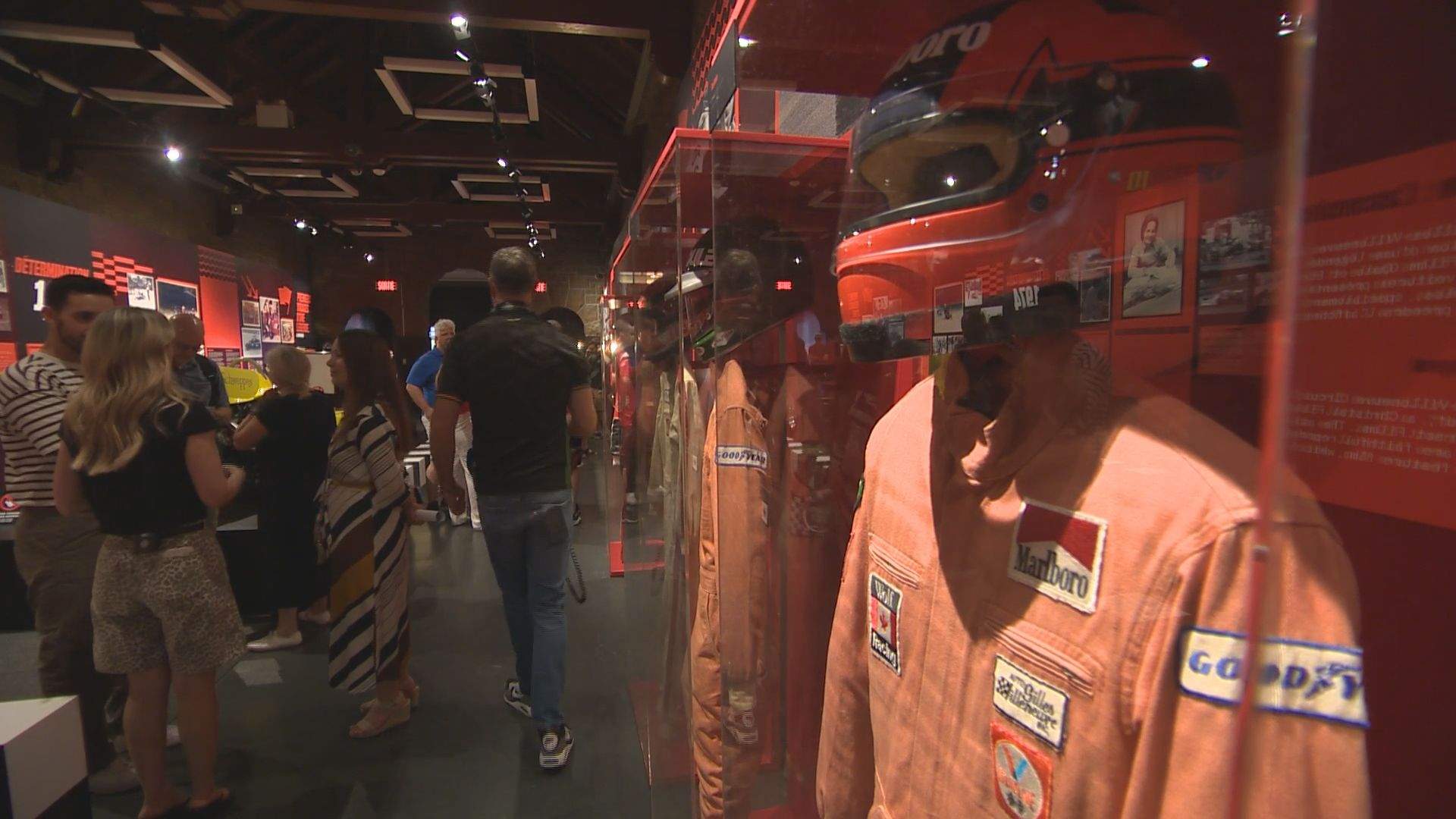
Cultural legacy in professional motorsport behaves like physical capital: without deliberate reinvestment, public memory degrades. The opening of the "Salut Gilles" exhibition at Parc Jean-Drapeau serves as a masterclass in how to institutionalize athletic heritage. Rather than treating legacy as a static, nostalgic commodity, the exhibition structures Gilles Villeneuve's narrative using specific physical artifacts and media assets to bridge the gap between historical performance and modern brand equity.
Understanding the mechanics of this exhibition requires moving past vague sentimentality. It requires a hard look at the structural elements that transform a deceased athlete’s career into a permanent regional and international brand. Also making waves in related news: Why the 2026 ESPY Awards Left the West Coast Behind and Actually Delivered.
The Three Pillars of Narrative Preservation
To convert raw sporting history into an impactful, educational public installation, a curator cannot rely merely on a chronological timeline. The exhibition uses a tripartite framework to convert historical data into a structured audience experience.
                  ┌─────────────────────────────────────────┐
                  │      PILARS OF NARRATIVE PRESERVATION   │
                  └───────────────────┬─────────────────────┘
                                      │
             ┌────────────────────────┼────────────────────────┐
             ▼                        ▼                        ▼
┌────────────────────────┐┌────────────────────────┐┌────────────────────────┐
│     1. ARCHIVAL        ││    2. THE MECHANICAL   ││    3. THE CINEMATIC    │
│     PROVENANCE         ││       EVOLUTION        ││       PROJECTION       │
│                        ││                        ││                        │
│ Focus: Family records  ││ Focus: Development of  ││ Focus: Media & film    │
│ to humanize the brand  ││ mechanical intuition   ││ as scale mechanisms   │
└────────────────────────┘└────────────────────────┘└────────────────────────┘
1. Archival Provenance
Public memory of professional athletes is often distorted by highlight reels. The exhibition counters this by using exclusive, uncurated family archives. The inclusion of personal photography, childhood artifacts, and private correspondence humanizes the subject. This establishes an authentic baseline. It moves the subject from an abstract "legend" to an actual individual, anchoring the visitor's emotional investment before introducing his professional achievements. Further details regarding the matter are explored by Sky Sports.
2. The Mechanical Evolution
Most retrospective motorsport displays over-index on an athlete's ultimate peak—in this case, his years driving for Scuderia Ferrari in Formula One. This creates a logical bottleneck by omitting the developmental pathway. The exhibition addresses this by showcasing the machinery of Villeneuve's early career, including:
- Competitive snowmobiles, where he refined his high-slip, low-traction driving style.
- Formula Ford open-wheel trainers.
- Formula Atlantic machinery, which served as his direct springboard to the global stage.
Displaying these intermediate steps proves that elite performance is an iterative process, not an overnight phenomenon.
3. The Cinematic Projection
Static displays struggle to capture the kinetic nature of motorsport. The integration of production elements, rare footage, and structural assets from the biographical film Villeneuve: The Rise of a Legend acts as a scale mechanism. It translates historical speed into contemporary visual vocabulary, making the visceral danger of 1970s racing accessible to generations raised on high-definition digital media.
The Structural Mechanics of a Living Brand
The long-term value of the exhibition lies in how it operationalizes sports heritage to serve concrete regional goals. This is not merely a tribute; it is a calculated effort to maintain Montreal's position in global motorsport culture.
The Geography of Authority
The physical placement of the exhibition is highly strategic. Located at Parc Jean-Drapeau, the installation sits directly adjacent to the Circuit Gilles Villeneuve—the active track that hosts the Canadian Grand Prix.
This spatial proximity creates a powerful feedback loop. The track provides the physical proof of Villeneuve's legacy, while the exhibition provides the historical context for the track. For the casual tourist or Grand Prix attendee, this layout directly explains the naming of the circuit, transforming a simple geographic label into an active educational experience.
Formal Institutionalization
Legacy preservation cannot rely solely on commercial interests. The sustainability of Villeneuve's brand was significantly reinforced by a formal policy action: Quebec's official designation of Gilles Villeneuve as an "historic figure."
This political designation shifts the responsibility of preservation from private entities to the state. It secures long-term institutional support and cements Villeneuve's place in the cultural curriculum of the province. The exhibition serves as the first major public activation of this new historical status.
Limitations of the Nostalgia Model
While the exhibition successfully organizes Villeneuve's legacy assets, relying strictly on physical curation presents structural challenges.
The first limitation is geographic friction. A physical installation at Parc Jean-Drapeau is inherently limited by physical foot traffic, restricting its reach to local residents and seasonal tourists.
The second limitation is generational decay. As the cohort of fans who watched Villeneuve race live in the late 1970s and early 1980s ages, the emotional resonance of physical memorabilia naturally declines. Without digital counterparts or interactive simulations that allow younger audiences to experience the physics of his driving style, the physical artifacts run the risk of becoming static museum pieces rather than active cultural touchstones.
Strategic Recommendation for Cultural Asset Managers
To maximize the return on cultural assets, organizations managing historical sports brands must transition from a passive "exhibit" model to an active "distribution" model.
The immediate tactical priority is to digitize the family archives showcased at Parc Jean-Drapeau. These assets should be packaged into a highly accessible, cloud-based educational portal. By licensing these authentic materials to sim-racing platforms, documentary filmmakers, and educational institutions, the estate can decouple the brand from physical locations.
Using the physical exhibition as a high-authority anchor point, asset managers must build a global, multi-platform digital footprint. This approach ensures the brand remains highly relevant to a younger, digitally native audience that values interactive and virtual experiences over static displays.