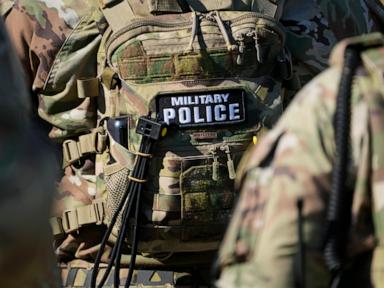
The fatal shooting of 20-year-old Tyrin Johnson in downtown Memphis by two Tennessee National Guard members exposes the operational friction points that occur when military personnel execute domestic law enforcement mandates. Occurring at approximately 4:00 a.m. during a multi-agency foot pursuit following reports of gunfire, the incident marks the first lethal kinetic action by National Guard troops assigned to the Memphis Safe Task Force. Beyond the immediate municipal fallout, this event serves as a critical case study in the systemic risks inherent to mixed-authority task forces—specifically regarding rules of engagement, tactical transparency, and constitutional boundary lines.
To evaluate the operational mechanics of this incident, the situation must be dissected through a structured analysis of joint urban policing models, systemic transparency asymmetries, and the economic variables driving federal-state deployments.
The Operational Friction Model: Kinetic Risk in Mixed-Command Structures
The deployment of 1,450 National Guard soldiers to Memphis, operating under the authority of Governor Bill Lee to support a broader federal task force initiative, introduces a structural variance in tactical execution compared to standard municipal policing. Military personnel and local law enforcement operate under fundamentally distinct institutional frameworks. When these entities are blended into a singular operational unit, structural vulnerabilities materialize across three primary vectors.
1. The Rules of Engagement Symmetry Gap
Municipal police officers operate under localized use-of-force continuums governed by state laws, departmental policies, and Supreme Court precedent under Tennessee v. Garner and Graham v. Connor (evaluating "objective reasonableness"). Conversely, National Guard personnel on state active duty are bound by State Rules for the Use of Force (SRUF).
While both frameworks permit lethal force in response to an imminent threat of death or serious bodily harm—such as an armed suspect turning toward personnel with a firearm—the training pathway leading to that split-second decision differs. Military training historically emphasizes threat neutralization and area security, whereas modern urban policing prioritizes de-escalation and containment within civilian populations. The intersection of these distinct tactical doctrines during a rapid foot pursuit increases the variance in escalation velocity.
[Report of Gunfire]
       │
       ▼
[Joint Foot Pursuit: MPD & National Guard]
       │
       ▼
[Suspect Turns with Weapon]
       ├──► MPD Vector: Local Use-of-Force Continuum
       └──► National Guard Vector: State Rules for the Use of Force (SRUF)
               │
               ▼
       [Kinetic Execution: Two Guard Members Fire]
2. The Tactical Equipment Mismatch
National Guard units deployed to high-crime urban areas are equipped for self-defense and support but frequently lack the intermediate, non-lethal compliance tools standard on a police officer's duty belt (e.g., conducted energy weapons, chemical irritants, or specialized physical restraint tools). When a situation escalates rapidly on foot, soldiers face a compressed decision window with fewer gradient steps between verbal commands and lethal kinetic force.
3. First-Aid Infrastructure vs. Lethal Outcomes
The operational architecture of the deployment did include internal mitigation protocols. According to military spokespersons, two National Guard medical specialists immediately administered combat casualty care at the scene. However, the application of high-level tactical medicine was insufficient to override the physiological trauma of two gunshot wounds to the chest, highlighting that robust field-medical integration cannot fully offset the high lethality rate of military-grade small arms engagements in urban environments.
The Transparency Bottleneck: Institutional Accountability Asymmetry
The investigation into the shooting, directed by the Shelby County District Attorney and executed by the Tennessee Bureau of Investigation (TBI), faces immediate structural bottlenecks regarding evidentiary collection and public disclosure. This asymmetry undermines public trust and complicates the verification of the official sequence of events.
The primary operational bottleneck is the absence of standardized mobile video recording systems among military personnel. While the Memphis Police Department utilizes body-worn cameras (BWCs) as standard operational equipment, statements from U.S. Marshals Service representatives indicate that National Guard troops operating within the Memphis Safe Task Force are not outfitted with BWCs.
This technological gap creates a fractured evidentiary landscape:
- Fragmented Visual Record: Investigators must rely exclusively on peripheral data streams, including municipal street cameras, private business surveillance, and the BWCs of municipal officers who may not have had an unobstructed line of sight during the critical seconds of the engagement.
- The Chain of Custody Delay: Because the TBI acts as an independent state-level investigator, local municipal leadership, including Mayor Paul Young, is structurally decoupled from the data flow. This creates an information vacuum where city executives must withhold substantive commentary, slowing the localized accountability loop and amplifying civic volatility.
The Macroeconomics and Jurisdictional Jurisprudence of Domestic Deployments
The incident in Memphis cannot be evaluated in isolation from the broader fiscal and constitutional frameworks driving the deployment. The Memphis Safe Task Force is part of a wider federal strategy targeting six metropolitan areas, including New Orleans and Washington, D.C. This approach relies on a specific financial and legal architecture that faces intensifying systemic challenges.
The Fiscal Burden Matrix
According to data from the Congressional Budget Office, these domestic National Guard policing interventions generated a cumulative taxpayer cost of nearly $500 million through the end of December 2025. Projections for the full calendar year of 2026 estimate the total expenditure will exceed $1 billion.
This massive capital allocation is deployed against highly contested performance metrics. While proponents point to overall downward trends in urban violent crime over the past 24 months as justification for the expenditure, criminological data indicates these crime contractions began globally across major U.S. cities prior to the initiation of the military deployments. The high marginal cost of utilizing military forces for routine urban patrol tasks suggests a diminishing marginal return on investment compared to localized structural interventions.
Legal Challenges to Sovereign Authority
The deployment strategy operates on a contentious legal axis defined by federalism and state executive overreach. In Memphis, this tension has manifested in a two-front legal battle:
- The Structural Vector: Local Democratic officials previously sued to halt the deployment, arguing it violated the Tennessee Constitution’s explicit restrictions regarding the conditions under which a governor can deploy military forces within autonomous municipalities. The Tennessee Court of Appeals neutralized this avenue in April 2026, ruling that local elected officials lacked the formal standing to block state executive military orders.
- The Civil Liberties Vector: A concurrent federal lawsuit filed in May 2026 by Memphis residents, backed by the American Civil Liberties Union, targets the operational behavior of the task force itself. The suit challenges a state statute used by the task force that criminalizes bystanders who film law enforcement actions within a 25-foot perimeter. The plaintiffs allege tactical retaliation, including surveillance and intimidation by unmarked vehicles and personnel wearing tactical vests outside the residences of individuals who recorded task force operations.
Strategic Action Plan for Joint Force Optimization
To mitigate the inherent operational risks of mixed-authority urban policing and prevent further un-instrumented kinetic outcomes, task force leadership must execute immediate structural adjustments. Continuing under the current operational framework introduces unacceptable levels of legal, financial, and human liability.
Weaponry and Equipment Standardized Restructuring
The Tennessee National Guard must immediately suspend active foot-patrol operations within municipal borders until all deployed personnel are equipped with standard-issue body-worn cameras integrated into the local police department's digital evidence management system. Furthermore, soldiers assigned to joint task forces must be cross-trained and equipped with intermediate non-lethal force options to expand their tactical continuum.
Jurisdictional De-escalation and Command Realignment
Operational command must shift from a co-equal mixed structure to a strict subordinate-support model. National Guard assets should be restricted to secondary perimeter security, logistical intelligence gathering, and stationary strategic overwatch. Direct civilian interaction, tracking, and active pursuits must be executed exclusively by municipal officers who are bound by local civil rights policies, subject to localized civilian oversight boards, and optimized for urban community dynamics.