The destruction of medical infrastructure in active combat zones is not an isolated act of vandalism; it is a predictable breakdown of a complex socio-biological system. When an Ebola treatment center in the Democratic Republic of Congo is set ablaze, resulting in the escape of 18 suspected cases, the immediate crisis is epidemiological, but the root cause is structural. Managing highly infectious pathogens under conditions of state fragility requires balancing two conflicting systems: the clinical protocols of viral containment and the political economy of local populations. Containment fails when external medical interventions treat a biological threat in isolation from the prevailing socio-political matrix.
To understand why containment failures recur, the event must be deconstructed into three interdependent variables: tactical security vulnerability, institutional trust deficits, and the mechanics of viral amplification.
The Triad of Containment Vulnerability
Epidemiological interventions in conflict zones operate under a permanent state of friction. The failure of containment in eastern Congo reveals a structural vulnerability that can be quantified through three distinct vectors.
                  [1. Tactical Security Vulnerability]
                                  │
                                  ▼
[2. Institutional Trust Deficits] ──► [CONTAINMENT FAILURE] ◄── [3. Viral Amplification Mechanics]
1. Tactical Security Vulnerability
Medical facilities housing Level-4 biosecurity threats require a security perimeter that mirrors military defensive positions, yet they must remain accessible to civilian populations. This creates an operational paradox. A treatment tent constructed from standard canvas or lightweight polymers represents a catastrophic single point of failure. It possesses zero ballistic resistance and can be compromised using rudimentary incendiary devices.
When security architectures rely on local state actors or international peacekeeping forces with overlapping or conflicting mandates, a protection vacuum emerges. The moment the physical perimeter is breached, the facility transitions from a containment zone to an extraction point, allowing symptomatic and highly infectious individuals to re-enter the community.
2. Institutional Trust Deficits
External medical interventions frequently miscalculate the local political economy. In regions marked by decades of civil war and state neglect, the sudden influx of well-funded international non-governmental organizations (NGOs) generates acute economic distortions. The local population observes a stark asymmetry: millions of dollars are allocated to combat a single pathogen (Ebola), while basic primary healthcare, malnutrition, and ongoing security threats are left unaddressed.
This asymmetry fuels exploitation narratives. The containment facility ceases to be viewed as a place of healing; instead, it is perceived as a foreign corporate or political enterprise extracting biological capital or serving as a front for state surveillance. Rumors that the virus is fabricated or deliberately introduced are rationalizations of this economic and political disenfranchisement. Consequently, attacking the facility becomes a logical act of political resistance for marginalized groups.
3. Viral Amplification Mechanics
The physical escape of 18 suspected Ebola cases introduces an exponential transmission risk into the surrounding community. The mechanics of post-escape amplification are governed by three compounding factors:
- The Diagnostic Gap: Suspected cases are unconfirmed cases. Within a compromised cohort, individuals infected with standard malaria or typhoid are mixed with active Ebola shedding vectors. The process of escape and subsequent evasion forces these individuals into close physical proximity, accelerating cross-contamination outside a controlled triage environment.
- The Velocity of Contact Networks: Escaped individuals do not remain stationary; they seek refuge within familial or tribal networks. This expands the contact-tracing radius exponentially. Every hour spent evading health authorities increases the reproduction number ($R_0$) from a managed sub-critical state to an unmanaged super-spreading trajectory.
- The Suppression of Reporting: Because the escapees are now fugitives from a state-backed health intervention, they are highly unlikely to present themselves to alternative clinical nodes when severe symptoms manifest. The terminal phase of Ebola hemorrhagic fever involves massive viral shedding through bodily fluids. Dying in hiding guarantees that family members and traditional healers will be exposed to lethal viral loads under zero-barrier conditions.
The Strategic Miscalculation of Purely Clinical Interventions
The primary operational error in managing these crises is the reliance on a purely clinical framework. Western medical models assume that demonstrating clinical efficacy (e.g., reducing mortality rates via monoclonal antibodies) will naturally generate community compliance. This assumption ignores the behavioral realities of asymmetric conflict zones.
The introduction of high-containment protocols alters local social structures. High-efficiency particulate air (HEPA) filters, positive-pressure bio-hazard suits, and restricted visitation policies strip away the human element of medical care. When a patient enters an Ebola treatment unit, they disappear behind a wall of plastic and armed guards. If they die, traditional burial practices—which often involve washing and touching the deceased—are strictly prohibited by bio-security teams.
This intervention framework treats the human body as a biological hazard while ignoring the social obligations tied to death and mourning. By criminalizing traditional grief rituals without providing culturally viable alternatives, containment teams inadvertently incentivize families to hide symptomatic relatives, raid facilities, or assist in escapes. The burning of a tent is an assault on the clinical alienation imposed by external actors.
Restructuring the Containment Architecture
To prevent recurring failures, the operational blueprint must transition from an insular bio-security model to an integrated civil-military and anthropological framework. The following structural modifications are required to harden containment operations in hostile environments.
Decentralization of the Clinical Footprint
Concentrating dozens of suspected and confirmed cases in centralized, high-visibility tent complexes creates a high-value target for insurgent factions and local protestors. The footprint must be decentralized into smaller, modular, low-profile stabilization points embedded within existing, trusted community health centers.
These modular units should utilize reinforced masonry or bullet-resistant composites rather than soft-sided tents. By reducing the visual profile of the intervention, the facility is less likely to become a focal point for political agitation.
Centralized Model (High Risk):
[Large Tent Complex] ──► Attracts Protest/Insurgency ──► Single Point of Failure

Decentralized Model (Resilient):
[Masonry Unit A] + [Masonry Unit B] + [Masonry Unit C] ──► Embedded in Existing Clinics
Transition to Co-Managed Security Perimeters
Relying exclusively on state military forces or foreign private security details alienates the local population and validates narratives of occupation. The security architecture must feature a dual-layered perimeter:
- An External, Passive Perimeter: Managed by local community elders, religious leaders, and respected civil society actors who control access through negotiation and social capital.
- An Internal, Technical Perimeter: Managed by specialized biosecurity personnel focusing strictly on containment engineering and access control, completely divorced from local political factions.
Dynamic Resource Balancing
International health agencies must allocate a fixed percentage of operational budgets to non-Ebola healthcare infrastructure. If an agency deploys a multi-million dollar Ebola field hospital, it must simultaneously fund and staff permanent maternal health, clean water, and pediatric triage capabilities in the host community. This directly undercuts the narrative of opportunistic pathogen extraction and re-establishes the intervention as a comprehensive public good.
The Operational Risk Matrix
Every modification to containment strategy introduces trade-offs. The table below outlines the structural limitations inherent in moving away from standard international intervention models.
| Strategic Shift | Primary Risk | Mitigation Protocol |
|---|---|---|
| Decentralization of Facilities | Logistics fragmentation; difficulty maintaining cold-chain supply lines for sensitive therapeutics. | Deployment of solar-powered ultra-low temperature mobile freezers and localized drone-delivery networks. |
| Community Co-Managed Security | Potential infiltration by active rebel elements or subversion of protocols via local bribery. | Strict biometric access logs at the inner technical perimeter; decoupling medical data from state intelligence agencies. |
| Integration of Local Burial Customs | Accidental exposure during modified, low-contact traditional ceremonies. | Co-designing "safe and dignified" burial protocols with local clergy where family members wear light personal protective equipment (PPE). |
Immediate Tactical Requirements for Contact Resumption
The escape of 18 suspected vectors demands an immediate pivot from passive containment to active, non-coercive community surveillance.
The deployment of armed search-and-retrieval teams will fail. It drives the vectors deeper into hiding, ensures the complicity of the community in concealing them, and increases the probability of retaliatory strikes on surviving medical infrastructure. Instead, the tactical response must leverage the existing network of local community healthcare workers who are independent of state military structures.
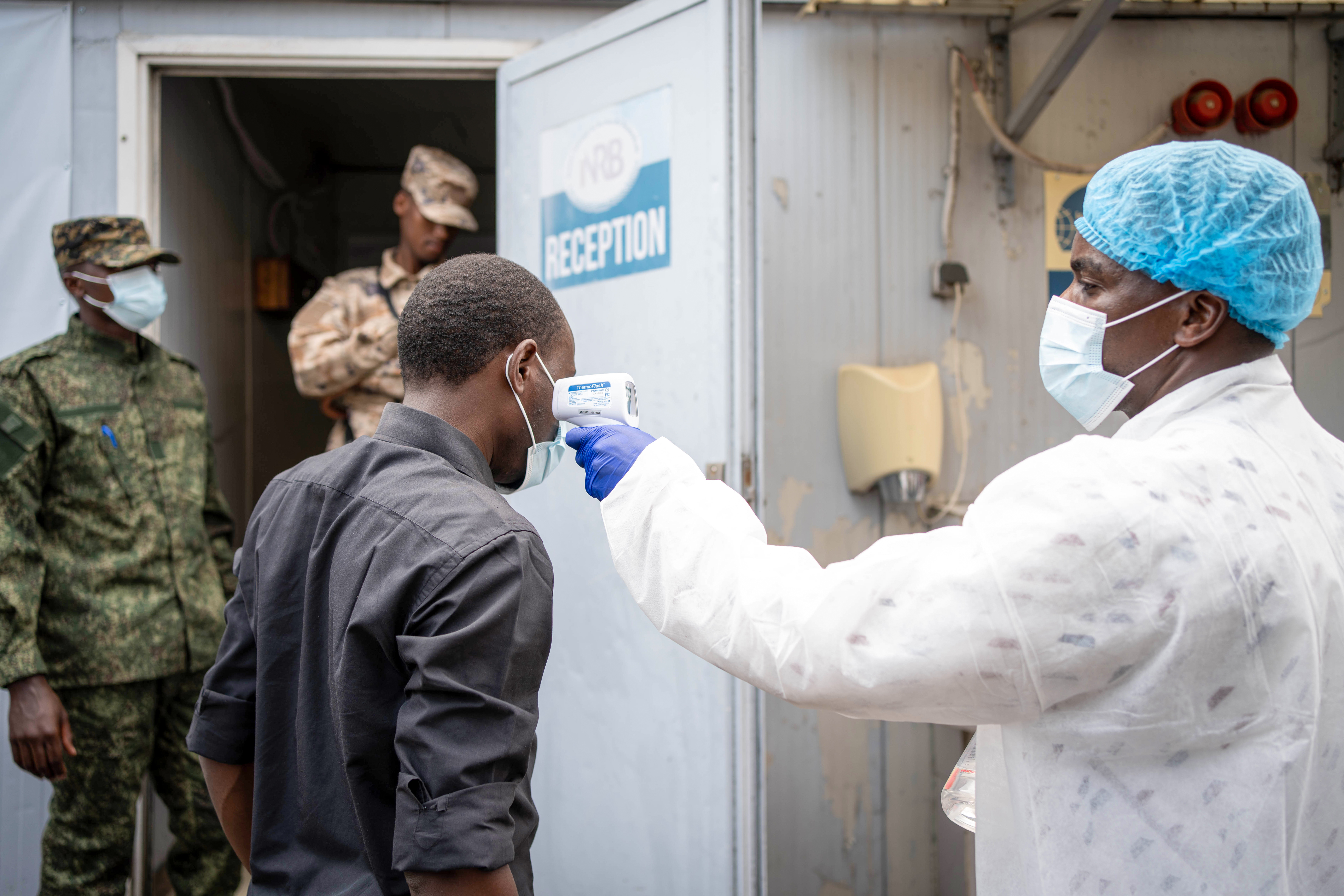
These local actors must be equipped with oral swab diagnostic kits and thermal imaging tools that allow for non-invasive, rapid assessment from a distance. The operational objective is to establish decentralized isolation zones within the homes of the escapees rather than forcing them back into a central facility that has already been compromised.
If an escaped suspect tests positive within the community, the home must be fortified with temporary barrier materials, and the family must be supplied with direct food and medical stipends to eliminate the economic necessity of leaving isolation. Containment is achieved not by the strength of the cage, but by reducing the friction of isolation for those inside it.