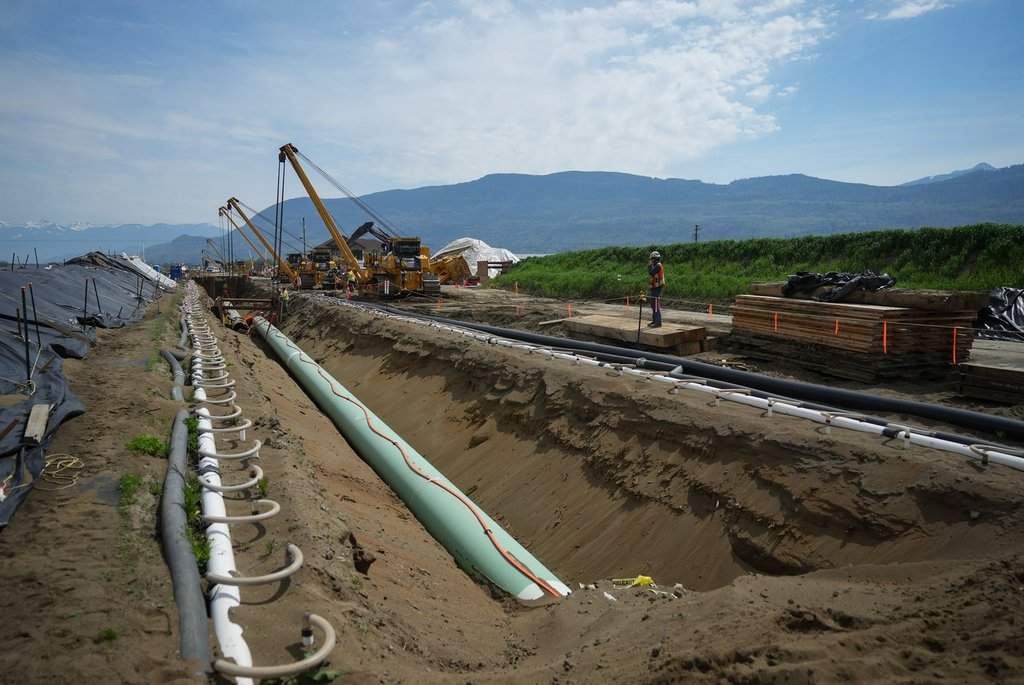
The announced framework for a proposed one-million-barrel-per-day bitumen pipeline from Alberta to the Canadian West Coast represents an attempt to bypass traditional commercial risk cycles through state-led pre-development. By filing its formal submission to the federal Major Projects Office on July 2, 2026, the Alberta government is acting as an institutional proxy to de-risk early-stage regulatory hurdles. However, decoupling regulatory advocacy from private-sector capital exposure creates a structural mismatch. Historically, midstream infrastructure viability depends on long-term shipper commitments and commercial underwriting. Examining this initiative requires evaluating the complex interaction between federal regulatory speed, industrial emissions mandates, and the physical constraints of West Coast marine logistics.
The Dual-Gate Regulatory Framework
The architecture of the Canada-Alberta memorandum of understanding relies on a synchronized, two-part regulatory commitment designed to compress traditional multi-year approval timelines.
[Alberta MPO Submission (July 2)] ──> [Federal National Interest Designation (Oct 1)] ──> [Targeted Construction Approval (Sept 2027)]
The primary mechanism is the federal Major Projects Office, an entity tasked with accelerating infrastructure reviews. Under the implementation agreement signed in May 2026, the structural logic follows a strict chronological sequence:
- Gate 1: The Jurisdictional Trigger (July 2, 2026): Alberta submits its high-level corridor options, economic modeling, and preliminary engineering frameworks. This submission satisfies the technical requirement to initiate federal review.
- Gate 2: National Interest Designation (Targeted October 1, 2026): The federal cabinet intends to leverage statutory powers to declare the corridor a project of national interest. This designation aims to shield the project from localized regulatory bottlenecks and establish a predictable, accelerated legal track.
The structural limitation of this framework is its departure from precedent. Typically, a midstream operator submits detailed engineering data derived from extensive geotechnical assessments. By presenting a conceptual corridor rather than a finalized route, the government introduces execution risk. While the accelerated process targets a construction approval date of September 1, 2027, the lack of site-specific data could invite legal challenges regarding the depth and adequacy of constitutional consultation obligations.
The Conditional Quid Pro Quo: Emissions Interdependency
Federal backing for increased bitumen egress is structurally linked to Western Canada’s industrial decarbonization performance. The federal-provincial energy accord treats market access and carbon abatement as mutually dependent variables. Specifically, the regulatory viability of the million-barrel-per-day line is contingent on the execution of the multi-billion-dollar Pathways Alliance carbon capture and storage (CCS) network.
This creates a strict economic cost function for upstream producers. To secure the long-term federal approvals and international market access promised by the pipeline, the five major oilsands operators must simultaneously commit capital to the foundational CCS infrastructure. The federal logic dictating this pairing is designed to cap the absolute emissions intensity of the Western Canadian Sedimentary Basin even as total volumetric output expands.
This interdependence introduces a commercial vulnerability. If the capital expenditure required for the CCS network alters the half-cycle economics of oilsands production, the long-term volume commitments required to fill a one-million-barrel-per-day pipeline could erode. Midstream economics demand utilization rates typically exceeding 85% to amortize capital costs effectively. If upstream compliance costs suppress production growth, the structural justification for new greenfield egress weakens.
Marine Logistics and Jurisdictional Bottlenecks
The choice of pipeline routing introduces a sharp trade-off between marine transit efficiency and jurisdictional friction. The northern corridor variants, terminating near prince Rupert or Kitimat, offer the most direct, efficient shipping routes to Asia-Pacific refining hubs. However, these routes run directly into the federal northern oil tanker moratorium.
+------------------+-----------------------------+-----------------------------+
| Route Corridor   | Marine Logistics Advantage  | Regulatory Friction Point   |
+------------------+-----------------------------+-----------------------------+
| Northern Routes  | Shortest transit to Asia;   | Active federal tanker ban;  |
|                  | deepwater port capacity     | strict regional opposition  |
+------------------+-----------------------------+-----------------------------+
| Southern Route   | Existing brownfield path;   | High capital intensity;     |
|                  | established legal precedent | localized B.C. resistance   |
+------------------+-----------------------------+-----------------------------+
| Mid-Continent    | High legal certainty;       | Disadvantaged netbacks;     |
| (Existing South) | avoids West Coast entirely  | avoids premium Asian growth |
+------------------+-----------------------------+-----------------------------+
Amending the tanker ban requires federal legislative adjustments, an action that directly triggers jurisdictional conflict with British Columbia. The province has historical precedent in leveraging environmental assessment certificates, construction permitting, and provincial park land-use regulations to delay linear infrastructure. Even if federal "national interest" designations technically override provincial statutes, provincial agencies retain significant indirect leverage over water crossings, traffic management, and localized environmental monitoring.
The Commercial Capital Deficit
The most critical structural vulnerability of the current strategy is the complete absence of a private-sector proponent. The Alberta government has allocated $14 million for foundational engineering and economic modeling to serve as an early-stage sponsor. However, the ultimate transition from a state-supported concept to a commercially viable asset requires private underinvestment or institutional capital deployment.
Midstream corporations evaluate projects using disciplined capital allocation frameworks. Recent history in Western Canadian infrastructure development—marked by significant cost overruns on major pipeline expansions and coastal export facilities—has driven a corporate preference for brownfield optimization over high-risk greenfield execution.
For a commercial operator to assume ownership of the project post-October 2026, the state must offer more than an expedited regulatory pathway. Institutional capital will demand clear mechanisms to insulate against cost-escalation risk, explicit financial structures for Indigenous equity co-ownership, and guaranteed long-term take-or-pay contracts from creditworthy upstream producers.
Strategic Play
The province must pivot its focus away from purely political and regulatory timelines toward establishing commercial terms. The upcoming July 2 announcement should be used to establish a structured commercial data room. This facility must clearly define the terms of the proposed Indigenous equity co-ownership model and outline the fiscal mechanisms the province will deploy to backstop early-stage cost overruns. Securing non-binding expressions of interest from major midstream operators before the federal October 1 deadline is essential. Without a commercial anchor tenant to validate the economic modeling, the regulatory approvals achieved in Ottawa will remain abstract legal frameworks incapable of attracting construction capital.