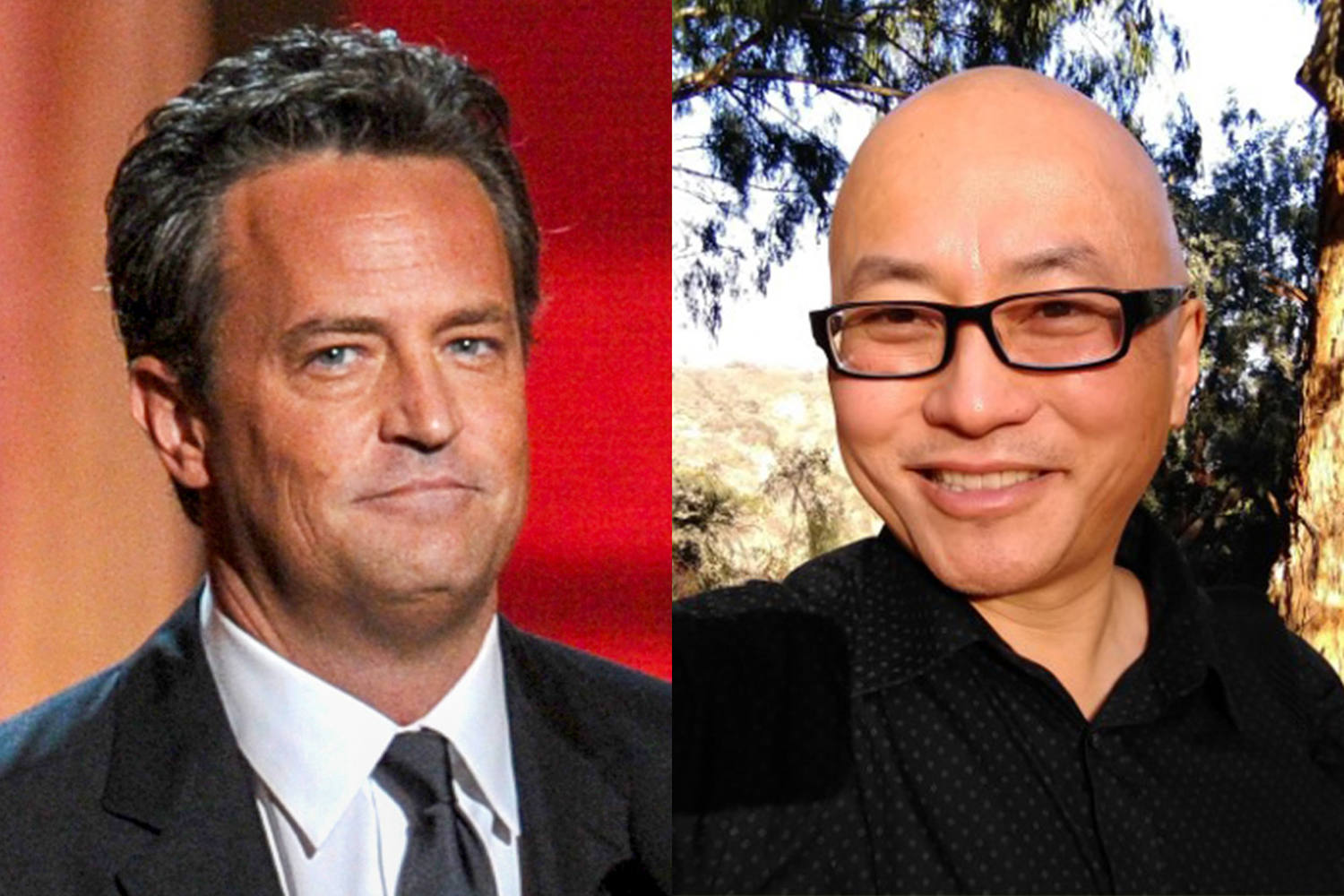
The sentencing of Kenneth Iwamasa to 41 months in federal prison marks the definitive closure of the multi-jurisdictional investigation into the death of actor Matthew Perry. Beyond the standard true-crime narrative, this case serves as a precise case study in supply chain engineering, asymmetric power dynamics, and market exploitation within a closed ecosystem. The fatal outcome was not an isolated lapse in judgment, but the mathematically predictable result of a highly organized, multi-tiered procurement framework optimized for illicit distribution under the guise of specialized corporate service.
To understand the structural failure that led to the October 2023 fatality, the network must be deconstructed into its distinct operational components, examining how economic incentives overrode institutional safeguards.
The Structural Architecture of the Supply Network
The illicit supply chain that serviced Perry functioned via a bifurcated infrastructure, transitioning from institutional exploitation to open-market procurement when the primary channel reached capacity constraints.
[Tier 3: Sourcing Providers] (Dr. Chavez / Jasveen Sangha)
                 |
                 v
[Tier 2: Intermediaries]      (Dr. Plasencia / Erik Fleming)
                 |
                 v
[Tier 1: Operational Node]    (Kenneth Iwamasa - Assistant)
                 |
                 v
[End-User / Consumer]         (Matthew Perry)
Tier 1: The Operational Node (The Gatekeeper)
Kenneth Iwamasa, operating as a live-in personal assistant with an annual compensation of $150,000, served as the logistical nexus. While the defense framed his actions through the lens of subservience and intense professional loyalty—drawing historical parallels to a butler executing a principal's demands—the prosecution successfully demonstrated a pattern of deliberate gatekeeping. Business manager Lisa Ferguson and estate executor documents revealed that Iwamasa systematically eliminated competing influences, including sober-living companions and external medical personnel, effectively monopolizing the micro-environment surrounding the principal.
Tier 2: The Intermediaries (The Facilitators)
Dr. Salvador Plasencia and Erik Fleming functioned as the mid-tier logistical managers. Plasencia exploited his professional credentials to provide an initial veneer of clinical legitimacy. When capital constraints or risk thresholds altered that relationship, Fleming stepped in to manage open-market procurement, bypassing regulatory tracking by utilizing encrypted communications networks.
Tier 3: The Sourcing Providers (The Origin)
Dr. Mark Chavez, who operated a licensed ketamine clinic, and Jasveen Sangha, a high-volume illicit distributor known as the "Ketamine Queen," acted as the primary wholesale sources. Chavez diverted legitimate medical inventory, while Sangha provided an unmonitored bulk supply line capable of meeting escalating demand curves.
The Economic Inefficiency and Cost Function of Illicit Markets
The operation of this network demonstrates the extreme price premiums present in dark markets where buyers possess low price elasticity and high urgency.
In a standard clinical setting, the acquisition cost of a standard vial of ketamine is approximately $15. However, within this specific procurement ring, Dr. Plasencia charged a cumulative $57,000 for 20 vials and associated paraphernalia. This represents an astronomical markup:
$$\text{Markup Factor} = \frac{$57,000}{20 \times $15} = \frac{$57,000}{$300} = 190\times \text{ (or } 19,000%)$$
This massive premium reflects the cost of regulatory evasion, the monetization of professional medical licenses, and the exploitation of a wealthy individual's absolute confidentiality requirements.
When the economic drain of this 19,000% markup became unsustainable or inefficient, the network executed a strategic supply chain pivot. Iwamasa shifted procurement from Plasencia’s corrupted medical channel to Fleming and Sangha’s illicit open-market operation. Over an intense 11-day period in October 2023, Iwamasa bypassed clinical checkpoints entirely to secure 51 vials from this secondary source, dramatically lowering the unit cost while exponentially increasing the volume and chemical risk profile.
Systemic Failure and the Substitution of Expertise
A critical inflection point in the failure cascade occurred when technical competency was deliberately substituted with low-cost, unverified labor to minimize external observation.
- The Delegation of Clinical Function: Dr. Plasencia taught Iwamasa how to administer intramuscular injections. By transferring a medical procedure to an untrained assistant earning a corporate salary, the licensed physicians insulated themselves from immediate proximity to the act, attempting to offload legal liability.
- The Elimination of Feedback Loops: In a legitimate medical framework, a adverse reaction triggers immediate intervention or cessation of the protocol. Iwamasa witnessed multiple instances of severe physiological distress, including episodes where the principal experienced profound catatonia—referred to in court documents as "freezing up"—and lost the ability to articulate speech.
- The Absence of a Redundant Safety Net: In a standard corporate hierarchy or medical team, a failure at the operational level is corrected by external oversight. Because Iwamasa had successfully insulated the environment, there were no redundant communication lines to notify family members or independent medical authorities.
The operational breakdown culminated on October 28, 2023, when Iwamasa administered at least three separate ketamine injections within a single day. The final dose was delivered immediately before Iwamasa vacated the premises to execute logistical errands, leaving an incapacitated principal completely unmonitored near an open body of water. The medical examiner’s post-mortem analysis confirmed that acute ketamine toxicity caused immediate unconsciousness, making drowning a secondary, mechanical consequence of the chemical sedation.
Legal Precedents and Accountability Metrics
The judicial resolution delivered by Judge Sherilyn Peace Garnett establishes a clear blueprint for how federal courts assess liability within closed personal ecosystems. The defensive argument centered on an absolute power imbalance, asserting that a non-medical employee lacks the agency to refuse the explicit commands of an influential employer. The court explicitly rejected this deterministic view, drawing a sharp line between a structural obligation to serve and a conscious decision to participate in reckless, illegal behavior.
The final sentencing metrics across the entire five-defendant cohort reflect a calculated distribution of culpability based on institutional position, profit motives, and cooperation timing:
| Defendant | Institutional Role | Sourcing Channel | Cooperation Status | Final Federal Sentence |
|---|---|---|---|---|
| Jasveen Sangha | Wholesale Distributor | Illicit Open Market | Non-Cooperative | 15 Years Prison |
| Kenneth Iwamasa | Tier 1 Operational Node | Dual-Channel Liaison | Early Plead / Primary Informant | 3 Years, 5 Months Prison |
| Dr. Salvador Plasencia | Tier 2 Intermediary | Corrupted Clinical | Post-Indictment Plead | 2.5 Years Prison |
| Erik Fleming | Tier 2 Intermediary | Illicit Open Market | Cooperative | 2 Years Prison |
| Dr. Mark Chavez | Wholesale Sourcing | Diverted Clinical | Early Plead / License Surrender | 8 Months Home Detention |
The structural logic behind Iwamasa’s 41-month sentence reflects a complex legal trade-off. As the immediate physical actor who delivered the fatal doses, his direct exposure to a manslaughter or high-tier distribution charge was significant. However, his decision to settle with federal prosecutors in August 2024 provided the foundational intelligence required to dismantle the upper tiers of the supply network.
The prosecution argued for the 41-month high-end threshold of his plea bracket by citing his post-incident behavior, which included the initial fabrication of statements to law enforcement and the systematic destruction of physical evidence before a federal search warrant was executed in January 2024. The defense’s request for home confinement was denied because the court determined that Iwamasa possessed the executive agency to halt administration after observing repeated adverse physiological events, defining his continued actions as a calculated choice rather than a condition of employment.
Operational Safeguards for High-Net-Worth Ecosystems
The operational vulnerabilities exposed by this network highlight a critical need for rigorous corporate governance within the private management structures of high-net-worth and high-profile individuals. When private staff are embedded directly into residential environments, standard institutional boundaries dissolve, creating high-risk scenarios where personal loyalty replaces regulatory compliance.
To mitigate these risks, family offices and estate management firms must institute formal operational frameworks that prevent the concentration of unchecked authority within a single employee node.
- Mandatory Separation of Duties: The individual responsible for day-to-day logistical scheduling must never hold sole custody or administrative control over medical care or pharmaceutical procurement. Medical management must be siloed under independent, credentialed third-party professionals who report directly to an outside executor or an established board of trustees.
- Whistleblower Frameworks and External Redundancy: Private employment agreements must include explicitly protected channels that allow staff members to report medical non-compliance, substance escalation, or illegal demands directly to legal counsel or designated family representatives without fear of immediate termination or contractual penalty.
- Independent Clinical Auditing: Any specialized medical protocol conducted outside a traditional hospital setting must be subject to periodic, unannounced audits by independent physicians. This ensures that prescription volumes, administration methods, and patient monitoring practices align with accepted medical standards, eliminating the risk of isolated, predatory clinical operations capitalizing on a client's privacy requirements.