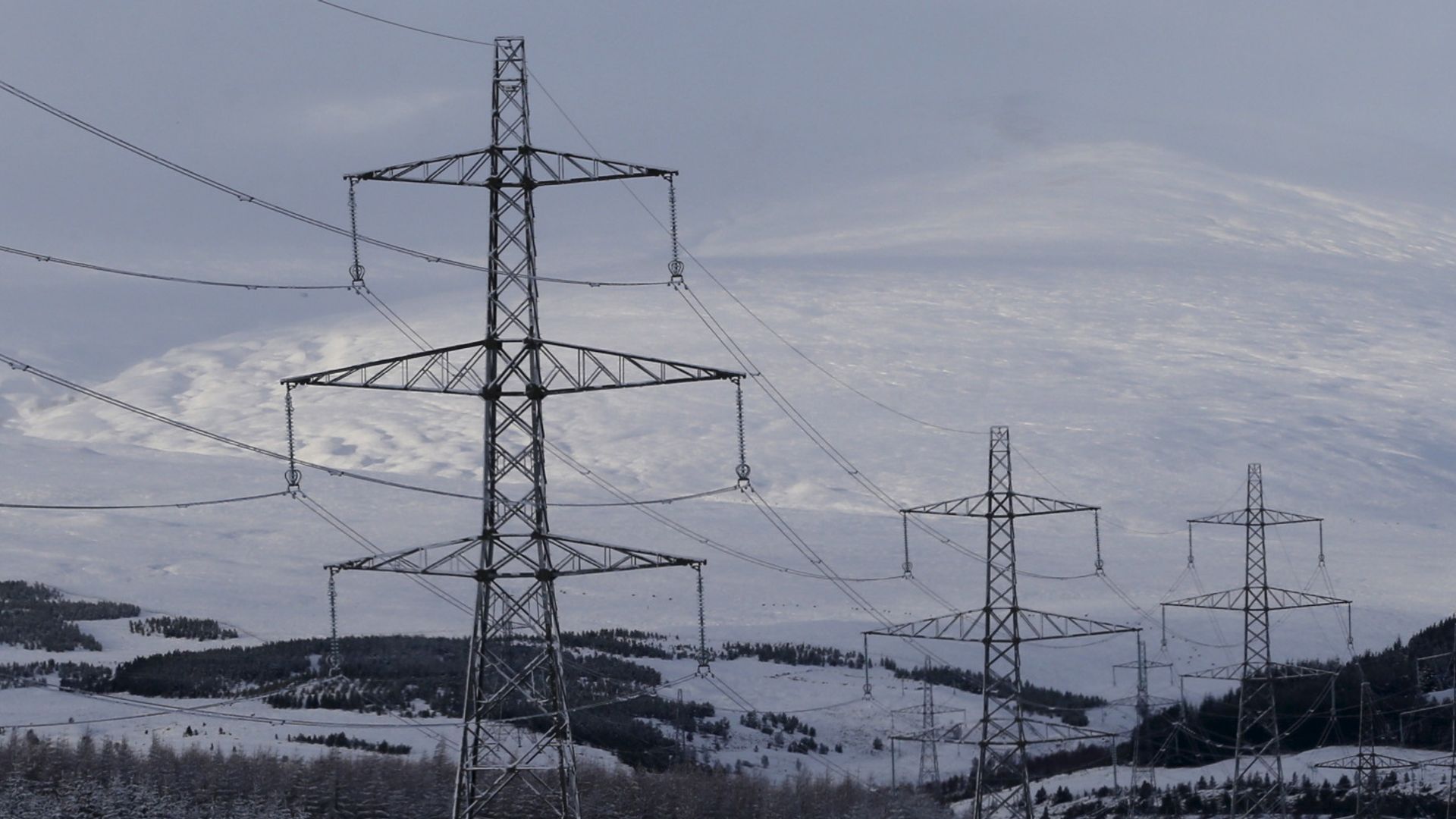
The National Energy System Operator (NESO) declaration that the UK electricity supply will remain secure during the upcoming winter misinterprets the nature of modern energy risk. By focusing almost exclusively on volumetric security—the physical presence of electrons and gas molecules within domestic infrastructure—the official verdict fails to account for the price transmission channels that dictate systemic viability. The issue confronting the British economy is not an absolute physical blackout. The vulnerability lies in the financial friction of a market tied directly to global marginal pricing, rendering domestic power systems economically fragile even while remaining operationally functional.
The Bifurcation of Security: Volumes vs. Prices
To evaluate the impact of the US-Iran conflict on the UK power sector, the analysis must split energy security into two distinct vectors.
- Volumetric Security: The physical capacity to balance generation with load demands.
- Economic Security: The ability to clear the market at a price that does not trigger widespread demand destruction or industrial insolvency.
NESO’s assurance addresses the first vector. The UK power system possesses sufficient nominal generation capacity, interconnector capacity with continental Europe, and liquefied natural gas (LNG) import infrastructure to meet projected peak winter demand. This physical insulation stems from a decoupled supply structure: the UK does not import electricity or natural gas directly from the Persian Gulf.
The second vector remains fully exposed. Natural gas accounts for approximately 30% to 40% of UK electricity generation, acting as the marginal price setter in the wholesale electricity market under the UK's pay-as-clear pricing model. Because natural gas operates within a global commoditized market, any supply disruption that occurs at a major global chokepoint shifts the global supply curve outward, forcing prices upward across all geographies simultaneously.
The International Energy Agency (IEA) confirmed that 34 energy facilities in the Gulf suffered structural damage during the conflict, requiring an estimated two years to restore to pre-war operational levels. The physical destruction of production facilities, coupled with ongoing premium costs associated with transiting the Strait of Hormuz, alters the global baseline price of gas. The UK cannot opt out of this price calculation.
The Three Transmission Cascades
The transmission of geopolitical risk from the Persian Gulf to a British domestic electricity meter occurs via three distinct market cascades.
1. The Global LNG Bidding War
When the Strait of Hormuz experiences instability, the immediate casualty is the flexible pool of global LNG shipments, primarily from Qatar. While European and British terminals have physical regasification capacity, they must outbid East Asian economies for uncommitted Atlantic and Pacific spot cargoes. The UK grid relies on these cargoes to supplement Norwegian pipeline gas and domestic production during prolonged cold spells known as Dunkelflaute—periods of low wind and solar output.
2. Infrastructure Hysteresis
A common analytical error is assuming that a military truce or a diplomatic memorandum of understanding instantly resolves energy market distortions. The physical reality of energy infrastructure imposes a lag. Roughly 10,000 of the Gulf region’s 36,000 oil and gas wells are offline. Bringing these facilities back online requires a technical sequence involving depressurization mitigation, structural corrosion repair, and the mobilization of specialized equipment. Commodity strategists estimate that only 50% of the disrupted regional production will return by the end of the third quarter of 2026. This prolonged deficit ensures that wholesale gas futures remain elevated, maintaining artificial pressure on UK power pricing.
3. The Tanker Fleet Displacement Bottleneck
The maritime logistics sector does not rebalance instantly. Ships are misaligned globally due to months of avoidance maneuvers and rerouting. The pace at which empty tankers enter the Gulf to clear regional storage tanks dictates when production can scale back up. Until export storage tanks drain, upstream production remains restricted. The resulting structural constraint sustains high maritime insurance premiums and freight rates, which embed themselves into the landed cost of gas at British grain terminals.
The North Sea Misconception
Political arguments frequently emerge suggesting that a reversal of the 2025 ban on new North Sea oil and gas drilling would insulate the UK from these international shocks. This position fails basic economic and geological tests.
The North Sea is a mature basin. Approximately 90% of its total recoverable resources have been extracted. Any new exploration campaigns initiated today would require years of capital deployment, geological surveying, and infrastructure development before yielding initial production.
More fundamentally, private operators extract North Sea gas and sell it to the highest bidder on the international market, typically via the National Balancing Point (NBP) or Title Transfer Facility (TTF) hubs. Domestic extraction does not equate to domestic price insulation. A British utility purchasing gas extracted 50 miles off the coast of Scotland still pays the globally determined market rate, which incorporates the risk premiums generated by drone strikes in the Middle East.
Systemic Realities of Clean Energy Transition
The current crisis has forced an acceleration of net-zero targets as an alternative framework for national security. The underlying logic holds that replacing gas-fired generation with wind, solar, and nuclear power breaks the transmission link between global commodity volatility and domestic consumer electricity bills.
This strategy introduces its own structural liabilities. A grid dominated by intermittent renewable generation requires immense capital expenditure in short-duration and long-duration energy storage, synchronous condensers for grid stability, and expanded interconnector capacity. Until these assets exist at scale, gas remains the indispensable transitional fuel required to maintain system frequency and prevent blackouts during periods of low renewable generation.
The transition phase creates a period of dual exposure. The UK remains vulnerable to global gas shocks because it still requires gas for marginal power generation, while simultaneously becoming exposed to supply chain bottlenecks in the critical minerals required for renewable infrastructure. The ongoing instability in global maritime chokepoints affects the transit of rare earth elements and battery components, threatening the deployment timelines of the very assets designed to replace fossil fuels.
Strategic Operational Directive
The government must pivot its defensive posture from structural energy independence, which is an impossibility in the medium term, toward aggressive financial and operational hedging.
- Mandatory Minimum Gas Storage Obligations: The UK possesses structurally deficient gas storage capacity compared to continental European peers, leaving the domestic market dependent on just-in-time delivery. Implementing a regulatory framework that compels large suppliers to fund and hold physical gas reserves removes peak spot-market dependency during supply shocks.
- Reforming the Marginal Pricing Mechanism: The government must decouple the pricing of electricity generated by low-cost renewables from the marginal price of gas-fired generation. Introducing a split-market design where clean energy is traded on long-term fixed contracts while gas handles the residual peak load would limit the financial contagion of international energy conflicts.
- Direct Industrial Demand-Side Response (DSR) Infrastructure: Rather than relying on consumer-side appeals for behavioral reduction, industrial facilities must be integrated into automated, remunerated load-shedding networks. This provides the system operator with predictable blocks of demand reduction to maintain volumetric grid equilibrium without risking unmanaged cascading grid failures.

/https://tf-cmsv2-smithsonianmag-media.s3.amazonaws.com/filer/c6/97/c697b065-e0bd-4970-81ea-819779296b91/u765404inp.jpg)
