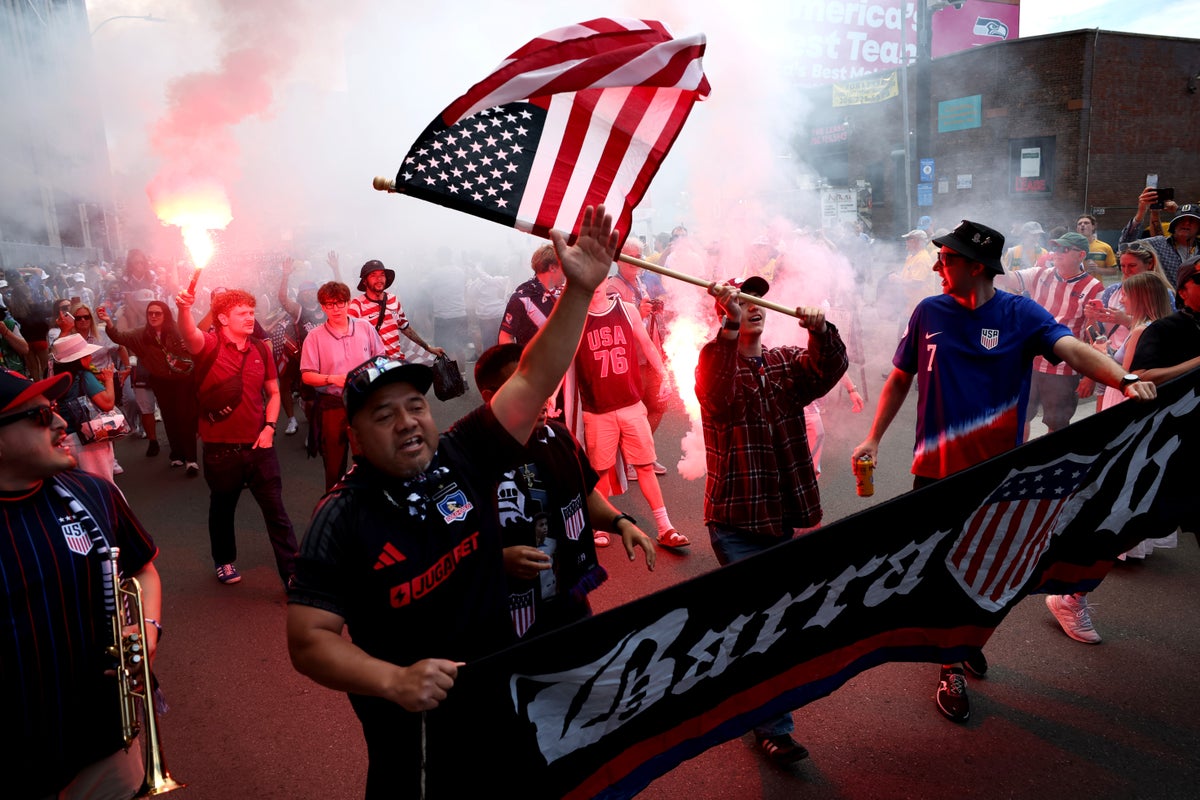
American sports fans love a good tailgate. You pack the truck, grill some burgers, drink a light beer, and walk into the stadium. It's organized. It's contained.
The rest of the world doesn't do contained.
With the World Cup taking over U.S. streets, major metro areas are getting a blunt lesson in global sports culture. If you thought local police departments and city councils were prepared for tens of thousands of international fans turning public infrastructure into a giant party, you haven't been paying attention. Two specific European fanbases just showed the East Coast exactly how different this tournament hits.
The Day Manhattan Learned To Row
Manhattan traffic is usually a nightmare of yellow cabs and delivery trucks. On Monday night, it became a literal sea of red and navy blue. Ahead of Norway’s Group I match against Senegal at New Jersey's stadium, thousands of Norwegian supporters decided that the concrete jungle needed a bit of Scandinavian maritime history.
They didn't just walk through Times Square. They sat down on the asphalt and the iconic red steps, locked arms, and began performing the "Viking Row."
Imagine trying to commute home on the subway or cross 42nd Street only to find five thousand people in horned helmets swaying back and forth, chanting at the top of their lungs, and mimicking an ancient longship. The spectacle brought the heart of New York City to a complete standstill. It wasn't corporate, it wasn't a sponsored pre-game activation, and it certainly wasn't authorized by a city permit.
Norway entered the match riding high after a massive win over Iraq. Led by Erling Haaland, their on-field confidence has clearly bled into a fanbase that treats every public space like a conquered territory. They even tried practicing yoga alongside local Manhattan yogis, creating bizarre viral moments that dominated social media. For a city that prides itself on seeing everything, New York looked genuinely stunned by the sheer scale of the Scandinavian invasion.
How The Tartan Army Forced A Sister City Alliance
If New York was startled by the Norwegians, Boston was thoroughly remodeled by the Scots. Scotland hadn't qualified for a World Cup since 1998. That's nearly three decades of pent-up tournament energy released into the streets of New England.
Estimates suggest up to 40,000 Scottish supporters—the legendary Tartan Army—flooded the region for their opening matches against Haiti and Morocco. They didn't just visit Boston; they basically occupied it.
- The Booze Factor: Local establishments weren't ready. Hennessy’s Bar reported that sales tripled what they normally pull in during St. Patrick’s Day. The Dubliner, located right by the City Hall Plaza fan fest, recorded the biggest single revenue day in its history. Bars were literally being drunk entirely out of beer before noon.
- The Infrastructure Takeover: Scots were spotted riding the infamous City Hall Plaza slide, packing Fenway Park during Red Sox games, and turning local historic sites into open-air pubs.
- The Political Impact: The cultural collision was so intense that Boston Mayor Michelle Wu officially signed a sister-city partnership with Glasgow at a local Scottish restaurant called The Haven.
When the Tartan Army finally had to head south to Miami for their group finale against Brazil, the departure looked more like a cultural evacuation. Delta Air Lines had to implement priority boarding at Boston Logan for anyone wearing a kilt or carrying bagpipes just to keep the terminal moving.
What Most Cities Get Wrong About Soccer Culture
U.S. sports organizers are brilliant at managing stadiums, but they struggle with the organic chaos of global soccer culture. American stadiums are often built out in distant suburbs surrounded by massive parking lots—like the stadium in Foxborough, 22 miles away from downtown Boston.
International fans don't want to hang out in a parking lot three hours before kickoff. They want to drink in the historic city center, march through the streets, and use public transit as a rolling concert venue.
Local police departments in both Boston and New York largely chose to stand back and let the festivities happen, which prevented major incidents. But as the tournament progresses toward the knockout stages, the strain on local infrastructure, alcohol supply chains, and public transit systems is going to test every host city on the bracket.
To get the most out of this tournament cycle, stop treating it like an oversized NFL game. Look up the local fan assembly points in your city ahead of time. Don't try to drive through downtown areas on match days. Most importantly, if a crowd of thousands demands you sit on the floor of a subway station and pretend to row a boat, just sit down and start paddling.