For the first time in a generation, the numbers are actually moving in the right direction. If you’ve spent any time looking at the wreckage of the American opioid crisis, you know how rare it is to see a win. After decades of a steady, terrifying climb that peaked during the pandemic, federal data confirms that U.S. overdose deaths fell significantly in 2025.
We’re looking at a third consecutive year of declines. According to provisional CDC data released in May 2026, roughly 69,973 people died from overdoses in 2025. That’s a 14% drop from the year before and a massive distance from the 2022 peak when deaths nearly hit 110,000. For context, we’re back down to roughly 2019 levels. You might also find this connected story insightful: The Calendar That Lies and the Missing Pieces of Women health.
But don't start celebrating just yet. While these numbers are a relief, they’re still historically high, and the "drug supply" isn't getting any safer. It’s just changing. If we get complacent now, or if policy shifts pull the rug out from under the programs that are working, we’ll see these numbers bounce right back up.
What's actually driving the decline
It isn't just one thing. It's a combination of massive funding and a shift in how we handle the crisis on the ground. For years, the U.S. treated addiction strictly as a crime. Lately, we've started treating it as a public health emergency, and the results are showing up in the morgue reports. As extensively documented in detailed reports by World Health Organization, the results are worth noting.
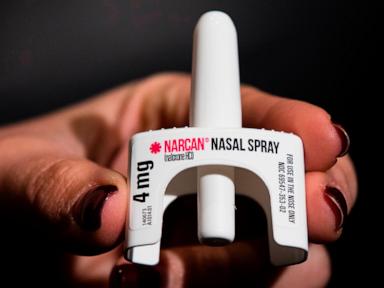
Naloxone is everywhere. You can’t overstate how much the wide availability of Narcan has changed the game. It’s in libraries, vending machines, and the pockets of people who use drugs. We aren't necessarily seeing fewer people use; we’re seeing fewer people die when they do.
The "settlement" money is hitting the streets. Billions of dollars from opioid lawsuit settlements with companies like Purdue Pharma and various distributors are finally being spent. This money is funding "low-barrier" treatment—basically, getting people into care without making them jump through a dozen hoops first.
Medications for Opioid Use Disorder (MOUD). Methadone and buprenorphine are much easier to get than they were five years ago. When someone can get a prescription for buprenorphine via a telehealth appointment, their risk of a fatal overdose drops by half almost immediately.
The drug supply is a moving target
Even though deaths are down, the street supply is more "poisoned" than ever. Fentanyl still causes the lion's share of deaths—about 44,564 in 2025—but the "mix" is getting weirder. We’re moving past the "Fentanyl Era" into something more complex and harder to treat.
We're seeing a rise in Nitazenes. These are synthetic opioids that can be up to 40 times stronger than fentanyl. The scary part? Standard fentanyl test strips won't catch them. We're also seeing "Orphines," another class of synthetics that are popping up in lab results in 2026.
Then there’s the "tranq" problem. Xylazine, a horse sedative, is frequently mixed with fentanyl. Since it’s not an opioid, Narcan doesn't work on it. It causes horrific skin ulcers and makes it much harder to revive someone who has stopped breathing.
Basically, the "quality" of the drugs is getting worse even as we get better at saving lives. It’s a race between medical intervention and chemical evolution.
Why some states are still losing the battle
The national average looks great, but it hides some ugly local truths. While most of the country saw declines, states like Arizona, Colorado, and New Mexico saw overdose deaths jump by 10% or more in 2025.
Why the disparity? It usually comes down to two things: geography and policy.
- The West Coast/Southwest Shift: Fentanyl hit the East Coast years ago, and those communities built their defenses early. It hit the West later, and many of those states are still catching up.
- Access to Care: In states with "treatment deserts," you can't just walk into a clinic. If you have to drive three hours for methadone, you probably won't do it.
- Policy Resistance: Some local governments still resist harm reduction tools like syringe exchanges or supervised consumption sites, viewing them as "enabling" rather than life-saving.
The threat of policy reversals
The biggest worry among experts right now isn't the drugs—it's the money. We're seeing "budget fatigue" at the federal level. There’s a real risk that the massive grants that funded the 2024-2025 success story will be scaled back in 2026 and 2027.
If we pull funding for naloxone distribution or shutter low-barrier clinics, we're basically inviting a "rebound effect." We saw this in the 1990s and early 2000s with different drug waves. When the government thinks the problem is "solved," they move the money elsewhere, and the problem returns with a vengeance.
Real steps to keep the numbers falling
If you're looking at these stats and wondering what actually moves the needle in your own community, forget the "Just Say No" posters. Here’s what works in the real world:
- Flood the zone with Naloxone. It should be as common as a fire extinguisher. If you know someone who uses, or even if you live in an area with high drug activity, carry it.
- Support "Drug Checking" services. Since we can't stop the supply of nitazenes or xylazine overnight, we need to give people the tools to know what's in their bag. High-tech spectrometers at community centers can save lives by telling someone their "heroin" is actually a lethal dose of a new synthetic.
- End the stigma of MOUD. We need to stop acting like being on methadone isn't "real" sobriety. It’s a life-saving medication. Period.
- Protect the funding. Demand that local opioid settlement funds go toward actual evidence-based treatment, not just more police cruisers or general "awareness" campaigns that don't save a single soul.
The 2025 decline is a proof of concept. It shows that when we actually fund public health and stop treating addicts like lost causes, they stop dying. We just have to be smart enough to keep doing it.