China wants you to believe its maritime dominance is inevitable. If you look at the raw numbers, it's easy to see why. The People's Liberation Army Navy (PLAN) commands over 340 surface ships and submarines, while the US Navy sits at roughly 290. Beijing's shipyards churn out 20 warships a year. The US struggles to build six to eight.
But sheer numbers of manned hulls don't tell the whole story. The South China Sea is a massive, volatile stretch of water spanning 3.5 million square kilometers. Patrolling it with traditional warships is incredibly expensive, logistically exhausting, and politically provocative. Also making headlines in related news: Why AI Found 303 New Nazca Lines But Missed the Whole Point of Archaeology.
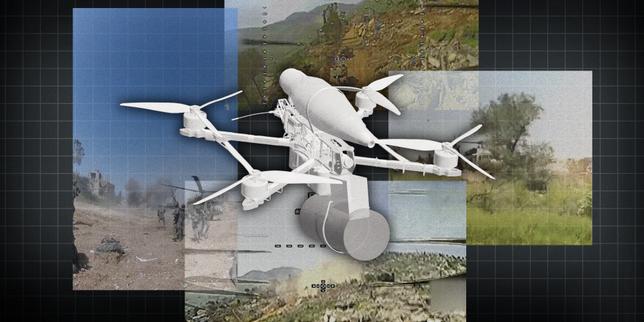
That's why Beijing is shifting its strategy toward autonomous technology. The plan seems perfect on paper. Deploy a swarm of cheap, AI-assisted unmanned surface vessels (USVs) and underwater drones to handle the daily grind of tracking foreign vessels, ramming Philippine fishing boats, and enforcing domestic laws.
It sounds like a silver bullet for regional control. But it isn't. Behind the aggressive propaganda and the high-tech sheen, Beijing's autonomous maritime strategy faces severe technical, political, and operational bottlenecks that keep total control just out of reach. Further insights into this topic are explored by CNET.
The Autonomous Illusion in Grey Zone Warfare
Beijing dominates the South China Sea through "grey zone" tactics. These are coercive actions that stop just short of provoking a direct military response from the United States or its allies. For years, this meant using the China Coast Guard and the People's Maritime Militia—essentially armed fishing fleets—to bully regional neighbors like the Philippines and Vietnam.
Replacing human crews with AI-assisted unmanned vessels is the next logical step for the PLAN. Autonomous platforms don't get tired. They don't need food. Most importantly, they don't leave behind human casualties if a confrontation turns violent.
Take the JARI USV, a 15-meter stealth drone boat developed by China State Shipbuilding Corporation. It packs a modular punch with anti-ship missiles, torpedoes, and a mini-phased array radar. On paper, a fleet of these can blanket contested zones like Scarborough Shoal or the Spratly Islands, creating a permanent, low-cost picket line.
But grey zone warfare relies entirely on human intuition and signaling. It requires calibrated aggression. A coast guard captain knows exactly how hard to ram a Philippine resupply boat to send a political message without sinking it and triggering a mutual defense treaty.
AI algorithms don't understand political nuance. They operate on binary logic. If a foreign vessel takes an unexpected evasive maneuver, an autonomous patrol boat might misinterpret the action as a hostile threat. The resulting automated escalation could trigger the exact shooting war Beijing wants to avoid.
The Blind Spots in the Intelligentized Fleet
The Chinese military is obsessed with "intelligentized" warfare—the integration of AI, big data, and autonomous systems into every layer of command. We see this in recent upgrades to vessels like the Qinzhou, a guided-missile frigate equipped with AI algorithms designed to eliminate radar blind spots during chaotic air defense drills.
But out in the open ocean, AI systems are only as good as the data feeding them. The South China Sea is an electronic warfare nightmare.
The US Navy isn't sitting still while China builds drone swarms. Washington recently unveiled its $65.8 billion "Golden Fleet" plan, which includes funding for 63 unmanned platforms like the Sea Hunter and Vanguard USVs alongside heavy investments in asymmetric electronic warfare.
If conflict brews, the first thing to disappear will be clean data.
- GPS and Satellite Spoofing: Autonomous vessels rely heavily on China's BeiDou satellite navigation system. Heavy electronic jamming can blind these vessels, leaving them drifting aimlessly or sailing off course.
- Acoustic Blind Spots: Beijing is actively researching AI-intelligentized naval mines to place around the Paracel Islands, aiming to exploit rugged undersea seamounts. But those same natural acoustic shadow zones make it incredibly easy for adversary submarines and electronic attack systems to hide from and deceive autonomous sensors.
- Data Suffocation: Advanced semiconductor export controls imposed by Western nations severely limit Beijing's access to the high-end hardware required to process massive, volumetric data inputs in real time.
Without access to the best chips, Chinese maritime AI risks being outpaced by American counter-autonomy systems. A drone fleet that can't communicate or process its surroundings isn't a weapon. It's target practice.
Trusting the Machine in a Rigid System
There's a cultural barrier that civilian tech analysts constantly miss. The Chinese Communist Party values absolute control above all else. This creates a fundamental paradox when deploying autonomous weapons.
To make a drone swarm effective, you have to give the AI the autonomy to make decisions on the fly. If a group of 200 autonomous vessels has to ping a human commander in Hainan every time a wave disrupts their formation or a foreign drone approaches, the tactical advantage of speed is completely wiped out.
Yet, the PLA leadership is deeply terrified of losing control. Software can be hacked. Algorithms can hallucinate. If an AI-assisted vessel defects, crashes into a commercial tanker, or fires on an allied asset without authorization, the political fallout lands directly on Beijing.
Top security analysts note that China maintains a highly cautious official posture regarding fully autonomous lethal actions. The system is structurally terrified of information it cannot predict or control. This institutional paranoia acts as a heavy brake on how much actual authority Beijing will ever delegate to an AI patrol fleet.
De-escalating the High-Tech Standoff
The deployment of AI-assisted vessels in the South China Sea isn't a distant hypothetical. It's happening right now in incremental stages. To prevent these automated systems from destabilizing regional security, frontline states and international observers need to pivot their strategies immediately.
If you are a maritime security operator, policy analyst, or regional stakeholder, focus on these concrete next steps to counter the rise of autonomous gray-zone pressure.
First, prioritize building overlapping regional coalitions rather than relying on isolated bilateral agreements. China prefers negotiating one-on-one because it holds all the economic and military leverage. Joint patrols involving the US, Japan, Australia, and the Philippines force Beijing to calculate the risk of confronting multiple nations simultaneously, making them think twice about deploying aggressive drone swarms.
Second, invest heavily in counter-UAS and counter-USV electronic warfare frameworks. Frontline states don't need to match China hull-for-hull in the autonomous space. Instead, focus on fielding coastal defense missiles, smart sea mines, and integrated maritime domain awareness networks that can detect, jam, and spoof autonomous sensors. The goal must be to degrade the data inputs of AI vessels, turning their autonomy into a liability.
Finally, establish clear international legal precedents regarding autonomous maritime liability. The international community must explicitly state that sovereign states bear full criminal and political responsibility for the actions of their unmanned systems. If an unmanned Chinese vessel causes damage or loss of life, Beijing cannot be allowed to hide behind the fiction of an "algorithmic error." Strip away the excuse of plausible deniability, and the appeal of the unmanned fleet vanishes.