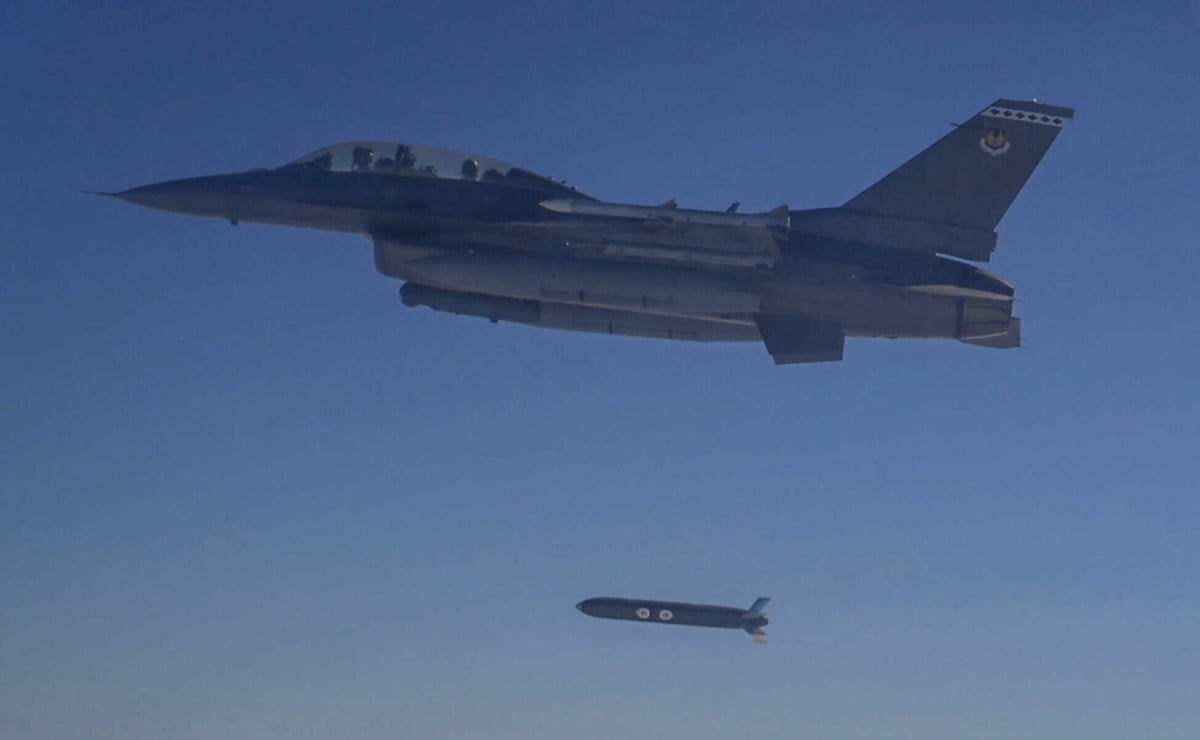
Ukraine just changed the math of long-range strikes inside Russia. On June 22, 2026, a high-precision strike tore through the Voronezh Semiconductor Device Plant, a massive silicon foundry located on the left bank of the Voronezh River. Russian regional governor Alexander Gusev confirmed heavy damage to the production facility, while local reports noted emergency blood drives, hinting that the blast killed at least five people and injured dozens. Moscow claims Ukraine used a brand-new American weapon to pull this off: the AGM-188 Rusty Dagger cruise missile.
This isn't just another factory getting hit. The Voronezh plant is integral to producing the semiconductor and microelectronics components that guide Russia's own precision weapons. Kyiv wanted to choke Russia’s missile supply chain at the source, and they used a weapon explicitly designed to do exactly that. The emergence of the AGM-188 in active combat marks a massive shift in how this war is fought.
What is the AGM-188 Rusty Dagger
You won't find the AGM-188 in old military textbooks. It's a brand-new, low-cost stand-off munition developed by Zone 5 Technologies under the US Air Force Extended Range Attack Munition (ERAM) program. The Pentagon started this initiative in late 2024 with a clear goal: build a highly affordable, mass-producible cruise missile specifically to help Ukraine bypass choked western supply chains.
The Rusty Dagger bridges the gap between a standard guided glide bomb and an advanced cruise missile. Weighing in at roughly 450 pounds, it packs a punch with a 100-pound multi-purpose warhead. A single PBS Aerospace TJ80 turbojet engine pushes the weapon to high subsonic speeds of Mach 0.6.
The missile boasts a range of more than 500 nautical miles (around 930 kilometers) when air-launched. It features an advanced navigation system that combines standard GPS and inertial guidance with an eight-element Controlled Reception Pattern Antenna (CRPA) to resist heavy electronic jamming. When GPS fails entirely, it can switch to an autonomous visual navigation system to find its target.
Western Jets and the New Deep Strike Strategy
The strike proves that Western technology integration is moving fast. In April 2026, the US Air Force completed integration testing of this specific munition class on F-16 multi-role fighters. Ukrainian forces have also been modifying their existing Soviet-era MiG-29 fleets to carry these exact types of Western stand-off weapons.
The choice of target reveals Kyiv's evolving deep-strike logic. Instead of just swatting down incoming Russian missiles over Kyiv, Ukraine is using the AGM-188's long range to fly past border air defenses and smash the foundries manufacturing the microchips for those weapons. Striking Voronezh, which sits roughly 250 kilometers from the Ukrainian border, puts Russia's deep military rear under constant, highly accurate threat.
This development also bypasses the political red tape that plagued earlier Western aid. Because the ERAM program was explicitly designed from day one to give Ukraine a cheap, long-range mass weapon funded largely by international coalitions including Denmark, the Netherlands, and Norway, the restrictions on striking targets inside Russian territory have effectively dissolved.
Fighting the Electronic Warfare War
Russian air defense and electronic warfare units face a tough problem with the AGM-188. Traditional cheap long-range drones are slow, loud, and easily knocked off course by heavy GPS spoofing. The Rusty Dagger changes that dynamic entirely.
Its CRPA antenna filters out localized jamming signals, keeping the missile locked on course. Even if Russian electronic warfare completely blanks out the skies over a strategic city like Voronezh, the visual terrain-matching software lets the onboard computer look at the ground below and guide itself straight to the target coordinates.
The mass-production aspect of the weapon creates another headache. Ukraine is cleared to purchase up to 3,350 of these munitions. When you can launch precision cruise missiles in high numbers without draining multi-million-dollar Western stockpiles, you can overwhelm local air defense networks by sheer volume.
To track how these long-range strategies continue to reshape the map, check out the tactical map breakdowns on the UATV English YouTube Channel.
This video provides an analytical breakdown of how Ukraine's long-range strikes are hitting deep military-industrial facilities across Russia.