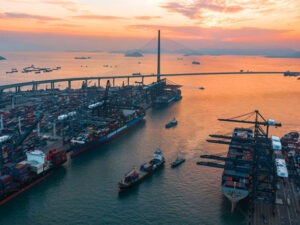
Abu Dhabi National Oil Company has formally approved a $6.2 billion final investment decision to develop the offshore Umm Shaif Gas Cap, aiming to extract more than 600 million standard cubic feet per day of natural gas by 2030. Backed by international partners TotalEnergies, Eni, and China National Petroleum Corporation, the megaproject will unlock fuel equivalent to nearly 10 percent of the United Arab Emirates' daily consumption. Official statements point to industrial expansion and data center growth as the main catalysts. Yet the real catalyst is a quiet geopolitical ticking clock that energy markets have largely overlooked.
Behind the public press releases lies a strategic imperative driven by regional security, expiring cross-border contracts, and an impending surge in power demand from artificial intelligence infrastructure. Abu Dhabi is racing to secure total energy independence before the end of the decade, and tapping into long-dormant gas caps is its most ambitious attempt yet to rewrite the Gulf energy balance.
The Ticking Clock of the Dolphin Pipeline
The United Arab Emirates currently relies on Qatar for approximately one-third of its daily natural gas supply through the undersea Dolphin pipeline. That contract expires in 2032.
Diplomatic relations between Abu Dhabi and Doha have weathered severe strains over the past decade. While pipeline flows remained uninterrupted during previous political blockades, energy planners in Abu Dhabi view continued reliance on Qatari gas as an unacceptable long-term vulnerability. Replacing hundreds of millions of cubic feet of daily pipeline imports requires years of heavy engineering, civil works, and reservoir management.
If Abu Dhabi fails to replace those volumes internally before 2032, it faces two unpleasant options. It could negotiate a new import contract with Doha from a position of weakness, or buy costly spot-market liquefied natural gas (LNG) cargoes off the open market.
By committing $6.2 billion to the Umm Shaif Gas Cap, alongside another major plan at the Bab Gas Cap expected to yield an additional 1.5 billion standard cubic feet per day, state energy leaders are executing an expensive insurance policy. Building domestic capacity is not merely about growth. It is about insulating the state grid from neighbor-state politics.
Tapping the Free Gas Layer Above Decades-Old Crude
Extracting gas from a cap sitting directly above an active oil field is a delicate balancing act.
Umm Shaif is Abu Dhabi's oldest operating offshore oil field, having produced crude for over six decades. Gas caps function as giant pressure cushions sitting atop liquid hydrocarbon reservoirs. Standard operating procedure in oilfield management dictates keeping gas caps pressurized as long as possible to force oil upward into recovery wells. Venting or producing the gas cap too early causes reservoir pressure to collapse, trapping millions of barrels of heavy crude underground forever.
Executing this project now means engineers have reached the tail end of primary and secondary oil recovery at Umm Shaif. They must deploy precision pressure-maintenance systems, injecting seawater or lean gas elsewhere in the structure to prevent reservoir collapse as the main gas cap is drained.
The $6.2 billion commitment breaks down into concrete industrial packages. Abu Dhabi has awarded three major engineering, procurement, and construction contracts totaling $5.1 billion for offshore platform towers, processing modules, and undersea gathering lines. A separate $365 million drilling package tasks ADNOC Drilling with sinking 14 dedicated wells over an 18-month window using three offshore rigs.
The raw gas from Umm Shaif is notoriously sour, packed with toxic hydrogen sulfide and carbon dioxide. Processing it demands heavy industrial scrubbing technology, sulfur recovery units, and specialized anti-corrosive alloys capable of withstanding aggressive chemical decay.
Powering the Data Center Surge
The domestic market for natural gas inside the UAE is changing rapidly.
Traditional demand was driven by air conditioning during scorching summer months and power generation for aluminum smelters or water desalination plants. Today, a new consumer has entered the frame. High-performance computing clusters and artificial intelligence data centers are springing up across the emirates, demanding continuous, uninterrupted baseload power.
Solar power installations have expanded rapidly across the UAE, but solar cannot run server farms at full capacity through the night. Energy storage technology at grid scale remains far too expensive and insufficient for gigawatt-scale computing loads.
Natural gas remains the only fuel capable of providing flexible, dispatchable baseload power quickly enough to meet the timelines of global technology firms investing in Gulf data hubs. ADNOC leadership has made explicit that gas from Umm Shaif will directly feed power plants supplying this new digital industrial sector. Without this gas, the country's technology ambitions would hit a hard ceiling defined by grid capacity limits.
The Push for Export Dominance
Domestic self-sufficiency is only half of the balance sheet. Abu Dhabi is simultaneously positioning itself as a dominant exporter in global LNG markets.
The state energy firm is building a massive 9.6 million metric tons per annum export facility at Ruwais, aiming to nearly triple its overall export capacity. By 2035, the company targets a marketable LNG portfolio of 47 million tons per year.
To achieve those export volumes, Abu Dhabi cannot afford to burn its own export-grade fuel inside domestic power plants. Every cubic foot of natural gas produced at Umm Shaif for local consumption frees up a corresponding volume of gas elsewhere in the pipeline system that can be chilled to minus 160 degrees Celsius and shipped to buyers in Europe and Asia.
This dual-track strategy also provides a hedge against maritime chokepoints. Currently, shipping LNG out of the Persian Gulf requires tankers to pass through the Strait of Hormuz, a narrow waterway exposed to regional conflict and maritime harassment. The UAE has evaluated alternative export routing and onshore pipeline connections, but maintaining high domestic output ensures that even if export corridors face temporary disruption, local industrial power remains entirely insulated.
| Project Metric | Specification |
|---|---|
| Total Investment | $6.2 Billion |
| Target Production Start | 2030 |
| Gas Output Volume | >600 Million scfd |
| EPC Package Value | $5.1 Billion |
| Drilling Contract Value | $365 Million |
| Number of Wells | 14 Wells |
| Key International Partners | TotalEnergies, Eni, CNPC |
Balancing International Capital Against State Price Controls
For foreign partners TotalEnergies, Eni, and China National Petroleum Corporation, entering a $6.2 billion commitment in offshore gas requires a careful calculation of risk and reward.
Foreign oil majors operate under concession agreements where state regulators control domestic gas pricing. In many Middle Eastern markets, domestic gas prices are capped at subsidized rates well below prevailing international spot prices. Foreign operators must be guaranteed adequate returns on capital through fee structures, cost recovery mechanisms, or equity shares in exported condensate and natural gas liquids produced alongside dry gas.
China National Petroleum Corporation views the investment through the lens of long-term energy security, ensuring steady liquid resource flows for Chinese industrial markets. TotalEnergies and Eni view it as an opportunity to deepen their operational footprint in low-cost, low-risk extraction geography while earning predictable yields.
Yet execution risk remains real. Offshore megaprojects across the energy industry have suffered from supply chain bottlenecks, rising steel and equipment costs, and specialized labor shortages over recent years. Delivering a massive offshore gas cap recovery project on time by 2030 will require strict management of fabrication yards and offshore installation vessels.
Abu Dhabi is spending $6.2 billion not because it has excess cash to deploy, but because the alternative—reaching 2032 dependent on imported gas while running power-hungry data centers—presents an existential threat to its economic transformation.