The diesel exhaust does not clear in the thin air of the Altiplano. At 12,000 feet above sea level, everything lingers longer—the cold, the fatigue, and the quiet panic of a nation running out of food. For fifty days, the heavy transport trucks have sat nose-to-tail on the dual-carriageway outside Cochabamba, their engines dead, their windshields coated in a thick film of mountain dust.
To understand how Bolivia arrived at a national state of emergency, you have to look past the ink of the presidential decree signed by President Rodrigo Paz. You have to stand on the asphalt where the asphalt ends and the dirt barricades begin.
Imagine a long-haul driver named Mateo, a hypothetical composite of the thousands currently stranded across the country's severed arterial highways. His cargo of fresh beef from the eastern lowlands has long since spoiled, turning into a biohazard in the Andean sun. He has spent his life savings on roadside water and stale bread. His family in La Paz is cooking over improvised wood fires because the domestic gas canisters have run dry. Mateo is not a political strategist. He is a man trapped between an IMF austerity plan and a peasant rebellion, watching the tires of his livelihood slowly deflate.
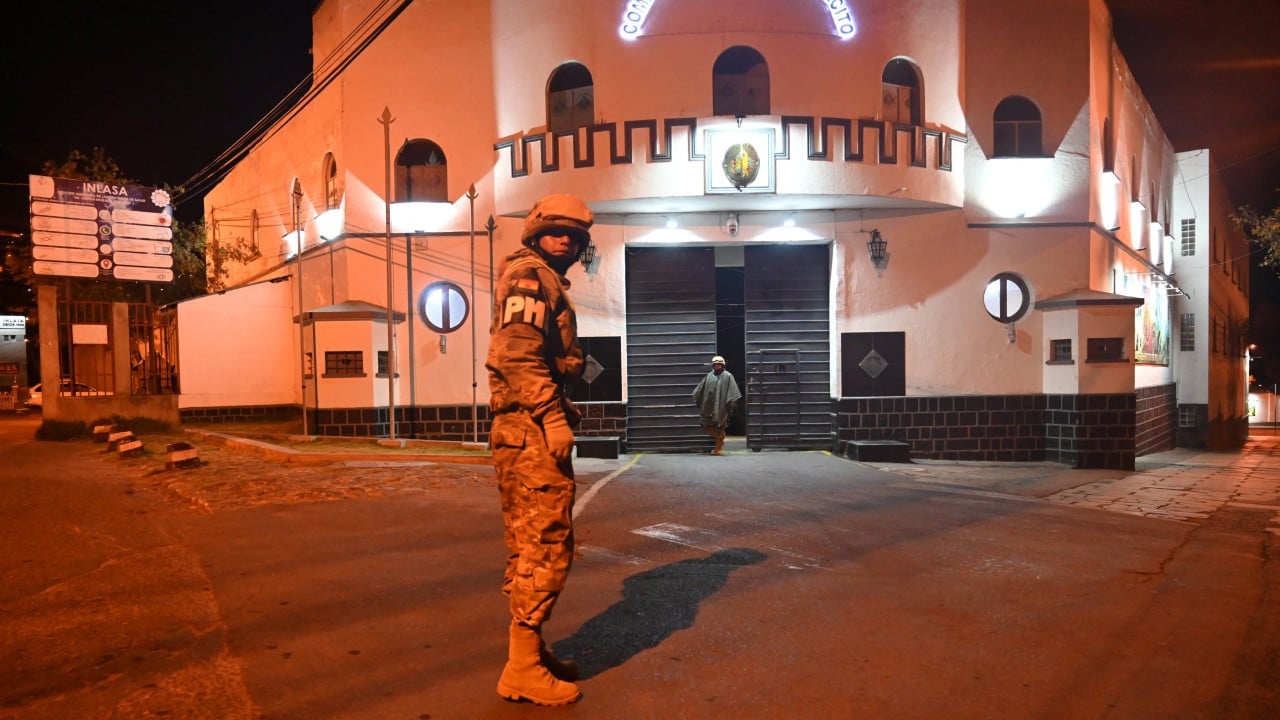
The dry wire copy reports that President Paz declared a state of exception on Saturday, clearing the legal path for military forces to dismantle the blockades. But a state of emergency is not just a constitutional mechanism; it is the sound of heavy boots hitting the pavement in cities that have already forgotten what normalcy feels like.
The Anatomy of an Empty Tank
The trouble started with something invisible to the naked eye: a shortage of green paper. For decades, Bolivia maintained an economic equilibrium built on subsidized fuel. It was an unwritten social contract. The government absorbed the true cost of gasoline and diesel, and in return, the markets stayed full, the buses ran, and the cost of living remained low.
When President Paz took office, ending two decades of left-wing rule by the Movement to Socialism party, he inherited a ledger bleeding red ink. Natural gas exports—the engine of the Bolivian economy—had plummeted. US dollars had vanished from bank vaults.
Seeking to shrink a runaway deficit and unlock structural support from the International Monetary Fund, the new administration made a sharp, sudden cut to those historic fuel subsidies.
The mathematical logic in the air-conditioned offices of La Paz was straightforward. The human logic on the ground was volatile.
Within days, the price of everything mutated. In a country where geography is a violent vertical climb from the Amazonian plains to the peaks of the Andes, transport is the literal lifeblood of existence. If diesel prices double, the price of a kilo of potatoes doubles before the truck even reaches the city gates. The administration tried to walk the measures back, stabilizing prices and reversing controversial land reforms, but the spark had already caught the dry brush.
The Two Bolivias Meet at the Barricade
What began as a protest against expensive fuel quickly transformed into a referendum on survival. The country split along lines that are centuries old, dividing the urban, institutional centers from the rural, indigenous heartlands.
A web of dirt mounds, burning tires, and boulders cut the country into isolated islands. The primary production corridors, particularly around Cochabamba, became the domain of rural syndicates and agricultural associations. Many of these groups remain fiercely loyal to former President Evo Morales, viewing the Paz administration not as an economic reformer, but as an ideological adversary bent on dismantling the social gains of the past twenty years.
Even as the president announced a tentative deal with the central workers' union on Friday night, the rural blockades held firm. They were not part of the negotiation. They had a different demand: the immediate resignation of the president.
Consider the compounding math of a fifty-day siege.
- Medical oxygen cannot reach regional hospitals.
- Infant formula becomes a black-market luxury.
- The highest inflation rates in forty years strip the purchasing power from a day laborer's hands before they can buy lunch.
In his televised address to the nation, President Paz spoke with the gravity of a leader who knows he has run out of peaceful levers. "Bolivians cannot continue to be hostages of blockades," he argued. His words were a direct appeal to the urban middle class, to the shopkeepers who cannot open their doors, and to the parents who are keeping their children home from school because the streets are unsafe.
The Risk of the Green Uniform
By formalizing the state of emergency, the government has used its final defensive card. The legislation, which moved through a grueling fifteen-hour overnight legislative session earlier in June, allows the police and the military to act in tandem to free the transit chokepoints.
This is where the story becomes dangerous.
In Latin American history, deploying the armed forces to resolve internal economic disputes is rarely a bloodless affair. The line between clearing a highway and suppressing a community is paper-thin, drawn in the dust by nervous young conscripts holding automatic rifles and farmers defending what they see as their right to exist.
The government maintains that its doors are open to good-faith dialogue. They insist that the state of exception is not an act of aggression, but a restoration of freedom—the freedom to move, to work, and to eat. But on the barricades, the arrival of the military is viewed through a lens of historical grievance.
The coming hours will decide if the highways can be opened by presence alone, or if the cost of clearing the roads will be paid in human currency. For now, the country holds its breath. The trucks remain parked. The fires continue to burn on the asphalt, and a quiet, heavy winter settles over the high plains of Bolivia, where the air is thin and the margins for error have completely disappeared.