The political floor of the United States shifted late last night when an erratic social media post from the Oval Office triggered an unprecedented collapse of partisan lines. Donald Trump, currently embroiled in a high-stakes standoff regarding the Hormuz Straits, claimed that a "whole civilization will die tonight" in a message that appeared to threaten the total erasure of Iran. The fallout was immediate. For the first time in American history, the loudest calls for the 25th Amendment—the constitutional mechanism for removing a president deemed "unable to discharge the powers and duties of his office"—are coming from within the MAGA house itself.
Marjorie Taylor Greene, the former congresswoman and once the most loyal of Trump’s lieutenants, broke rank with a visceral condemnation. "Not a single bomb has dropped on America," Greene stated, highlighting the lack of a direct provocation for such a cataclysmic threat. Her defection signals more than just a personal feud. It marks a fundamental schism in the populist movement that carried Trump to power twice. Greene is joined by an improbable coalition including progressive Representative Ro Khanna and Senate Majority Leader Chuck Schumer, creating a horseshoe-shaped political front aimed at a single goal: the immediate removal of the Commander-in-Chief.
The Trigger Point and the Civilization Threat
The crisis began when the President issued an ultimatum to Tehran, demanding the reopening of the Hormuz Straits. While military posturing is common in the region, the language used last night crossed a line that many in Washington believe indicates a cognitive or psychological break. By threatening the destruction of a 5,000-year-old civilization rather than military targets or a specific regime, Trump has alienated the isolationist wing of his own party.
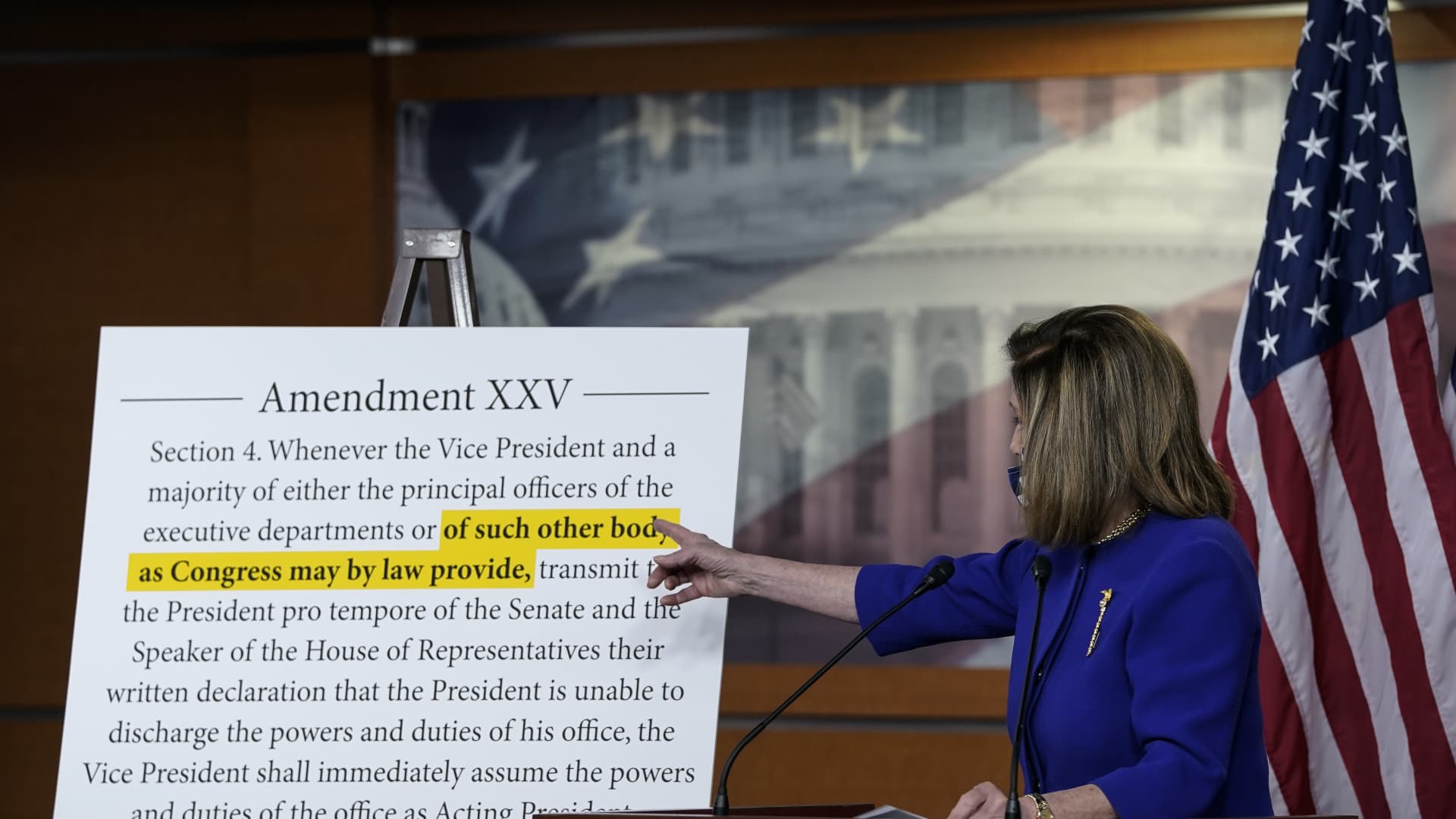
This isn't about policy anymore. It is about the fundamental stability required to hold the nuclear codes. When figures like Alex Jones and Candace Owens join hands with the NAACP and Chuck Schumer to demand the 25th Amendment, the conversation moves from political strategy to national survival. The 25th Amendment, specifically Section 4, is the most surgical and severe tool in the Constitution. It requires the Vice President and a majority of the Cabinet to sign a declaration that the President is unfit.
How the 25th Amendment Works in a Crisis
Unlike impeachment, which is a lengthy legislative process focused on "high crimes and misdemeanors," the 25th Amendment is designed for incapacity. It is about the "why" and the "now."
- The Declaration: Vice President J.D. Vance and eight Cabinet members must submit a written statement to the President pro tempore of the Senate and the Speaker of the House.
- Immediate Transfer: The moment that letter is submitted, the Vice President becomes Acting President. There is no debate period before the transfer of power occurs.
- The Rebuttal: The President can submit a counter-statement claiming he is fit.
- The Congressional Vote: If the Cabinet persists, Congress must decide the issue within 21 days. A two-thirds majority in both chambers is required to keep the Vice President in power.
The threshold is intentionally high. It was designed this way to prevent a "palace coup," yet the current atmosphere suggests that the Cabinet is under immense pressure to act before a perceived "war of choice" begins.
The Unlikely Alliance of Greene and Khanna
The most fascinating development is the partnership between Ro Khanna and Marjorie Taylor Greene. While they stand on opposite ends of the ideological spectrum, they have found common ground in a strictly anti-interventionist, "America First" interpretation of foreign policy. To them, Trump’s latest escalation is a betrayal of the 2016 and 2024 promises to end "forever wars."
Greene’s rhetoric has shifted from supporting the man to protecting the movement. She now characterizes the President’s behavior as "evil and madness," suggesting that the populist base is no longer a monolith. If the MAGA base perceives Trump as a liability to the nation's safety rather than its protector, his political shield vanishes. This leaves the Cabinet with a choice: loyalty to the man or loyalty to the office.
Technical Stability and the Nuclear Chain
Beyond the political theater, there is a technical concern regarding the chain of command. In the United States, the President has sole authority to launch nuclear weapons. There is no "second vote" or veto in the room. If a President issues a lawful order to the National Military Command Center, it must be executed.
The concern shared by Schumer and Khanna is that the President’s social media posts are no longer mere "trolling" but are being interpreted as formal intent. Military leaders are now in a precarious position. Disobeying a direct order is a violation of the Uniform Code of Military Justice, yet executing an order that constitutes a war crime—such as the "annihilation of a civilization"—is also illegal under international law. The 25th Amendment is the only way to resolve this tension before a button is pressed.
The Cabinet’s Silent Dilemma
As of this morning, the Vice President has remained silent. This silence is the most telling factor in the current crisis. In previous 25th Amendment scares, such as after the January 6th Capitol riot, the Cabinet quickly signaled their refusal to act. This time, the phones in the West Wing have gone dark.
For the Cabinet to act, they must be convinced that the President’s mental state has deteriorated to the point where he can no longer distinguish between a negotiation tactic and a global catastrophe. The Times of India and other international outlets are framing this as a "total erasure" policy. This international perception puts a unique brand of pressure on the American executive branch. If the world believes the American President is a "genocidal lunatic," as some commentators have now alleged, the diplomatic and economic consequences will be irreversible long before any bombs are dropped.
The reality of the 25th Amendment is that it is a political "nuclear option." It has never been used to remove a sitting president against his will. To do so now would not only end the Trump presidency but would fundamentally change the nature of the American executive. The precedent would be set: a president’s fitness can be adjudicated by his own appointees under the pressure of public opinion and "unhinged" communication.
We are no longer watching a standard political debate. We are watching the potential dismantling of a presidency by the very people who built it. The move by Greene and Khanna isn't just a critique; it is a declaration of vacancy. The next 24 hours will determine if the Cabinet agrees that the Oval Office is, for all intents and purposes, already empty.